




Sri Lanka’s renewable energy industry has issued a stark warning over a growing payment crisis that developers say could cripple the country’s clean energy transition and increase reliance on expensive imported fuel. The Federation of Renewable Energy Developers (FRED) claims nearly Rs. 10 billion remains unpaid for electricity already supplied to the national grid, with liabilities continuing to rise each month.
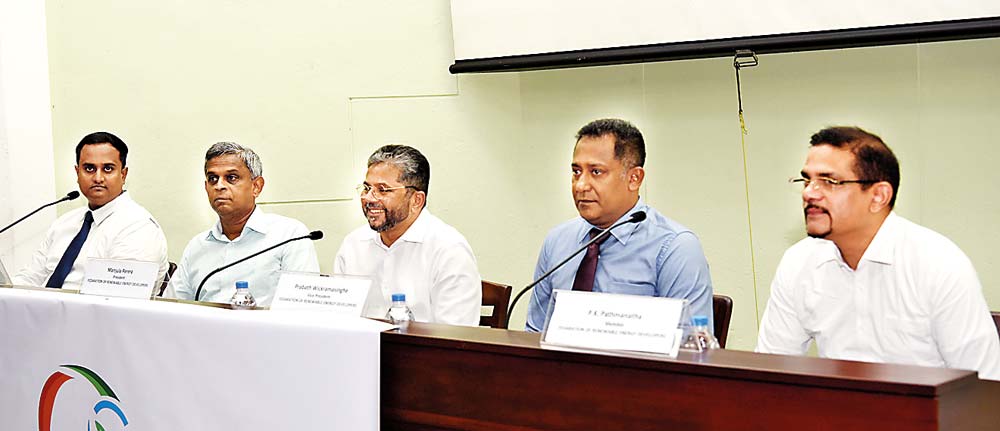
Speaking at a press briefing, FRED representatives urged the Finance Ministry and the Treasury to immediately intervene and release at least 50% of the outstanding dues owed by the National System Operator Ltd. (NSO). According to the industry body, the unpaid amount has ballooned since December 2025, while an additional Rs. 2.5 billion becomes payable every month.
FRED President Manjula Perera said the crisis began when shortfalls in coal-fired electricity generation forced the country to depend more heavily on diesel and heavy fuel power plants to cover daily supply shortages. He alleged that authorities were prioritising payments to thermal power producers while renewable energy suppliers were left unpaid for months.
Perera argued that the increasing dependence on thermal generation is financially unsustainable. He pointed out that diesel prices, combined with rising global fuel costs linked to geopolitical tensions in the Middle East, have significantly increased electricity generation expenses. Thermal power generation, he claimed, now costs close to or above Rs. 100 per kilowatt-hour, compared to much lower renewable energy costs.
Industry officials estimate that Sri Lanka currently spends almost Rs. 1 billion per day on thermal power generation, while renewable sources could supply equivalent electricity at nearly 15% of that cost. Despite this economic advantage, renewable developers say they are facing severe liquidity shortages that threaten the survival of hundreds of companies.
FRED stated that nearly 400 renewable energy firms, including many small and medium-scale local businesses, are now under intense financial pressure. The affected sector includes solar power plants, mini-hydro projects, wind farms, and biomass facilities contributing over 1,100 megawatts to the national grid.
Developers also accused the NSO of failing to engage with the industry. Perera claimed that communication between renewable energy producers and the system operator has effectively collapsed, with officials allegedly refusing meetings with industry representatives.
In addition to unpaid invoices, renewable energy companies say they are suffering major financial losses due to generation curtailments imposed during Sundays and public holidays. According to FRED, restrictions on electricity generation between 9 a.m. and 3 p.m. have caused monthly losses estimated between Rs. 2 billion and Rs. 2.5 billion since February 2025.

FRED member Kishan Nanayakkara warned that delayed payments and routine curtailments could amount to violations of legally binding power purchase agreements signed with developers. He described the situation as a “technical sovereign default,” arguing that because the NSO operates under state ownership, the Government ultimately bears responsibility for the unpaid obligations.
Industry representatives also questioned whether the post-restructuring financial framework of the electricity sector is functioning properly. They noted that renewable energy costs are already included in electricity tariffs approved by regulators, yet payments to developers remain outstanding.
FRED warned that continued payment failures could discourage future investment in renewable energy and battery storage projects, undermining Sri Lanka’s long-term energy security and climate goals.
By a Special Correspondent