




Sri Lanka’s public financial management system is facing renewed scrutiny after authorities admitted that duplicate Aswesuma welfare payments amounting to Rs. 248.79 million were mistakenly transferred to thousands of beneficiaries. The incident, which follows closely behind the recent $ 2.5 million Treasury-related phishing attack, has intensified concerns about the Government’s digital financial controls, institutional competence, and the quality of appointments made to key economic institutions.
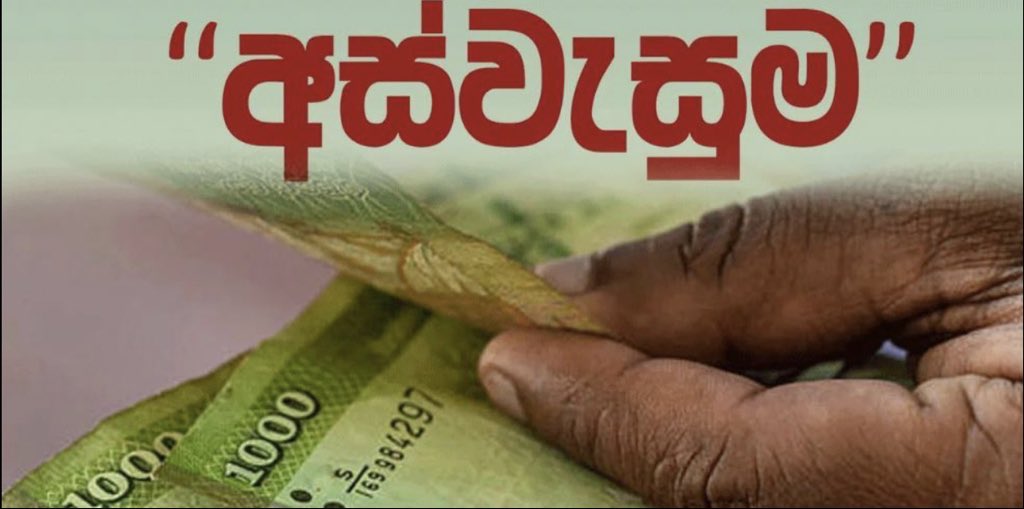
According to the Welfare Benefits Board, the duplication occurred when a payment file was uploaded twice during the processing of special New Year allowances approved for low-income families. Nearly 1.7 million beneficiary families were included in the payment process, with files grouped into batches before being forwarded to the Bank of Ceylon for distribution. Officials later acknowledged that tens of thousands of recipients had already withdrawn the excess funds before the transfers could be halted.
While authorities described the incident as a technical mistake caused by time pressure, critics argue that the problem runs much deeper than a simple clerical error. Financial analysts and civil society organizations say the episode reflects serious structural weaknesses inside the country’s digital governance and payment verification systems. The absence of multi-level approval mechanisms and automated safeguards has raised alarm about how public funds are being handled at a time when Sri Lanka remains under severe economic pressure.
The controversy has also reignited debate over the capability of officials appointed to strategic financial institutions under the JVP-led National People’s Power Government. Critics allege that several appointments have been based more on political loyalty than technical expertise, resulting in administrative inefficiency and weak oversight. Concerns have additionally emerged over communication barriers within institutions, with some observers arguing that inadequate English-language proficiency among certain officials has affected coordination with international financial systems, banking protocols, and digital service providers.
Economists warn that such weaknesses could undermine investor confidence and damage Sri Lanka’s credibility with multilateral lenders and foreign partners. In a modern financial environment heavily dependent on cybersecurity, real-time monitoring, and sophisticated payment infrastructure, even a small operational failure can trigger large-scale financial and reputational consequences.
The Free Lawyers organization has gone further, describing the duplicate payments as a potential misuse of public funds and calling for accountability through a formal investigation. Public pressure is also mounting for Parliament to conduct a special inquiry into the incident, particularly because previous financial irregularities including mistaken foreign remittances and salary payment errors had already exposed vulnerabilities within State financial systems.
Authorities now plan to recover the excess payments by deducting them from future Aswesuma disbursements. However, the recovery effort itself may create hardship for vulnerable families who believed the payments were legitimate Government assistance.
Beyond the immediate financial loss, the incident has become a broader symbol of declining institutional discipline within Sri Lanka’s public administration. What officials describe as a temporary technical error is increasingly being viewed by analysts as evidence of a deeper governance crisis involving weak digital management, poor accountability structures, and inexperienced leadership in the nation’s economic nerve centres.
By a Special Correspondent