




Two contrasting and highly debated events regarding Sri Lanka’s law enforcement and national security unfolded (Feb 25), raising profound questions about the country’s pursuit of justice. On one hand, the Criminal Investigation Department (CID) arrested Major General (Retd.) Suresh Sallay, the former Director of the State Intelligence Service (SIS), who served the nation for nearly three decades. On the other hand, the court ordered the very same CID to release gold and gems belonging to the family of the Easter Sunday suicide bombers.
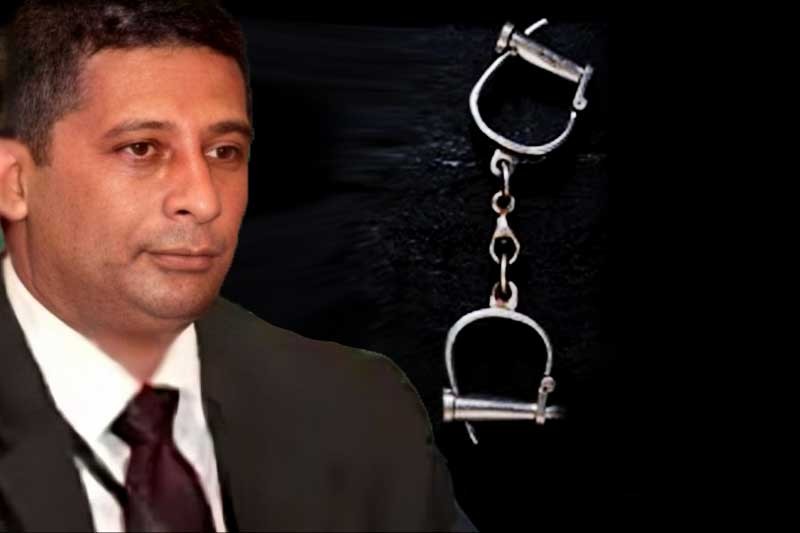
This chain of events has sparked a serious social dialogue: is true justice being served for the victims of the 2019 April 21st terror attacks-which claimed 273 lives- or are the ongoing legal processes being manipulated for political and professional vendettas?
The Arrest of Suresh Sallay and the Allegations
Major General (Retd.) Suresh Sallay was arrested by CID officers at around 8:10 AM yesterday while commuting to his office in Peliyagoda. He currently serves as an executive officer at the ‘Pathfinder Foundation’, an international think-tank founded by prominent diplomat and former minister Milinda Moragoda.
According to reports, a team of over 50 police officers searched his residence for several hours, seizing his computers, mobile phones, and files. Police later confirmed that he was arrested on charges of aiding, abetting, and conspiring in the Easter Sunday attacks, and will be interrogated under a 72-hour detention order.
Background to the Investigation:
- The Channel 4 Allegations: The investigation heavily stems from a documentary broadcast by Britain’s Channel 4, which alleged that Sallay met with members of the National Thowheed Jamath (NTJ) to create instability in the country to facilitate the return of the Rajapaksa family to power.
- The Source: This specific allegation relies on claims made by Azad Maulana, a former media spokesman for the politician Pillayan. Maulana is currently seeking political asylum in Switzerland.
- CID Proceedings: The CID had recently submitted progress reports on this confidential investigation to the Fort Magistrate’s Court, focusing on whether Sallay possessed prior knowledge of the attacks and concealed the information.
Expert Opinion: A Witch Hunt Against an Unblemished Officer?
International terrorism expert Professor Rohan Gunaratna has publicly voiced strong concerns regarding this arrest, characterizing it as a grave injustice.
- Alibi During the Attacks: Prof. Gunaratna highlights that during the time of the Easter attacks, Sallay had completed his tenure in Malaysia and was actively attending an advanced course at the National Defence College (NDC) in New Delhi, India.
- Service Record: Having joined the military in 1987, Sallay served under five different governments over three decades, holding key diplomatic postings in Paris and Malaysia.
According to Prof. Gunaratna, targeting intelligence officers based on the claims of an asylum seeker is a move celebrated only by terrorists and radical political elements harboring anti-military sentiments.
The Paradox of Justice: Releasing the Bombers’ Gold

While a former intelligence chief was placed in handcuffs and subjected to a massive home raid, a starkly contrasting legal development took place at the Fort Magistrate’s Court. Magistrate Isuru Neththikumara ordered the release of gold jewelry and gems -seized from the Dematagoda residence of the bombers- to the brother of suicide bombers Ilham Ahmed (Shangri-La) and Inshaf Ahmed. The assets are to be released within a week.
The primary reason for this judicial order was the CID’s failure to present any facts or objections regarding the release of these assets, despite being granted sufficient time by the court to do so.
Questioning the CID’s Impartiality
The glaring contrast in the CID’s operational conduct has drawn severe criticism. Mohamed Ibrahim, the father of the bombers, has a known political history and was previously nominated to the National List of the National People’s Power (NPP). Against this backdrop, observers question why the CID acts with extreme urgency and aggression when arresting intelligence officers, yet adopts a “silent policy” when dealing with the assets of families linked to terrorists.
With information regarding the ongoing trials of the 25 main suspects of the Easter attacks barely reaching the public eye, a reasonable suspicion has emerged. Critics argue that the quest for justice is being overshadowed by political agendas. Weakening the state’s intelligence apparatus while adopting a lenient stance on assets linked to terrorism risks completely eroding public trust in the state machinery- a tragedy that will inevitably compromise the nation’s future security.
#Samaara Paranavithana
[ This article was extracted and translated]