




Sri Lanka’s exploration of hosting the Miss Universe pageant could become a major tourism and international branding opportunity, but it could equally become a financial and governance minefield unless the Government establishes strict safeguards before committing public resources.
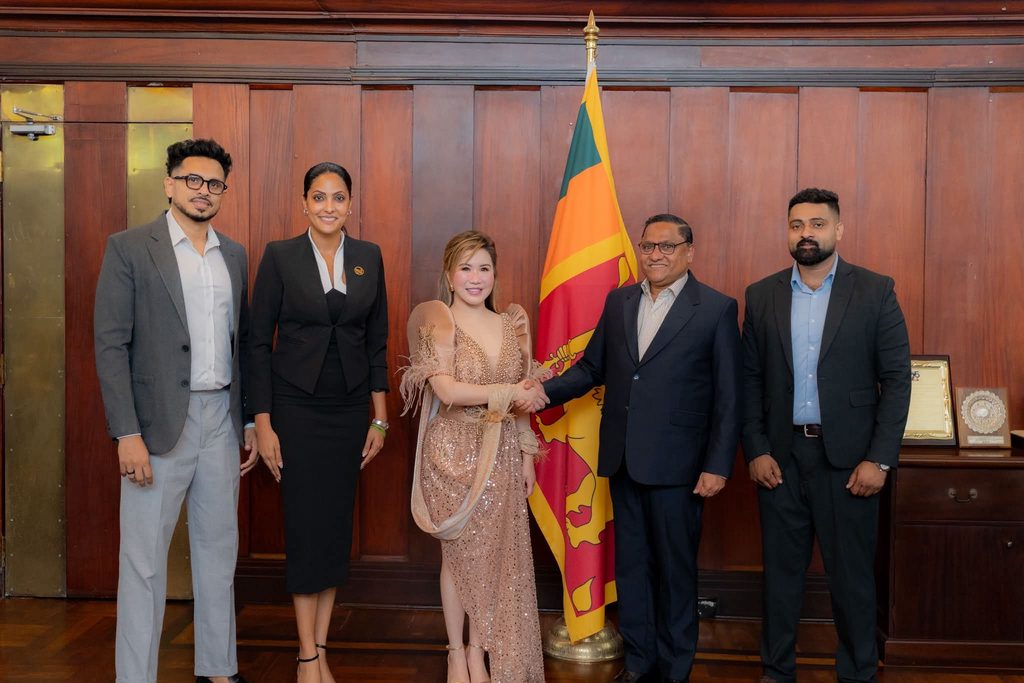
Foreign Minister Vijitha Herath has confirmed discussions with senior officials of the Miss Universe Organization over the possibility of bringing the global pageant to Sri Lanka. The Government’s argument is straightforward: an event attracting contestants, international media, sponsors, tourists and high-income visitors could generate foreign exchange while projecting Sri Lanka as a destination capable of handling major international events.
But the central question is not whether the pageant can generate publicity. It is whether the country can demonstrate that the financial structure behind the event is transparent, commercially justified and protected against misappropriation, inflated contracts and potential money-laundering vulnerabilities.
The danger begins with the franchise and hosting arrangements. International events of this scale involve licensing fees, production expenses, accommodation, transportation, security, venue management, broadcasting, marketing, sponsorship and hospitality packages. Without transparent procurement and independently verified contracts, the difference between legitimate commercial expenditure and excessive payments can become difficult to establish.
The Government therefore cannot simply announce that private sponsors will finance the spectacle. Every major financial commitment needs to be identifiable. Sponsorship money, tourism-promotion allocations, franchise payments and government-supported expenditure should be separately accounted for.
The tourism argument also requires evidence rather than assumptions. Bringing more than 100 delegations and international visitors could benefit hotels, airlines, restaurants, transport operators and other service providers. But the country needs to calculate how much foreign exchange would actually remain in Sri Lanka after franchise fees, international production payments, imported services and other expenses are deducted.
A further concern is whether tourism-promotion funds could gradually become a convenient source for expenses that are essentially entertainment or commercial-event costs. If public money is involved, Parliament, auditors and the public have a legitimate right to know precisely what is being purchased and what economic return is expected.
Money-laundering risks also cannot be dismissed merely because the event is internationally recognised. Large sponsorships, offshore transactions, hospitality arrangements, luxury packages and multiple intermediaries can create complex financial flows. That does not mean the Miss Universe initiative would involve laundering; rather, its financial architecture must be designed so that such risks cannot easily emerge.
The Government should therefore require beneficial-ownership disclosure from major sponsors and contractors, banking-channel payments, tax compliance, independent auditing and full documentation of all international transfers.
The ideological contradiction is another challenge. A government promoting austerity and social equity must explain why an expensive global beauty pageant deserves priority. The answer can only be credible if the event is demonstrably privately financed, economically viable and free from political patronage.
Sri Lanka does not merely need the world to watch its pageant. It needs the world to see that it can host one without losing financial discipline, accountability and public trust.