




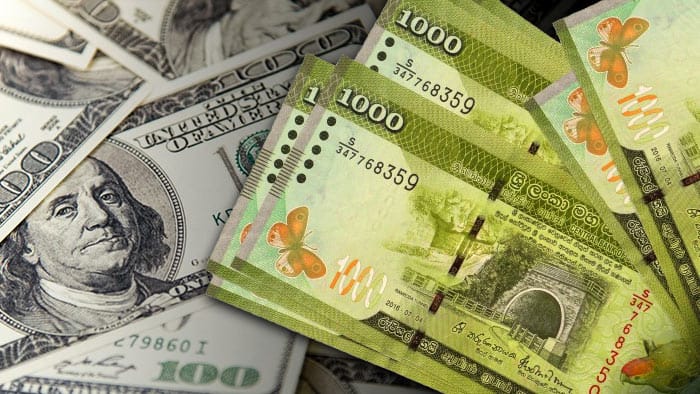
Sri Lanka’s currency has depreciated by 4.5 percent against the US dollar so far this year, with one US dollar now trading at around Rs. 329, reigniting concerns over the island’s fragile external sector and exposing the economy to renewed pressure from rising import costs and a widening current account imbalance.
The weakening rupee comes as Sri Lanka is expected to record a current account deficit in 2026 for the first time in four years, reversing the surplus trend that followed the country’s 2022 financial crisis. Economists say the latest depreciation reflects a combination of mounting dollar outflows, elevated global oil prices, slowing tourism earnings, and stronger import demand.

Appearing before Parliament’s Committee on Public Finance (COPF), Central Bank Governor Nandalal Weerasinghe said increased imports, particularly petroleum purchases, had exerted significant pressure on the foreign exchange market.
“At the same time, tourism also has slowed down, while imports have increased substantially. However, exports have not grown to the same extent,” he told lawmakers. “That imbalance has created pressure in the foreign exchange market, resulting in the depreciation of the currency.”
The Governor revealed that the import bill of the state-owned Ceylon Petroleum Corporation during the first four months of the year had already reached nearly two-thirds of its total expenditure for all of 2025, mainly due to surging global crude oil prices linked to escalating tensions in the Middle East.
Sri Lanka’s economy remains heavily dependent on imports for fuel, pharmaceuticals, milk powder, machinery, and industrial raw materials. As the rupee weakens, the cost of importing these essentials rises sharply, increasing inflationary pressure and adding to the burden on households already struggling with high living costs.
The depreciation also raises the local currency cost of servicing Sri Lanka’s external debt obligations. Since repayments to international creditors must be made in dollars, the government now requires significantly more rupees to settle the same volume of debt.
Manufacturers and construction firms are also facing higher operational costs because many rely on imported materials and equipment. Businesses may either pass those increased expenses on to consumers through higher prices or absorb losses through reduced profit margins.
Despite the downside risks, economists point out that a weaker rupee can generate certain economic advantages. Export-oriented sectors such as tea, apparel, and rubber become more competitive globally because their products become cheaper for overseas buyers paying in foreign currency.
Worker remittances also gain value when converted into rupees, increasing disposable income for many Sri Lankan households and supporting domestic consumption, especially in rural areas.
Analysts have additionally pointed to excess liquidity in the domestic money market as another factor contributing to the currency’s decline, arguing that insufficient liquidity absorption may have intensified pressure on the rupee.
Sri Lanka’s current account had shown a remarkable turnaround after the economic collapse of 2022. Following a deficit of around US$1.4 billion during the height of the crisis, strict import restrictions and recovering tourism earnings helped the country post surpluses in the following three years. However, rising global energy prices and weaker foreign exchange inflows now threaten to reverse those gains.
By a Special Correspondent