




The disruption of National Identity Card (NIC) printing operations, leaving approximately one million identity cards awaiting issuance, has exposed another serious administrative failure within Sri Lanka’s public service delivery system. A shortage of plastic cards has brought the production process under pressure, raising troubling questions about procurement planning, supply-chain management, institutional accountability and the ability of the responsible ministry and the Department for Registration of Persons to perform one of their most essential public functions.
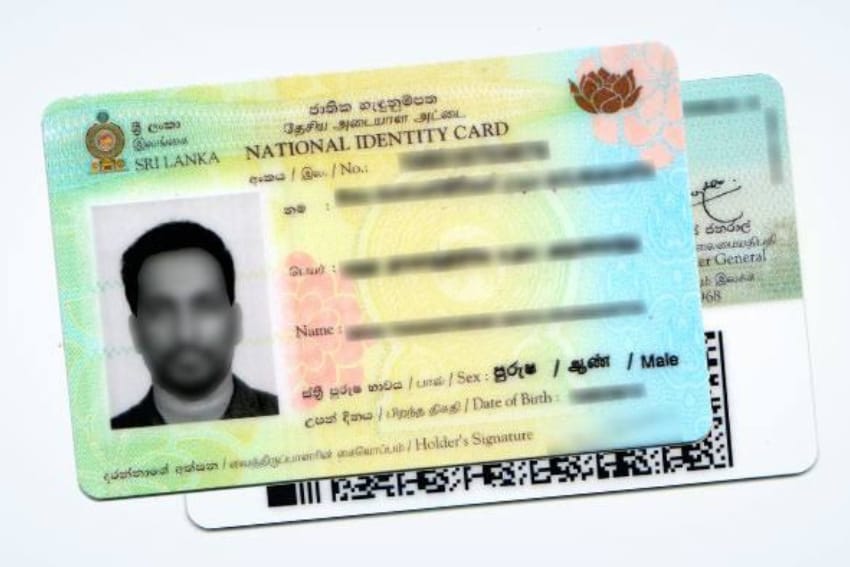
The crisis is particularly disturbing because the National Identity Card is not merely an identification document. It is a fundamental requirement for accessing government services, banking facilities, financial transactions, examinations, employment opportunities and numerous other activities. For hundreds of thousands of applicants, delays in receiving an NIC can translate into practical difficulties, financial inconvenience and the loss of important opportunities.
The plastic identity card was introduced in 2017 to replace the traditional identity card that had served the country for decades. The new format incorporated a 12-digit national identity number and was expected to modernise identification services while reducing production costs and improving administrative efficiency. Nearly a decade later, however, the failure to maintain an adequate supply of the basic plastic material required for printing raises questions about whether the promised efficiencies have been translated into sustainable operational capacity.
The present shortage cannot be treated as an unexpected operational inconvenience. Official government and parliamentary documents indicate that the problem has been developing for several years, with repeated procurement complications contributing to interruptions in the supply of pre-printed polycarbonate cards. The cancellation of an earlier procurement for five million cards in May 2024, following recommendations by the procurement committee and procurement appeal mechanisms, forced the authorities to arrange an emergency purchase of 2.3 million cards from the previous supplier, Just In Time Technologies (Pvt) Ltd. Cabinet approval for this arrangement was granted in June 2024.
More disturbing revelations emerged in the Auditor General’s 2024 report. It disclosed that 1,055,461 applications were already awaiting NICs at the beginning of 2024. By December 31, 2024, the backlog had increased to 1,608,710 applications, while the Department possessed only 667,820 pre-printed cards. During that year, although 985,209 applications were received, only 431,960 identity cards were issued against a cumulative requirement of 2,040,670 applications. These figures expose the scale of the administrative and production deficiencies that have undermined the Department’s ability to fulfil its statutory responsibility.
The Department’s own performance report for 2024 also acknowledged that procurement cancellations had delayed the acquisition of essential pre-printed cards, forcing restrictions on NIC issuance. Schoolchildren sitting for the G.C.E. Ordinary Level examination had to receive identity-information confirmation letters instead of actual identity cards. The same report identified delays in introducing electronic NICs because of unfinished software development, restructuring of the head office and incomplete procurement of essential equipment.
Although the authorities subsequently announced that approximately 2.3 million cards ordered from the previous supplier had been delivered, the underlying supply and procurement problems were not convincingly resolved. In April 2025, Cabinet approved a fresh international procurement process for 15 million polycarbonate cards, intended partly to support the proposed electronic NIC programme and the re-registration of approximately 17 million citizens. In September 2026, Cabinet approved a contract for five million cards from Germany’s Muhlbauer ID Services GmbH at a cost of €4.93 million.
These developments raise an important accountability question: why did successive procurement exercises, emergency purchases and substantial public expenditure fail to guarantee an uninterrupted supply of a basic identification document?
The Ministry responsible for the Department and its senior administrative officials must explain whether procurement delays, inadequate forecasting, tender-management weaknesses or failures in coordinating supplies and production contributed to the continuing crisis. Any allegations of irregularities or malpractice must be independently investigated rather than assumed without evidence.
The consequences extend far beyond administrative inconvenience. Without an NIC, citizens can encounter difficulties in banking, passport applications, employment, examinations and dealings with government institutions. Vulnerable communities, young applicants entering employment and people requiring urgent official documentation are particularly exposed.
The Department for Registration of Persons must publish the exact number of pending applications, available card stocks, current daily printing capacity and a realistic clearance timetable. The National Audit Office and the relevant parliamentary oversight committees should examine the procurement history, contract implementation, expenditure and responsibility for repeated interruptions.
Sri Lanka cannot claim to be building a digitally empowered public administration while its citizens remain unable to obtain one of the most basic documents of citizenship. The NIC crisis is therefore not simply a shortage of plastic cards. It is a test of public-sector accountability, procurement discipline and the Government’s commitment to delivering essential services without bureaucratic failure.
The central question remains whether those responsible will finally be held accountable.