




Sri Lanka’s ambitious attempt to eliminate forced labour from imported goods has opened a new front in the country’s economic strategy protecting international credibility while confronting mounting costs for businesses.
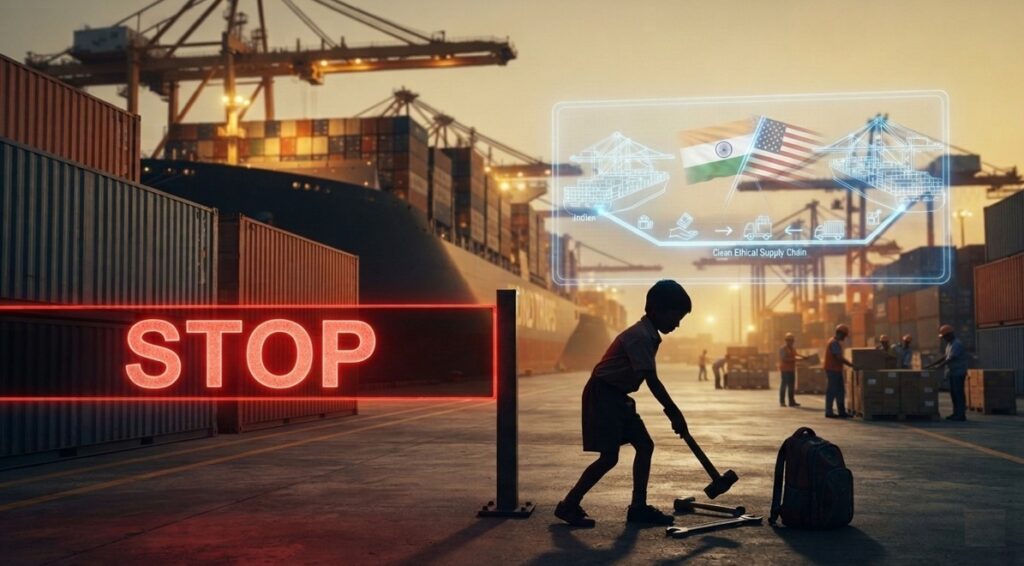
The government’s decision to immediately prohibit forced labour-linked imports marks a significant shift in trade policy. The move was introduced after growing pressure from the United States, which warned of a possible 12.5% tariff on Sri Lankan exports under Section 301 provisions.
Although the ban aligns Sri Lanka with international labour standards, the business sector is concerned that the lack of detailed enforcement guidelines could create uncertainty throughout the economy.
The Exporters Association of Sri Lanka (EASL) has called for a risk-based system targeting high-risk products, supply chains and countries rather than demanding extensive documentation for every import transaction.
According to exporters, forcing all businesses to meet identical compliance requirements could create unnecessary costs and slow down legitimate trade. They argue that Customs authorities must provide clear rules on certification requirements, verification procedures and reasonable adjustment periods before implementation.
The impact is expected to be felt most strongly by industries with complex international supply chains. Sri Lanka’s apparel sector, one of the country’s largest foreign exchange earners, depends on thousands of imported materials and components. Even a single questionable supplier in a multi-layered chain could expose companies to regulatory difficulties.
Manufacturers may now have to invest heavily in supplier checks, legal advice, audits and documentation systems. Companies may also be forced to move away from cheaper suppliers that cannot provide reliable proof of ethical production, increasing production expenses.
Small and medium enterprises are particularly vulnerable. Unlike large exporters with established compliance departments, smaller firms may struggle to absorb additional costs. Higher input prices could reduce competitiveness, threaten contracts and create pressure on employment.
However, the regulation also presents a potential economic opportunity. Global brands are increasingly searching for suppliers with transparent and ethical production systems. Sri Lankan businesses that develop strong traceability mechanisms could benefit from growing demand for responsibly produced goods.
The United States’ campaign against forced labour reflects a broader global trend where trade policy is increasingly connected to human rights standards. Washington argues that products made through exploitation create unfair competition by reducing production costs and undermining workers’ rights.
For Sri Lanka, the challenge is ensuring that ethical commitments do not become an unnecessary burden on businesses. The government must now build a regulatory framework that protects labour standards while keeping exporters competitive.
The EASL has stressed that cooperation between authorities, exporters, importers, logistics providers and industry groups will be essential.
Sri Lanka’s reputation as a reliable trading partner may depend on how effectively it manages this transition. If implemented carefully, the forced labour ban could strengthen international confidence. If handled poorly, it could create new obstacles for businesses already facing global economic pressures.