




The long-running legal battle surrounding Sri Lanka Podujana Peramuna (SLPP) Parliamentarian Namal Rajapaksa and the controversial Rs. 70 million Krrish transaction has entered a new phase, with the Colombo High Court postponing the trial until November 16, 2026, while ordering international summonses for two key Indian witnesses whose testimony could determine the outcome of the case.
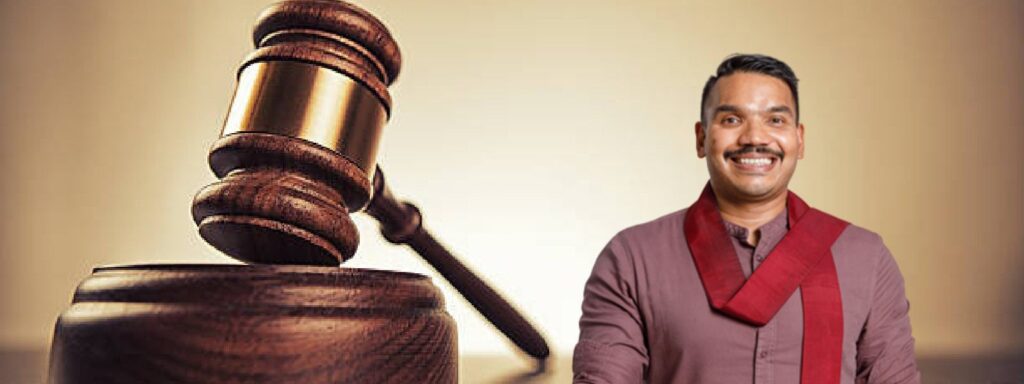
The trial was originally scheduled to commence on July 7, 2026, following the completion of pre-trial conferences in May. However, High Court Judge Nadee Aparna Suwandurugoda rescheduled the hearing after directing that formal summons be issued to two Indian nationals listed as prosecution witnesses. The court ordered that the process be carried out in accordance with the Judicial Service Commission’s guidelines governing foreign witnesses after the Criminal Investigation Department (CID) informed the court that previous attempts to contact them had failed.
At the heart of the prosecution is an allegation that Rajapaksa criminally misappropriated Rs. 70 million received from India-based real estate developer Krrish Lanka (Pvt) Ltd. The Attorney General alleges the money was obtained under the pretext of promoting rugby and sports development in Sri Lanka but was ultimately diverted for personal or unauthorized purposes, constituting criminal breach of trust.
The investigation traces the financial trail back to late 2012. Police Financial Crimes Investigation Division (FCID) investigators found that between October and December that year, Krrish Lanka deposited Rs. 70 million into two bank accounts belonging to Nimal Perera, then President of Ceylon Premium Sports.
Investigators say the funds were requested by Rajapaksa from Krrish director R.P. Gupta, reportedly to sponsor the 2013 Super Sevens Rugby Tournament and broader sports development initiatives. However, according to Perera’s statement to police, the entire sum was later withdrawn and handed over to Rajapaksa in two separate cash payments of Rs. 35 million each at the Gowers Corporate Services office in Colombo.
Rajapaksa, in his statement to the FCID, maintained that he transferred the money to a finance committee established to manage the rugby tournament. That explanation became a major focus of investigators.
According to official investigations, interviews conducted with tournament directors and committee members revealed that no such funds were ever received, recorded or reflected in the event’s financial records. Investigators concluded that the money never reached the tournament organizers and instead bypassed the intended sporting project entirely.
The prosecution argues these contradictions form a central pillar of its case, alleging that the funds were diverted for purposes unrelated to rugby or sports development.

The case itself originated from a complaint lodged in 2015 by anti-corruption campaigner Wasantha Samarasinghe. Following investigations, indictments were filed by the Attorney General, and Rajapaksa was granted bail after the proceedings were transferred from the Magistrate’s Court to the Colombo High Court.
The significance of the two Indian witnesses extends beyond the disputed payment itself. Sri Lankan investigators examining Krrish Group’s financial activities uncovered evidence suggesting the parent company diverted substantial customer funds from Indian real estate projects into the Colombo-based The One Transworks Square development. Because crucial elements of the financial transactions originated in India, prosecutors consider testimony from the Indian witnesses essential to establishing the complete financial trail.
With international summons now being processed, the November hearing is expected to mark a critical stage in one of Sri Lanka’s most closely watched financial crime prosecutions involving a prominent political figure.