




The JVP-led National People’s Power (NPP) Government this week unveiled an ambitious national strategy promising to transform Sri Lanka’s battered small and medium enterprise (SME) sector into the engine of a $300 billion economy. Yet across the country, struggling entrepreneurs say glossy policy frameworks alone will not rescue businesses already crushed by the pandemic, economic collapse, and recurring climate disasters.
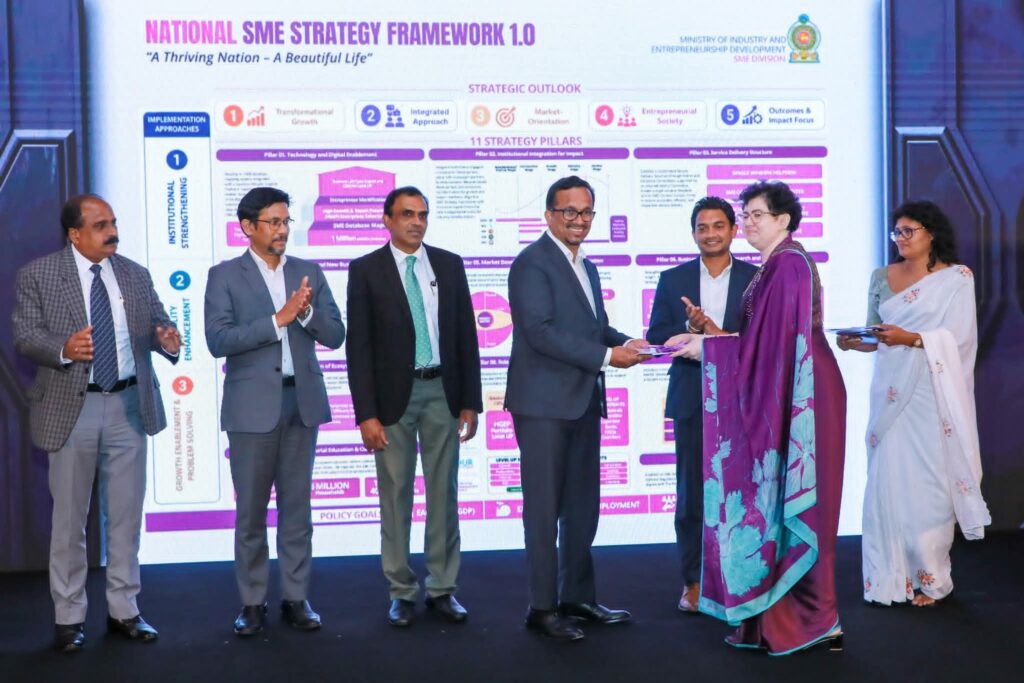
Launched under the banner “SME NEXUS,” the Government’s first-ever National SME Strategy Framework aims to modernise and integrate the country’s fragmented SME ecosystem. The initiative proposes a sweeping overhaul built around digital transformation, market expansion, institutional reform, entrepreneurial development, and improved access to finance.
Industry and Entrepreneurship Development Minister Sunil Handunneththi described the framework as a historic turning point capable of repositioning SMEs as the backbone of Sri Lanka’s economic recovery. The Government claims the sector currently accounts for 75 percent of registered businesses, employs nearly 45 percent of the workforce, and contributes more than half of GDP.
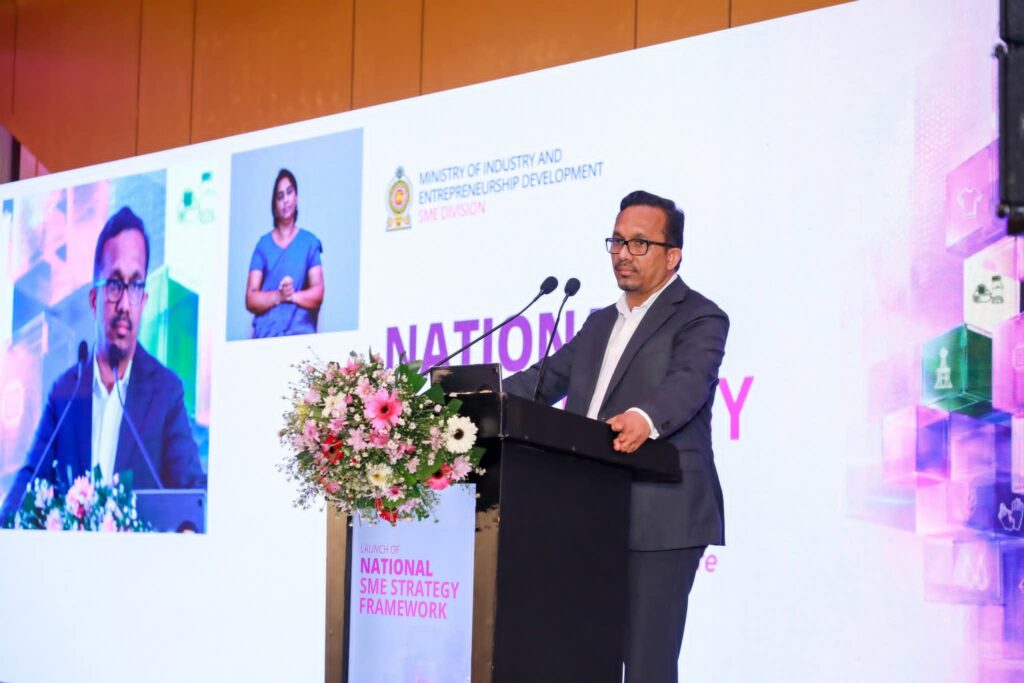
Officials now want SMEs to drive 80 percent of economic activity as part of a broader national growth agenda championed by President Anura Kumara Dissanayake.
But beneath the optimism lies a far harsher reality.Many SME owners say they have heard similar promises before. What they urgently need, they argue, is immediate relief rather than long-term policy rhetoric.
Over the last four years, SMEs have endured an unprecedented chain of crises. Thousands of businesses were crippled during the COVID-19 pandemic, only to be hit again by Sri Lanka’s foreign exchange collapse, soaring inflation, fuel shortages, and punishing interest rates during the economic crisis. More recently, severe floods and cyclone-related devastation in several districts wiped out inventories, damaged equipment, and disrupted already fragile supply chains.
Despite repeated Government announcements of support schemes, business owners complain that many relief packages remain inaccessible, heavily bureaucratic, or insufficient to address mounting debts and operational losses.
Critics say the latest framework risks becoming another high-level policy document disconnected from grassroots realities.
A World Bank Enterprise Survey cited during the launch identified some of the biggest barriers facing SMEs: excessive taxes, complex licensing procedures, weak tax administration, poor access to finance, lack of skilled labour, customs regulations, transport difficulties, and unreliable infrastructure.
While Minister Handunneththi pledged to address these constraints, scepticism remains widespread among entrepreneurs who say implementation has historically been Sri Lanka’s greatest weakness.
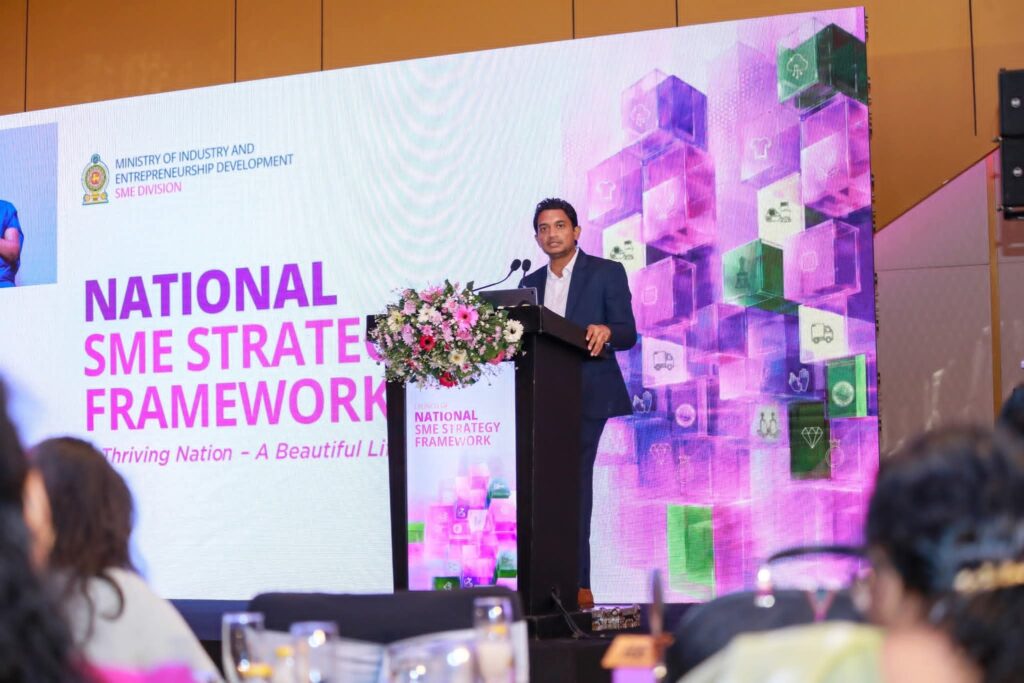
Deputy Minister Chathuranga Abeysinghe acknowledged that fragmented policymaking had failed SMEs for decades and insisted the new framework was designed to unify institutions and create a more coordinated support system.
International development agencies including the World Bank, Asian Development Bank, and Australia Aid have backed the initiative, raising hopes that technical expertise and external oversight could improve execution.
Still, for thousands of struggling entrepreneurs across Sri Lanka, confidence will depend less on speeches and more on whether promised loans, grants, market access, and recovery assistance finally materialise.
Until then, many SMEs say the Government continues to “talk the talk” while failing to truly “walk the talk.”
By a Special Correspondent