




The trial concerning the human immunoglobulin and rituximab drug scam, which has been proceeding five days a week for nearly a year, is currently exposing the severe loopholes within Sri Lanka’s state administrative apparatus to the public.
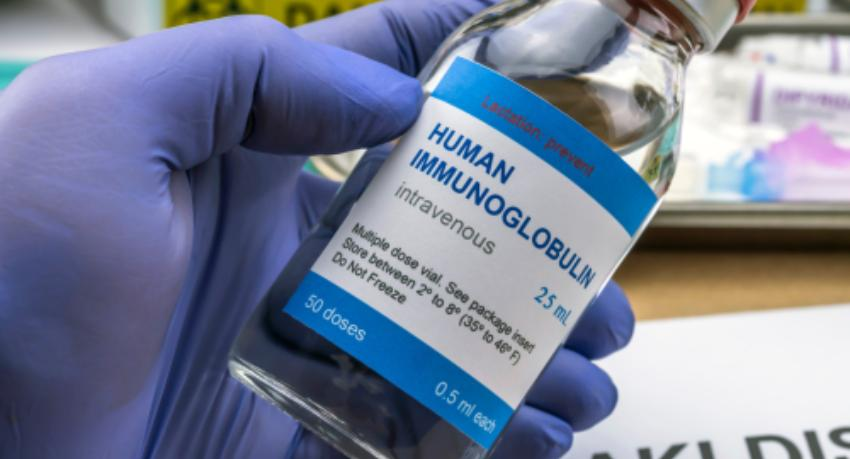
Heard before a three-member High Court bench comprising High Court Judge Priyantha Liyanage (Presiding Judge), Viraj Weerasuriya, and Thilakarathne Bandara, this case has transcended a mere individual fraud, evolving into a tragedy of systemic dysfunction that has engulfed the entire establishment.
The testimony provided by the Additional Secretary (Administration) of the Ministry of Health, Upeksha Shammi Kumari Denawatta, during the hearing on May 13th, along with the ensuing legal arguments, clearly demonstrate that behind the bureaucratic facade of state institutions lies a void—a culture of evading responsibility and shifting the blame onto others.
The series of questions posed to the witness by Deputy Solicitor General Lakmini Girihagama was less a standard examination by the prosecution and more a diagnostic check on the very heartbeat of the state procurement process. The conduct of the committee, which purportedly evaluated a massive list of 285 drugs within a brief span of just two days, was heavily scrutinized.
The witness confessed before the court that she had no clear recollection of what constituted items one, two, and three on the priority list, nor of the exact quantity of drugs considered. This is where the tragedy of the administrative process begins. It was established that during the document review, the committee members did not possess the complete tabulation, and decisions were made relying solely on handwritten notes and the verbal advice of technical officers. This represents one of the darkest facets of modern public administration: the process of handling files and signing documents has become a mere symbolic ritual, with no one taking ownership of the actual content or bearing the responsibility.
Several dramatic and critical moments unfolded throughout the trial. In particular, the courtroom fell dead silent when the witness was questioned regarding anti-cancer drugs and essential vaccines.
“Do you know whether that drug is a tablet, a solution, or a capsule?” the Deputy Solicitor General asked directly. The witness’s response of “No” calls the foundation of the entire evaluation process into question.
It is astonishing that when evaluating drugs directly linked to human lives and funded by billions of rupees in public money, the committee members did not even know the basic nature of the drug, its country of origin, or what the Waiver of Registration (WOR) certificate—which verifies its quality—even entails.
They had all operated under the illusion created by “technical authorities” such as Dr. Jayanath, Dr. Sudarshana, and Additional Secretary Solomans.
The witness’s statement that she lacked the capacity to act independently in decision-making and had signed off solely on the “trust” that the technical officers were acting correctly and in good faith, vividly illustrates the tragic dependency inherent in the administrative structure.
The verbal clashes between the defense counsels and the prosecution during this trial also added a new dimension to the proceedings. Attorney-at-Law Amitha Ariyaratne, representing the eleventh accused, raised strong objections to the Deputy Solicitor General’s repeated use of the suffix “wath” (meaning “even,” as in: “Didn’t you even have an understanding?”) when framing questions during the examination of evidence.
He argued that this forced the witness into a corner, compelling a “yes” or “no” answer, which hindered a fair examination of the evidence. The Presiding Judge accepted this argument and instructed the prosecution to rephrase the questions by removing the contentious word, a move that exemplifies the delicate balance of the legal process.
Furthermore, in the face of objections raised by Attorney-at-Law Rahul Jayathilake and President’s Counsel Priyantha Nawana, appearing for the ninth and tenth accused respectively, the bench decided to postpone certain questions until the cross-examination stage, thereby further intensifying the technical and legal complexity of the case.
Ultimately, this trial report and the surrounding sequence of evidence reveal to us not merely a story of a few corrupt individuals, but the narrative of a completely dysfunctional, unaccountable administrative culture. Cabinet memoranda, emergency procurement committees, and evaluation boards have become mere shields used by officials to evade their responsibilities. Against a backdrop where looking at information on a computer screen and signing scraps of handwritten paper has become state policy, the occurrence of such disasters is no coincidence.
However important it is to bring individuals to justice, the space for such frauds will never diminish as long as this blind administrative mechanism—which makes decisions baselessly, relying solely on the advice of others—is not uprooted and restructured. This case is proving day by day that the true culprit is not only in the dock but also at the bureaucratic desk, signing documents without a shred of conscience.