




(Special Legal & Investigative Report – Hari Deshaya)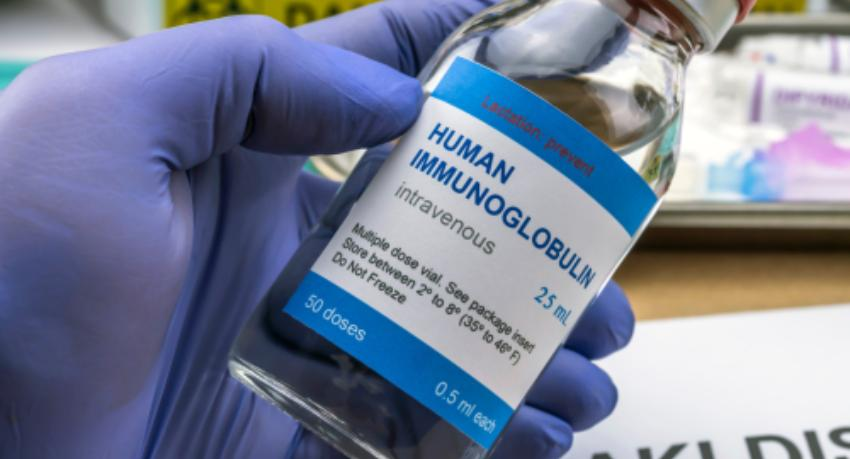
The procurement of substandard ‘Immunoglobulin’ and ‘Rituximab’—a scandal that has convulsed Sri Lanka’s health sector and allegedly siphoned off over Rs. 144.4 million in public funds—is currently facing intense judicial scrutiny. As new revelations surface daily from this labyrinthine trial, a pivotal question emerges: Is this merely a case of political graft, or does it signify a catastrophic systemic failure rooted in the bureaucratic dereliction of the state’s administrative machinery?
On May 11, 2026, proceedings before the Permanent High Court Trial-at-Bar—presided over by High Court Judge Priyantha Liyanage, alongside Judges Viraj Weerasuriya and Thilakarathne Bandara—transcended a routine court report. It served as a mirror reflecting the illusory nature of the country’s bureaucratic order. While politicians may dictate policy via Cabinet memoranda, it is the senior bureaucrats who vest these decisions with the veneer of legality. The courtroom meticulously unmasked the collapse of this administrative facade.
Prosecutorial Lapses and the Defense’s Legal Offensive
As the trial commenced, the Deputy Solicitor General (DSG) initiated the re-examination of the 150th prosecution witness, Kalpana Tharindi Dabare, a Development Officer at the Ministry of Health. From a strict jurisprudential standpoint, introducing new material during re-examination that was omitted during the examination-in-chief runs contrary to standard evidentiary procedures. Consequently, President’s Counsel Priyantha Nawana, representing the 10th accused, alongside counsel for the 9th accused, raised vehement objections.
Relying on the tenets of the Code of Criminal Procedure, the defense argued that attempting to elicit omitted facts at this stage would cause severe prejudice to the accused.
At this juncture, a concession by the DSG raised profound questions regarding the prosecution’s investigative rigor. She informed the court that a critical procurement document, designated as ‘6v6’, was not in the prosecution’s possession during the initial examination. It had been tendered to the court by the 6th accused. In a high-stakes trial involving the misappropriation of hundreds of millions, over 350 witnesses, and nearly 300 case productions, the fact that the state’s prosecuting and investigating arms were blind to a vital procurement document at the preliminary stage highlights a glaring investigative lapse.
Nevertheless, the Trial-at-Bar’s resolution of the impasse demonstrated a steadfast commitment to the rule of law. The bench ruled equitably: since the defense had introduced the matter during cross-examination, the prosecution was entitled to seek clarification. Emphasizing that “the court requires all evidence” to dispense justice, the presiding judge allowed the questioning, while concurrently granting the defense the right to further cross-examination, thereby maintaining the balance of the scales.
“No Knowledge… Signed on Trust”: The Zenith of Bureaucratic Apathy
The trial’s most dramatic, yet tragic, phase unfolded when the 184th witness, Shammi Kumari Denawatta, Additional Secretary (Administration) of the Ministry of Health, took the stand. In late 2022, she was appointed by the Health Secretary to chair the crucial Technical Evaluation Committee (TEC) tasked with procuring life-saving drugs under the Indian Credit Line.
Her exchange with the DSG was a damning indictment of the Sri Lankan administrative apparatus.
- DSG: “Did you possess the technical expertise to conduct such an evaluation?”
- Witness: “Absolutely not, My Lord.”
The appointment of an official bereft of technical knowledge regarding medical supplies—who admitted she had never previously encountered a Waiver of Registration (WOR) certificate—to spearhead a committee making multi-million rupee procurement decisions borders on administrative farce.
When probed on how she authorized these critical documents, her response was deeply unsettling. She testified that her scrutiny was based entirely on information provided by the medical officers on the committee—Dr. Jayanath Buthpitiya, Dr. Sudarshana, and Assistant Director Mrs. Solomans—and her “assumption” of their professional integrity.
“This evaluation committee consisted of experienced officers. I assumed they were performing their duties honestly. I had no reason to doubt that each officer was executing their assigned responsibilities correctly,” she informed the court.
Bureaucratic Blindness and Criminal Liability
Analyzed through a legal and administrative lens, it is precisely this ‘blind trust’ that creates the permissive environment for high-level corruption. A chairperson is not appointed to act as a mere rubber stamp, but to provide vigilant regulatory oversight. When a senior administrative officer testifies under oath that she was oblivious to how data was entered into the system, and that she approved minimum bid prices based solely on subordinate advice, it exposes ‘accountability’ within the state machinery as a mere illusion.
Furthermore, her testimony revealed a startling legal anomaly: even after the State Ministry of Drug Regulation was officially abolished in April 2022, it continued its operations as a division of the Health Ministry based merely on a directive from the Department of Management Services. This exposes the gaping legal loopholes and arbitrary practices that plague the administrative structure.
The Burden of Proof and the Judicial Road Ahead

The tragedy illuminated by this testimony frames the core legal challenge of the trial. The prosecution bears the heavy burden of proving the 13 indictments of criminal conspiracy and misappropriation against the 12 accused, including former Health Minister Keheliya Rambukwella. In criminal jurisprudence, establishing both the guilty act (actus reus) and the guilty mind (mens rea) beyond a reasonable doubt is imperative. The complex task now before the Permanent Trial-at-Bar is determining whether this extreme administrative negligence constitutes a calculated ‘criminal conspiracy’, or if it is merely an unprecedented level of bureaucratic incompetence.
This case has laid bare how administrative officers—whether by complicity or sheer apathy—facilitate political corruption under the guise of statutory compliance. Despite the investigative hurdles faced by the prosecution, the Trial-at-Bar’s impartial and meticulous approach to evidence indicates that those who gambled with public lives and state coffers will face the full rigor of the law. As the trial proceeds, the veil protecting this blind bureaucracy is certain to be lifted further.