




The Port of Colombo remains one of South Asia’s busiest maritime gateways, but industry observers warn that rising political interference and weak institutional management under the current JVP-led NPP Government could threaten the port’s long-term sustainability and regional competitiveness.
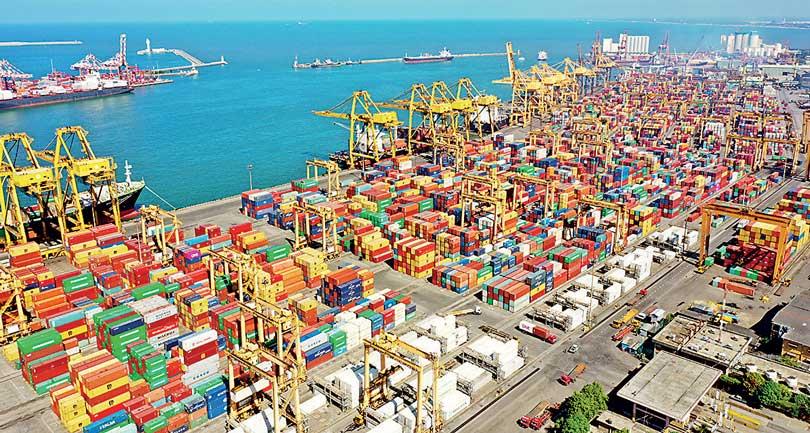
Official figures indicate that Colombo handled more than 761,000 TEUs in April 2026, recording a 22 percent year-on-year increase. Cumulative throughput during the first four months of the year exceeded 2.9 million TEUs, confirming the port’s continued operational importance along the East-West shipping route. In 2025 alone, the Port processed approximately 8.2 million TEUs, maintaining its standing among the region’s leading container hubs.
Despite these positive indicators, maritime analysts argue that the growth largely reflects Colombo’s inherited strategic location rather than effective policy innovation or administrative excellence under the current Government. Concerns are growing that politicisation within the Sri Lanka Ports Authority is beginning to weaken operational efficiency at a time when regional rivals are aggressively modernising.
The Port of Colombo’s business model depends heavily on transhipment cargo, which accounts for more than 80 percent of total operations. Much of this cargo originates from India, making Colombo highly vulnerable to changing regional shipping patterns and competitive pressure from expanding Indian deep-water ports. Experts warn that even minor disruptions in service reliability or operational efficiency could encourage shipping lines to divert cargo elsewhere.
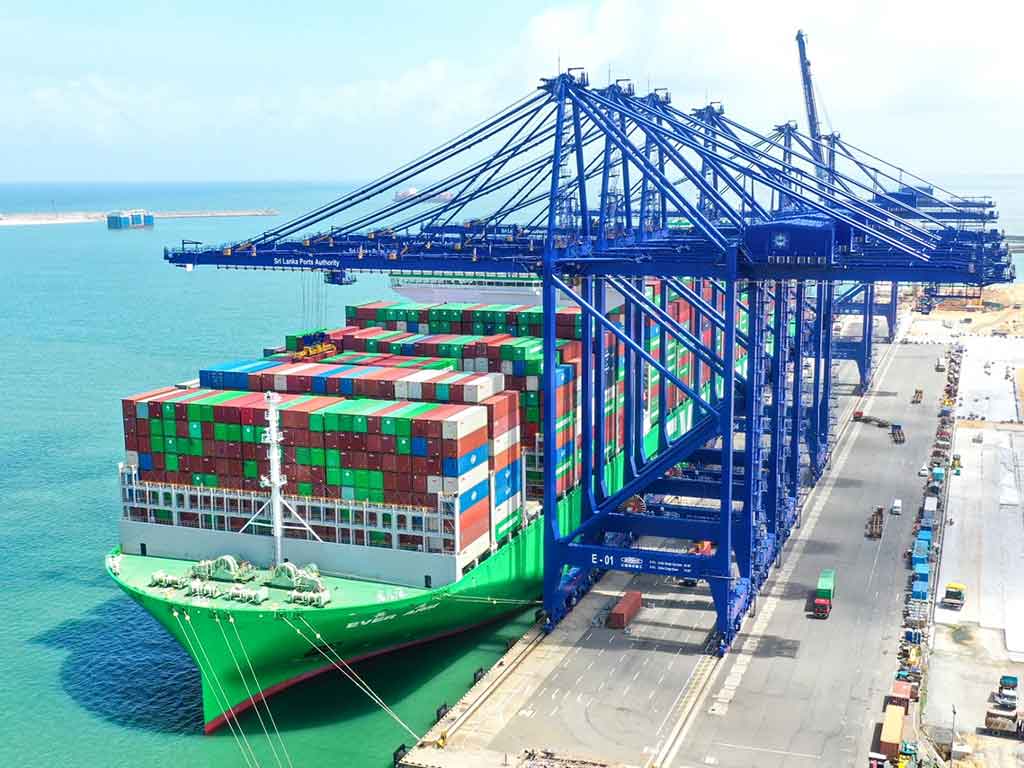
Industry sources point to delays in procurement, uncertainty in project implementation, and politically motivated decision-making as emerging threats to investor confidence. While Phase I operations at the Colombo East Container Terminal are underway using newly installed gantry cranes, the completion of remaining phases has reportedly faced administrative bottlenecks and slow approval processes.
Similarly, the planned expansion of the West Container Terminal remains crucial for future capacity growth. The proposed second phase is expected to increase annual handling capacity by more than 3 million TEUs. However, shipping stakeholders fear that political instability and inconsistent governance may discourage international investors and strategic partners needed to finance and operate large-scale terminal developments.
Analysts further argue that the Government’s increasing influence over operational management risks undermining the professional culture historically associated with the Port sector. Modern maritime logistics require commercially driven leadership, technological adaptation, and stable regulatory frameworks. Excessive political involvement, they say, creates uncertainty in an industry where reliability and efficiency determine global competitiveness.
The Colombo South Port breakwater project, developed at a cost of nearly $400 million, previously positioned the Port to handle ultra-large container vessels and compete with major regional hubs. Yet infrastructure alone cannot guarantee future success. Ports today compete through automation, turnaround speed, digital logistics systems, and investor confidence.
The forthcoming National Port Master Plan funded by the Asian Development Bank is expected to outline long-term development priorities for Sri Lanka’s commercial ports. Nevertheless, maritime economists caution that strategic blueprints will have limited value unless accompanied by institutional independence and professional governance reforms.
As neighbouring ports rapidly expand capacity and attract global shipping alliances, Colombo faces a decisive moment. Continued growth in cargo volumes may offer temporary reassurance, but unless management credibility and operational professionalism are restored, the Port risks losing its competitive advantage in the increasingly contested Indian Ocean maritime sector.
By a Special Correspondent