




By a special correspondent
Sri Lanka’s tea industry, a key pillar of the national economy, is facing mounting pressure as geopolitical tensions in the Middle East disrupt trade routes and weaken export performance. According to Asia Siyaka Commodities, escalating conflict involving the United States, Israel, and Iran has significantly affected tea exports, particularly following military developments in late February.

The situation worsened with the temporary closure of the Strait of Hormuz, a vital global shipping lane. This disruption had immediate consequences for Sri Lanka’s tea shipments. Exports in early March declined sharply, with some consignments rerouted and others partially offloaded before reaching their destinations.
Export data highlights the scale of the impact. March tea exports fell by 16% year-on-year to 19.7 million kilograms, while total exports for the first quarter dropped to 60.3 million kilograms, compared to 63.2 million kilograms a year earlier. These figures reflect the vulnerability of Sri Lanka’s tea sector to external shocks, particularly those affecting maritime trade.
Despite the decline in volume, there has been a notable shift in export composition. Value-added products such as tea packets, tea bags, and instant tea now account for nearly 60% of exports, up from 56% last year. This indicates a gradual move toward higher-value products aimed at protecting revenue during periods of instability.
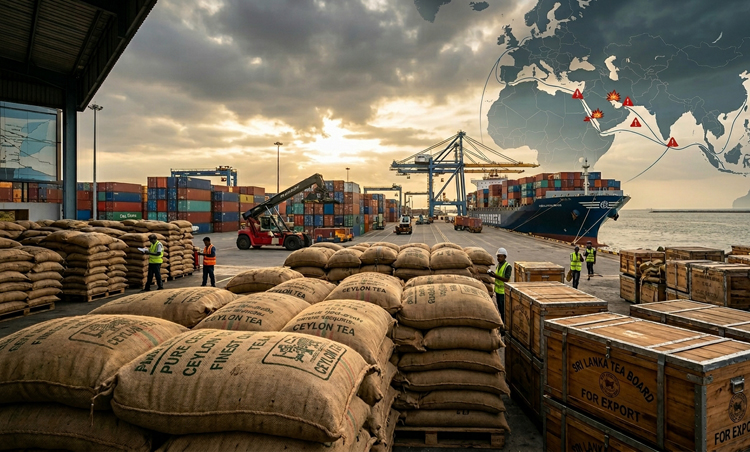
However, overall earnings tell a more concerning story. Although rupee earnings remained steady at Rs. 109 billion—helped by currency depreciation export revenue in dollar terms fell by 5% to $351 million, marking a three-year low. The average export price also declined slightly, reflecting weaker global demand and increased logistical challenges.
Shipping costs have risen sharply due to higher freight charges and insurance premiums, further reducing profit margins. Exporters have also faced delays and additional expenses linked to rerouting shipments, making Sri Lankan tea less competitive in key international markets.
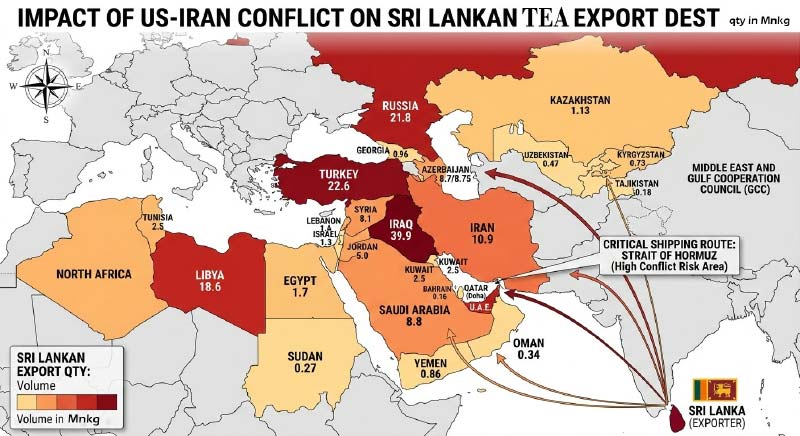
The regional impact has been uneven. Exports to the Middle East and North Africa declined significantly, with the United Arab Emirates recording a steep drop in imports. Meanwhile, shipments to Iraq—Sri Lanka’s largest tea buyer remained relatively stable, though slightly reduced.
In contrast, exports through Turkey increased significantly, suggesting that exporters are actively seeking alternative routes and markets to offset losses in the Gulf region. However, these gains are unlikely to fully compensate for disruptions in traditional markets.
The broader outlook remains uncertain. Sri Lanka’s tea industry must adapt to an increasingly unpredictable global environment by diversifying markets, strengthening logistics, and expanding value-added production. Without these measures, the sector risks prolonged instability as geopolitical tensions continue to influence global trade.