




Prosecution’s Case in Substandard Medicine Trial Falters Under Defense Scrutiny
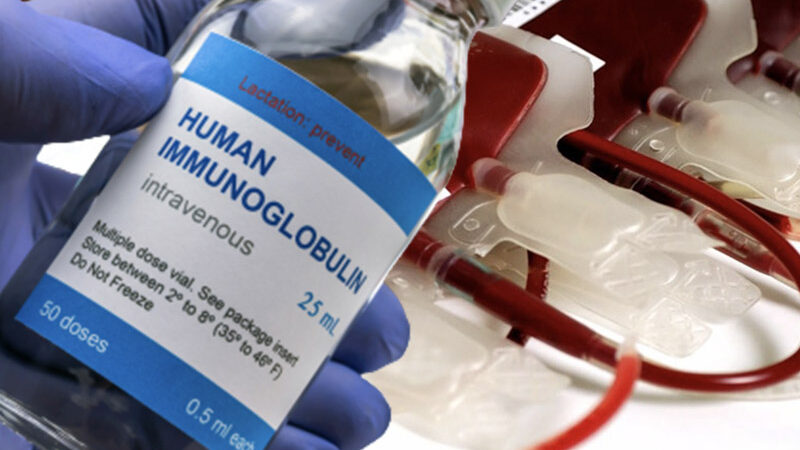
Defense counsels successfully mounted a formidable challenge against the integrity of the investigation process in the case filed against 12 accused, including former Health Minister Keheliya Rambukwella, concerning the procurement of substandard Human Immunoglobulin and Rituximab. During the trial held before the Colombo Permanent High Court Trial-at-Bar—comprising Justices Priyantha Liyanage (President), Viraj Weerasuriya, and Thilakaratne Bandara—severe procedural flaws in the prosecution’s investigation were exposed through the cross-examination of the primary investigating officer, Criminal Investigation Department (CID) Inspector of Police (IP) Eranga Prabhash Laksiri.
Representing the 8th Accused, former Health Minister Keheliya Rambukwella, Attorney-at-Law Nayantha Wijesundara rigorously scrutinized the circumstances surrounding his client’s arrest. During the cross-examination, the witness conceded that the investigation had not yielded any evidence to prove that the four specific files presented to the court had ever been forwarded to Mr. Rambukwella.
- Defense Counsel: “You stated that all these files were obtained from the 10th Accused?”
- Witness: “Two of those files were obtained on December 19, 2023, while the remaining files were acquired pursuant to an order issued by the Maligakanda Magistrate’s Court.”
- Defense Counsel: “Was it revealed whether a single one of these files had been forwarded to the 8th Accused?”
- Witness: “It was revealed that the annexures related to the Cabinet Memorandum were forwarded to him.”
- Defense Counsel: “Was it revealed that these specific files were forwarded to the 8th Accused?”
- Witness: “It was not revealed that these files were forwarded. However, it was established that the Cabinet Memorandum and its relevant annexures were directed to him.”
Furthermore, it was revealed in court that prior to his arrest on February 2, 2024, the CID had recorded a statement from him for approximately 11 hours without forewarning him that he was, in fact, a suspect in the matter.
- Defense Counsel: “You stated that the 8th Accused was arrested at 8:00 p.m. on February 2, 2024.”
- Witness: “The arrest was executed at the Criminal Investigation Department.”
- Defense Counsel: “You also mentioned that a statement was recorded from him for 11 hours prior to that.”
- Witness: “Statements were recorded prior to the arrest.”
- Defense Counsel: “Did you inform him at that juncture that he was a suspect?”
Witness: “He was questioned in relation to the investigation. He was not informed of it at that time. Statements were recorded after presenting him with documents dated October 10, 2023. The statement was recorded based on the Cabinet Memorandum and facts uncovered during the investigation.”
- Defense Counsel: “He was not under custody at that time, was he? He was not a suspect when the statement was being recorded?”
- Witness: “The arrest was executed based on the facts that surfaced during the investigation.”
- Defense Counsel: “Did you question him by presenting documents?”
- Witness: “The statement was recorded specifically regarding his conduct concerning those documents. Following the verification of those facts, he was arrested at 20:00 hours.”
Although the witness claimed the arrest was executed pursuant to written instructions allegedly issued by then-Attorney General Sanjay Rajaratnam, the Deputy Solicitor General raised fierce objections when the Defense Counsel questioned the authenticity of the signature on the said document. The prosecution maintained that defense questions regarding a signature cannot be entertained once the Attorney General has issued directives.
The legal foundation of the charges framed against the 11th Accused, Dr. Thusitha Sudarshana, was heavily scrutinized by Attorney-at-Law Amitha Ariyaratne. It was revealed in court that Dr. Sudarshana, who had been in the United Kingdom on a legally approved two-year study leave, had voluntarily returned to Sri Lanka at his own expense and appeared before the CID 14 months prior to the completion of his postgraduate studies upon learning of the ongoing probe.
The investigators’ failure to locate a specific duty list justifying the charges against him drew severe criticism. The witness was compelled to admit that the investigation relied on an outdated duty list issued in 2007, and investigators found no evidence to suggest that the respective officer had ever accepted or signed such a duty list.
The Defense leveled a strong accusation against the CID for selectively analyzing telephone records. The prosecution drew heavy fire for entirely neglecting to investigate the 163 telephone calls exchanged between the 1st Accused and Priyantha Kasturisinghe, the Stock Controller of Warehouse No. 7. The witness justified this omission by stating that the officer was overseas, hence a need to investigate did not arise. Similarly, investigators failed to obtain a statement from Sathish Kumara, the individual responsible for uploading procurement data to the computer system, citing his absence from the country. The Defense Counsel strongly questioned the impartiality and completeness of an investigation that bypassed such critical personnel.
- Defense Counsel: “It was reported in mainstream news recently that there is a severe medicine shortage at the cancer hospital. Are you aware of this?”
- Witness: “I do not have time to watch the news.”
- Defense Counsel: “Are you suggesting that CID officers do not watch the news? Are you oblivious to the fact that 125 essential medicines are completely out of stock and 65 are in critical shortage at the cancer hospital?”
- Witness: “I am unaware, My Lord.”
- Defense Counsel: “You conducted an investigation. Every single factor must be taken into consideration during a criminal probe. Failing to do so can result in a grave miscarriage of justice.”
- Witness: “That is correct, My Lord.”
Concluding the cross-examination, responding to questions raised by the Deputy Solicitor General representing the prosecution, the witness acknowledged that a sum of Rs. 44 million had been disbursed to the supplier by September 2023, despite adverse complications being reported regarding the drugs in question. Crucially, he further conceded that the investigation uncovered no evidence indicating a genuine medical necessity to procure these drugs under emergency procurement protocols.
The Defense emphatically asserted that this complex investigation, involving high-ranking officials managing vast administrative responsibilities, was constructed on mere conjectures and hypothetical premises. The Defense Counsels strongly proposed to the court that the investigation was exceptionally weak, riddled with misleading information, fundamentally incomplete, and had caused severe prejudice to the accused. Although the witness denied these allegations, the rigorous cross-examination laid bare multiple critical vulnerabilities within the prosecution’s evidence before the court.