




The disclosure of a list of prominent individuals in Parliament by Minister Bimal Rathnayake on October 8 has triggered questions over the evidence underpinning corruption allegations, the responsibility of public officials making such disclosures, and the safeguards required to protect the reputations of individuals who have not been found guilty of wrongdoing.
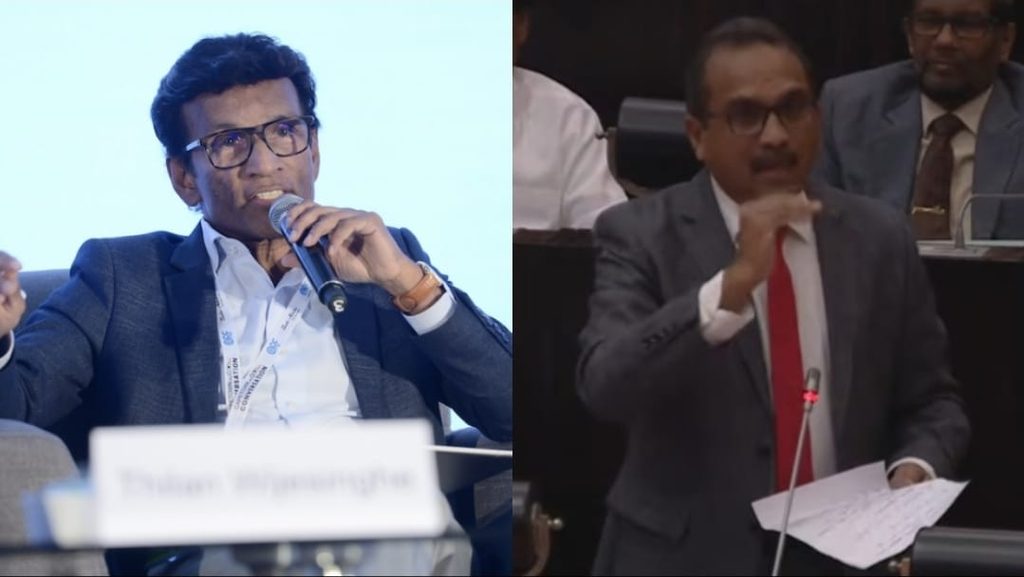
Among those named was former public-private partnership official Thilan Wijesinghe, who categorically denied the allegations in a statement issued on October 9. His response has brought the issue into sharper focus, particularly over whether the information presented to Parliament clearly identifies the alleged misconduct, the relevant dates and the legal or investigative status of each individual named.
According to reports cited in the supplied material, Rathnayake’s parliamentary disclosure connected Wijesinghe with alleged violations of anti-corruption legislation relating to the award of State development project contracts. However, Wijesinghe has challenged the implication, arguing that the reported allegations appear to concern 2010, when he was not holding public office but serving as Group Managing Director of Overseas Realty Ceylon PLC.
That distinction raises an important question requiring clarification: what specific public decision, contract or official intervention is alleged to have involved him, and what documentary evidence supports the allegation?
Wijesinghe has stated that no legal case is currently pending against him in relation to the allegations and that no State law enforcement agency has requested a statement from him on the matter. He has also reportedly contacted the Minister’s office seeking clarification.
These claims do not, by themselves, establish whether an allegation is true or false. Equally, the absence of a pending case cannot reasonably be treated as proof of wrongdoing. The central issue is whether the allegations can be substantiated through verifiable records and subjected to an appropriate investigative process.
Wijesinghe has also pointed to his subsequent role as the first chairman of the National Agency for Public Private Partnership from 2017 to 2019, which he says he performed on an honorary basis without State remuneration. While that account forms part of his defence, the immediate controversy concerns the precise conduct attributed to him and its connection to the alleged violations.
The episode also revives scrutiny of his earlier tenure at the Board of Investment. In March 2001, he resigned as BOI chairman and director general after the independent Bribery Commission initiated court proceedings concerning allegations that he solicited a US$1 million bribe linked to approval of a flour-mill project. He maintained his innocence at the time. The historical proceedings must be distinguished from the current allegations, and no conclusion about either should be drawn without examining the relevant legal records and outcomes.
The wider institutional concern is whether parliamentary disclosures about alleged corruption are accompanied by sufficient particulars to permit public scrutiny without prejudging guilt.
For the Government, the credibility of an anti-corruption campaign depends not simply on naming individuals but on demonstrating that allegations are investigated impartially, evidence is disclosed where legally appropriate, and due process is respected.
Rathnayake’s disclosure therefore requires clear follow-up: identification of the specific allegations, clarification of the evidence and disclosure of the status of any investigation. Without such information, a list intended to strengthen accountability risks generating more questions than answers.