




What began as simmering tensions inside Sri Lanka’s most overcrowded prison has exploded into a political crisis that is now threatening the credibility of the government’s promise of “system change.” The Negombo Prison bloodbath, which left 28 dead, more than 100 injured and a key correctional facility virtually destroyed, has exposed glaring failures of leadership, delayed decision-making and an apparent inability to respond swiftly to repeat warning signs.

The parliamentary Opposition has now moved a No-Confidence Motion against Justice Minister Harshana Nanayakkara, accusing him of dereliction of duty and administrative paralysis that allowed one of the country’s worst prison tragedies to unfold. The motion argues that the minister failed to ensure proper prison management despite longstanding warnings over severe overcrowding, staff shortages, organised criminal activity and deteriorating security.
The Negombo Prison, designed to accommodate around 650 inmates, was reportedly housing nearly 2,400 prisoners when rival drug trafficking gangs unleashed two days of unprecedented violence on July 5 and 6. Eight prison officers and 20 inmates were killed, while dozens more suffered serious injuries. The scale of the destruction has forced authorities to close the prison after declaring it a crime scene.
What has drawn increasing criticism, however, is not only the riot itself but the government’s response. Since the violence erupted, the Justice Minister has issued a succession of explanations and controversial public statements that critics say have failed to answer the central question: why was decisive action not taken before the situation spiralled beyond control?
Although the minister has publicly accepted responsibility as the Cabinet minister in charge, he has refused to resign. Opposition MPs argue that responsibility without accountability has little meaning when 28 lives have been lost under a ministry repeatedly warned about dangerous prison conditions.
Instead, the government has found itself scrambling to contain the fallout. Through gazette notifications issued only after the tragedy, the administration has taken over the old Bogambara Prison premises and the Mahamodara Hospital complex to provide temporary accommodation for transferred inmates as prison congestion reached crisis levels following the closure of Negombo Prison.
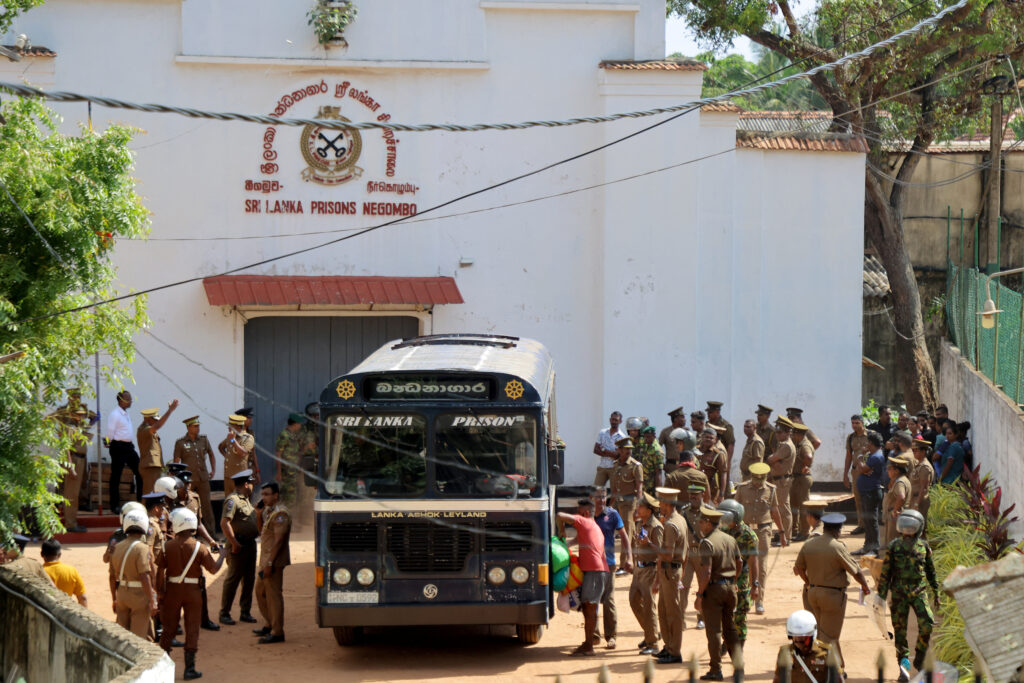
The emergency takeover of these state properties has raised fresh questions over why contingency plans were implemented only after a disaster that many prison experts insist was foreseeable. Critics argue that had alternative accommodation, prisoner transfers and congestion relief measures been introduced months earlier, the deadly confrontation might have been prevented or significantly contained.
The crisis has since widened beyond Negombo. Allegations that two transferred inmates died under suspicious circumstances in separate high-security prisons have prompted investigations by the Human Rights Commission of Sri Lanka, while the United Nations Human Rights Office has described the unfolding situation as “deeply alarming,” adding international pressure for an independent and transparent inquiry.
Cabinet has appointed a committee headed by retired Supreme Court Judge Priyanka Fernando to investigate the causes of the riot, while the government has announced plans to recruit prison personnel, accelerate forensic examinations and expand community correction programmes to reduce overcrowding.
Hitherto these reforms arrive only after irreversible damage has been done.
For the Opposition, the tragedy is no longer simply a prison riot but compelling evidence of ministerial failure. Their No-Confidence Motion contends that years of ignored warnings, bureaucratic inertia and delayed executive action culminated in a preventable national disaster. Whether Parliament agrees or not, the Negombo Prison massacre has become a defining test of ministerial accountability, exposing the high human cost when governance responds only after catastrophe strikes.