




The United Arab Emirates is deepening its economic engagement with Sri Lanka, signalling renewed confidence in the island’s strategic location amid growing competition for influence in the Indian Ocean. Fresh discussions between Sri Lankan Trade Minister Wasantha Samarasinghe and UAE Ambassador Khaled Nasser Al Ameri have focused on expanding trade, maritime cooperation, aviation partnerships and a possible bilateral trade pact expected to reshape commercial relations between the two countries.
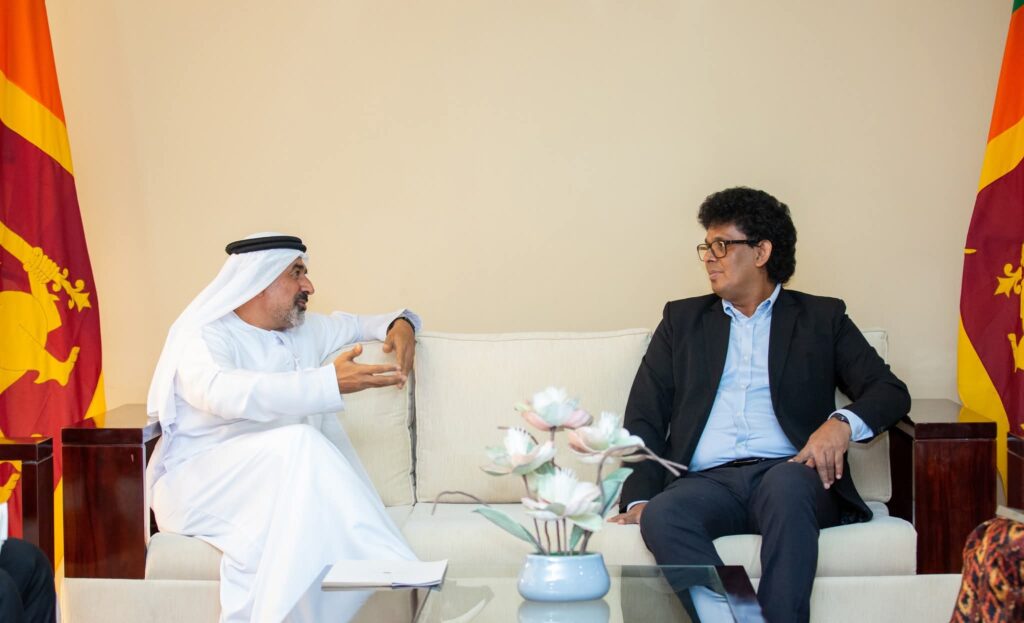
Bilateral trade between Sri Lanka and the UAE has now reached nearly US$ 1.5 billion, underlining the Gulf state’s growing role in Sri Lanka’s external trade sector. The UAE currently stands as Sri Lanka’s seventh-largest export market and third-largest source of imports, reflecting a relationship that has steadily expanded beyond traditional labour migration and remittances.
The latest talks indicate that Sri Lanka is positioning itself as a logistics and maritime hub capable of attracting Gulf investment at a time when the country is attempting to recover from its worst economic crisis in decades. Government officials are now aggressively marketing strategic assets such as the Port of Colombo and the Port of Trincomalee to foreign investors seeking access to South Asian shipping routes.
Particular attention was given to the interest shown by Abu Dhabi Ports Company in opportunities linked to the Port of Colombo. The development is significant because Gulf-based port operators have increasingly sought strategic footholds across Asia and Africa as part of broader efforts to strengthen maritime trade corridors connecting the Middle East to global markets.
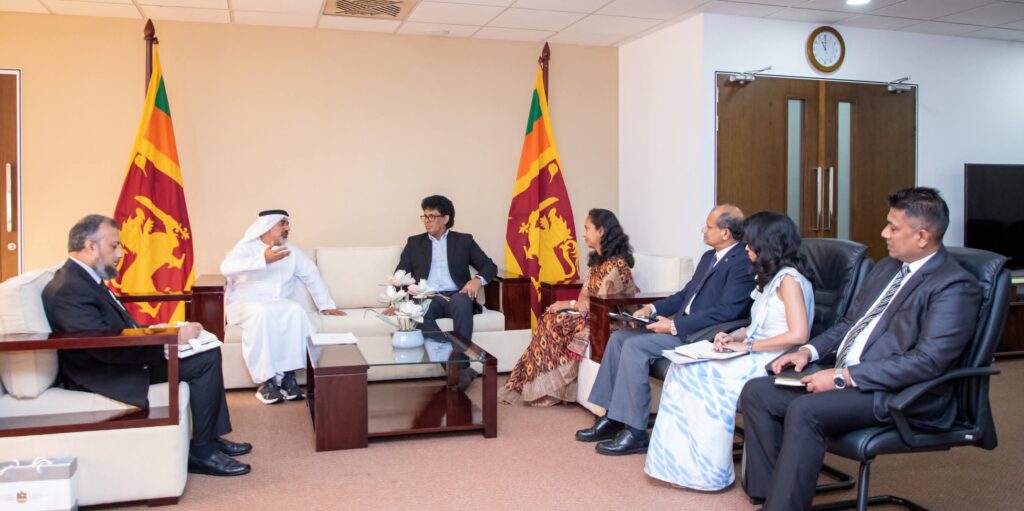
Analysts say the UAE’s growing focus on Sri Lanka is driven by the island’s proximity to major international shipping lanes that handle a substantial share of global container traffic. Colombo Port remains one of the busiest transshipment hubs in South Asia, while Trincomalee is viewed as a future energy and industrial hub due to its deep natural harbour.
The proposed Comprehensive Economic Partnership Agreement (CEPA) between Sri Lanka and the UAE was also discussed extensively during the meeting. Officials believe such an agreement could significantly reduce trade barriers, encourage foreign direct investment and improve market access for Sri Lankan exports including tea, garments, rubber products and gems.
Beyond ports and trade, the aviation sector has emerged as another major area of cooperation. The UAE side reportedly expressed interest in expanding technical collaboration with SriLankan Airlines, particularly in aircraft maintenance, engineering services and aviation support operations.
Industry observers believe such cooperation could help SriLankan Airlines strengthen technical capabilities while generating much-needed foreign revenue through regional maintenance services.
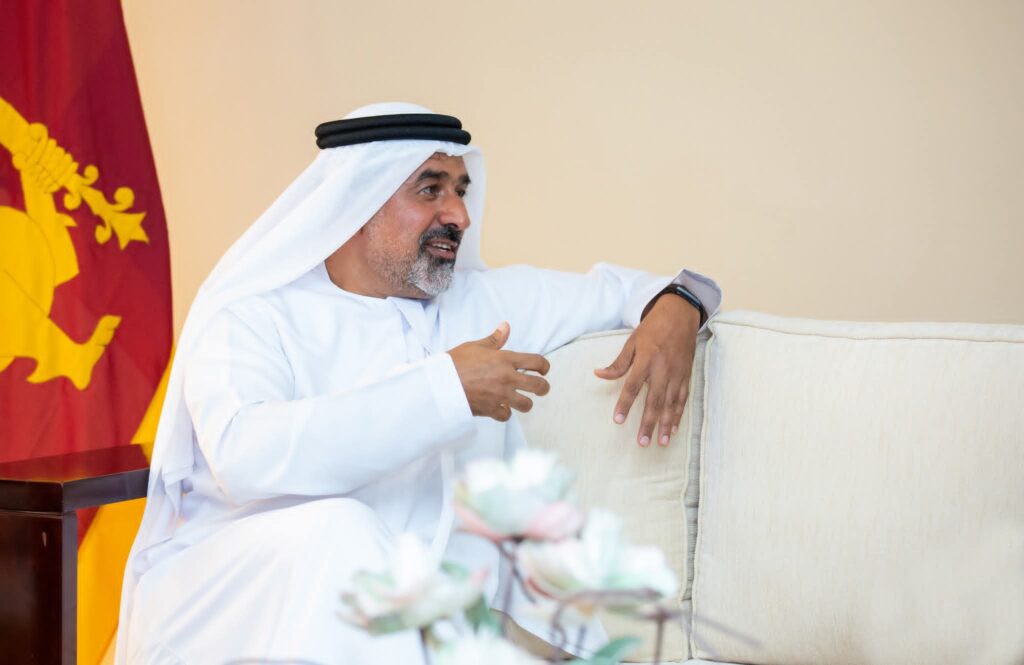
The renewed UAE interest comes as Sri Lanka attempts to diversify foreign investment partnerships while balancing geopolitical interests from India, China and Middle Eastern nations. Economists say attracting Gulf investment into logistics, ports and aviation could provide Sri Lanka with critical foreign exchange inflows and help revive long-term economic growth.
However, experts caution that future agreements must ensure transparency, regulatory safeguards and long-term national benefits as Sri Lanka negotiates strategic infrastructure partnerships with foreign powers.
By a Special Correspondent