




-SPECIAL CORRESPONDENT –
After the election revolution in September 2024, the National Carrier got a new Chairman. The appointment was presented as serious management reform.
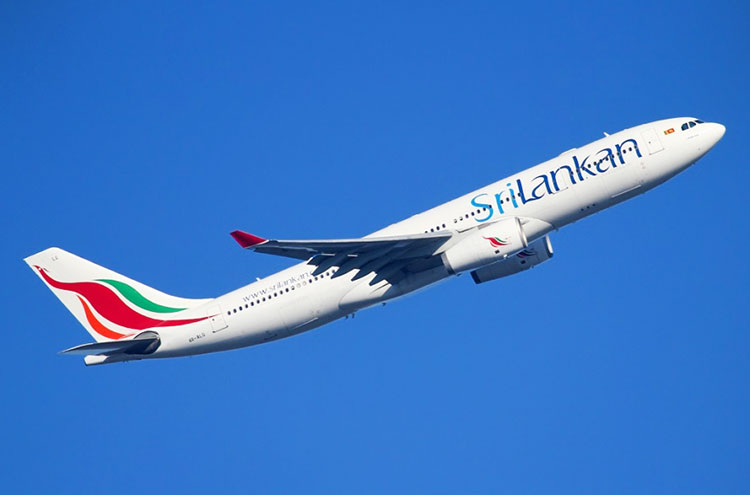
What it may have delivered is one of the most structurally compromised boardroom arrangements in the history of Sri Lankan public enterprise.
The Bald Man, who now chairs the National Carrier, has not severed his commercial ties to The Corporate, one of the country’s most powerful conglomerates. The Corporate runs a dedicated aviation arm that represents Airlines operating in direct competition with the institution he now leads.
This is not a historical association. It is a present and active one.
The Corporate’s aviation division operates as a General Sales Agency, representing Airlines, selling their seats, and growing their market share in Sri Lanka. Some of those Airlines fly to London. Some fly to Singapore. Some fly to Melbourne. The National Carrier flies to all three.
No formal recusal mechanism is known to exist. No Chinese Wall has been disclosed. No protocol explains what the Bald Man does when sensitive competitive data is placed before the National Carrier’s board.
The categories of information available to a sitting Chairman are not trivial.
Route expansion strategy, which new destinations the airline is considering before any public announcement, allows a competitor to establish itself first and lock up ground handling partnerships in advance.
Dynamic pricing data, the floor prices and bulk-seat arrangements that determine whether the National Carrier wins or loses against rival carriers, is precisely what a competitor’s sales agency needs to undercut effectively. Procurement decisions covering ground handling, catering, and maintenance contracts worth millions are areas where a conglomerate with diversified interests benefits from early visibility.
The Bald Man has access to all of this. Where that information travels once it leaves the boardroom has not been examined by any authority.

Sri Lankan law is not silent on this matter. The Anti-Corruption Act contains stricter conflict of interest provisions for public officials than any previous legislation. The Sri Lanka Consumer Affairs Authority Act addresses informational asymmetry in competitive markets. The Public Contracts Act imposes obligations on procurement integrity.
None of these have been invoked. No investigation has been opened. No summons issued.
The Bald Man’s appointment also coincided with active expansion by The Corporate’s aviation arm, including consolidation of representation rights for Airlines directly targeting passenger segments the National Carrier depends on for revenue recovery.
The National Carrier is not a private enterprise absorbing private losses. It carries public debt serviced by Sri Lankan taxpayers. Every strategic disadvantage it suffers, every route it loses ground on because a competitor moved faster or priced sharper, becomes a burden on ordinary citizens.
Standard explanations for the airline’s inability to compete involve fuel costs, fleet age, and bureaucracy. These are legitimate. But they do not address whether the airline has been competing with its strategy visible to those it is trying to beat.
The Committee on Public Enterprises must summon the Bald Man to testify under oath, with specific questions about what information he has accessed at National Carrier board meetings and what mechanisms exist to prevent that information reaching The Corporate’s aviation operations.
CIABOC must assess whether the dual role constitutes a conflict of interest under the Anti-Corruption Act. The commercial relationships are a matter of record.

The Auditor General must conduct a special audit of National Carrier decisions made since September 2024, examining whether any procurement, route, or pricing outcome aligned with The Corporate’s competitive interests.
These are not extraordinary demands. They are the baseline of accountability any government serious about reform must enforce, including against those it has appointed.
If this dual role continues without investigation, the message is unambiguous. Structural conflict of interest is acceptable, provided the individual is well-connected enough.
That would be a direct repudiation of the reform mandate on which this government was elected. It would confirm that the architecture of privilege has survived the change of government, wearing different faces.
The National Carrier’s passengers, its employees, and the taxpayers underwriting its debt are owed a direct answer to one question.
When you sit at the National Carrier’s board table, who do you work for?
Note -
This story is based on documented commercial relationships and publicly observable institutional arrangements. It does not allege the transfer of specific trade secrets. It calls for formal investigation into a structural conflict of interest that has been permitted to operate without scrutiny.