




By a special correspondent
Sri Lanka could face mounting economic pressure as the escalating conflict involving the United States, Israel and Iran disrupts energy markets and trade routes across the Middle East, according to a new analysis by policy research group Arutha Research.
The report warns that the economic fallout for Sri Lanka will largely depend on the duration and intensity of the conflict. A short-lived confrontation lasting only a few weeks may allow global supply chains to stabilise relatively quickly. However, a prolonged regional war could destabilise energy markets and trade flows for years, creating wider economic shocks for import-dependent economies.
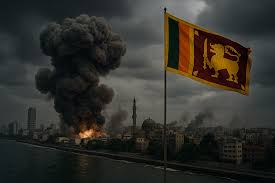
One of the most significant risks involves disruptions to shipping through the Strait of Hormuz, a narrow but vital waterway through which a large share of the world’s energy supplies pass.
Approximately 38 percent of global crude oil shipments, 29 percent of liquefied petroleum gas (LPG), and 19 percent of liquefied natural gas (LNG) transit the Strait annually. According to the report, the temporary closure of the route earlier this month has already unsettled global supply chains and pushed oil prices sharply higher.
Sri Lanka’s heavy dependence on Middle Eastern energy imports leaves the country particularly vulnerable. The United Arab Emirates alone supplies about 38 percent of Sri Lanka’s petroleum imports. Any disruption to shipments from the Gulf could tighten domestic fuel availability.
Officials at the Ceylon Petroleum Corporation have indicated that the country currently holds fuel stocks sufficient for roughly one month.
Electricity generation is closely linked to fuel availability. Oil-based thermal power accounted for around 20 percent of Sri Lanka’s electricity generation in February, meaning any supply disruption could affect the power sector.
The country’s hydropower output is expected to increase during the monsoon season beginning in May, when reservoirs typically generate close to half of the national electricity supply. Coal also remains a key energy source, accounting for roughly 31 percent of electricity production.
Sri Lanka imported about 93 percent of its coal from Russia in 2025. Although Russia is not directly involved in the conflict, global demand for coal could rise if countries shift away from oil, tightening supply in international markets.
Gas imports present another vulnerability. Oman accounted for around 53 percent of Sri Lanka’s LPG imports in 2025, followed by the United Arab Emirates and Saudi Arabia. While Oman is not directly involved in the conflict, shipping disruptions in nearby waters could still create logistical challenges.
Rising energy costs could also spill over into food production and transportation. Although most fertiliser imports come from China and Uzbekistan, about 22 percent originate from Middle Eastern countries.
Sri Lanka’s export sector is also exposed to the region. Around 25 percent of tea exports are shipped to markets including Saudi Arabia, Iraq, the UAE, Iran, Kuwait and Israel, generating about $450 million annually.
Overall, merchandise exports to these countries generate roughly $852 million, equivalent to about seven percent of Sri Lanka’s export earnings.
If the conflict persists, disruptions to these markets could significantly affect export revenue and economic growth.