




In a rare and unprecedented legal move, a sitting judge of Sri Lanka’s apex court, Supreme Court Justice A.H.M.D. Nawaz, has petitioned the Karnataka High Court in Bengaluru, India. The petition seeks a directive compelling Google India to de-index links to allegedly defamatory articles that have circulated online for nearly a decade, arguing they severely damage his reputation.
The Jurisdictional Shift: Why an Indian Court?
A Supreme Court justice seeking legal recourse in a foreign jurisdiction has prompted significant discourse within the legal community. This cross-border litigation is anchored in the fundamental legal maxim: “nemo judex in causa sua” (no one should be a judge in their own cause).
Justice Nawaz’s legal counsel highlighted that filing a defamation suit within the Sri Lankan judicial system—where he currently serves at the highest level—could provoke complex institutional and ethical conflicts. Consequently, the petition was filed in the Karnataka High Court, establishing jurisdiction based on the fact that Google India, the search engine indexing the articles, is headquartered in Bengaluru.

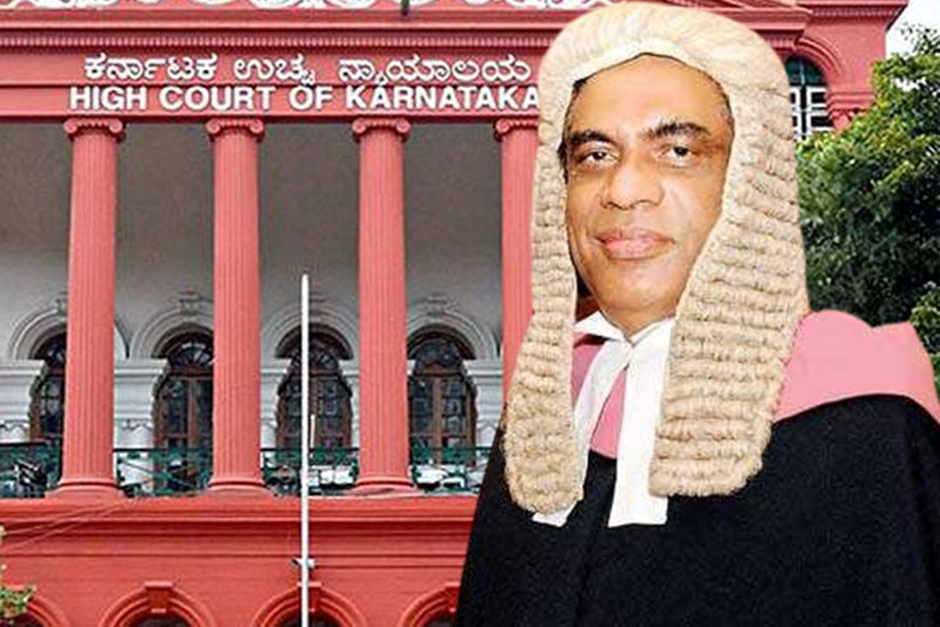
The High Court of Karnataka in Bengaluru, where Justice A.H.M.D. Nawaz has filed a petition seeking directions to Google India to remove links to allegedly defamatory articles.The Defamatory Claims and “Character Assassination”
The legal dispute centers on a series of articles published in 2015 and 2020 by two Sri Lankan web portals: Colombo Telegraph and Lanka eNews.
The publications alleged Justice Nawaz’s involvement in a bribery investigation concerning a state corporation during his tenure as Deputy Solicitor General. Furthermore, the articles criticized his 2020 appointment as the President of the Court of Appeal, made upon the recommendation of then-President Gotabaya Rajapaksa.
Categorically denying the allegations, Justice Nawaz emphasized in his petition that no charges of misconduct have ever been proven against him throughout his extensive judicial career. He asserts that these baseless articles amount to “character assassination” before the international legal community.
Legal Grounds: Article 21 and the ‘Right to Be Forgotten’
The arguments presented in this petition extend beyond standard defamation laws, navigating the complex realm of global digital rights. Justice Nawaz’s legal team has built their case on several critical frameworks:
- Right to Life and Dignity: Invoking Article 21 of the Indian Constitution, which protects the right to life and personal liberty—a fundamental right extending even to foreign nationals.
- International Law: Drawing upon principles enshrined in the International Covenant on Civil and Political Rights (ICCPR).
- The ‘Right to Be Forgotten’: The most striking argument is the invocation of this concept—widely recognized in European data protection laws—requesting the Indian court to order the de-indexing of outdated or defamatory search results.
A Cross-Border Digital Dilemma: Current Status
Prior to this litigation, Justice Nawaz issued legal notices to the publishers and Google in 2023. However, Google responded that it could not remove the links without a valid court order.
This landmark case is poised to test the delicate balance between freedom of expression in the digital age and the cross-border protection of individual reputations. According to reports by The Hindu and The Indian Express, the Karnataka High Court has issued notices to Google India and India’s Ministry of Electronics and Information Technology, granting them until March 16 to file their responses.