




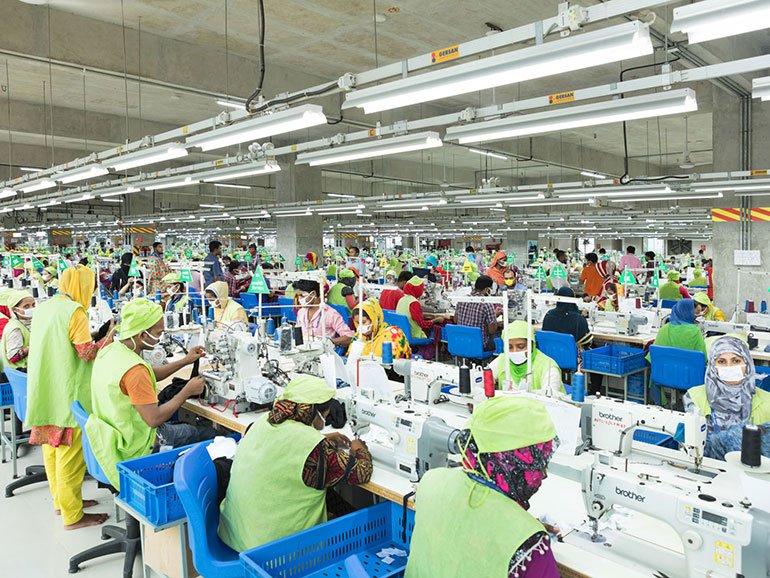
The sudden announcement that MAS Holdings is shutting down two of its prominent factories in Mihintale has sent shockwaves through Sri Lanka’s labor force and economic circles. As South Asia’s largest intimate apparel manufacturer—and a conglomerate widely celebrated as one of Sri Lanka’s most respected corporate entities—MAS Holdings has been a pillar of the local economy for over three decades. Yet, the closure of these facilities leaves thousands of workers, including 2,200 employees at the Methliya plant alone, facing a bleak and uncertain future.

But is this merely a casualty of the global economic downturn, or is there a more complex corporate strategy at play?
The Corporate Narrative: A “Temporary” Setback?
Officially, MAS Holdings has framed this move as a “temporary four-month closure.” The management attributes the shutdown to a significant drop in global apparel orders, citing the economic crisis in the United States, Sri Lanka’s own financial instability, and fluctuating exchange rates.
To mitigate the backlash and maintain its corporate image, the company has offered what it calls “alternatives” to its workforce. Employees at the Methliya plant have been given the option to either transfer to other MAS facilities located in different parts of Sri Lanka or relocate to the company’s factories in Jordan.
The Bitter Reality: Forced Resignation in Disguise
While offering relocation options looks good in a press release, industry experts and labor advocates paint a very different picture. The workforce in Mihintale primarily consists of young women and individuals deeply rooted in their local communities. Their entire lives, families, and support systems are built around this region.
Expecting a rural Sri Lankan factory worker to uproot her life overnight to move to a distant boarding house—or migrate to Jordan—is practically impossible. Critics argue that these “alternatives” are simply a facade; a calculated strategy to force voluntary resignations. By doing so, the corporation can effectively downsize its workforce while minimizing mandatory severance payouts and protecting its public relations image.
Profit Margins Over People?
Economic analysts suggest that the primary catalyst for these closures isn’t a massive drop in orders from giant clients like Victoria’s Secret, Nike, or Polo. The actual culprit is the skyrocketing cost of production in Sri Lanka.
- Surging Operational Costs: Recent astronomical hikes in electricity tariffs, coupled with heavy taxation, have made manufacturing in Sri Lanka increasingly expensive.
- Shifting for Profit: Rather than maintaining local operations at a reduced profit margin, multinational giants often find it more lucrative to divert their existing orders to their own factories in countries with lower production costs, such as Vietnam, Bangladesh, or Jordan.
In this light, the closures appear less like a desperate survival measure against a global crisis, and more like a strategic sacrifice of the local workforce to maximize corporate profitability.
The Political Fallout and Government Inaction
The crisis has not gone unnoticed in the political arena. Opposition Leader Sajith Premadasa recently raised the issue, drawing a sharp contrast between the current situation and the historic “200 Garment Factories” program initiated by former President Ranasinghe Premadasa, which originally empowered rural youth.
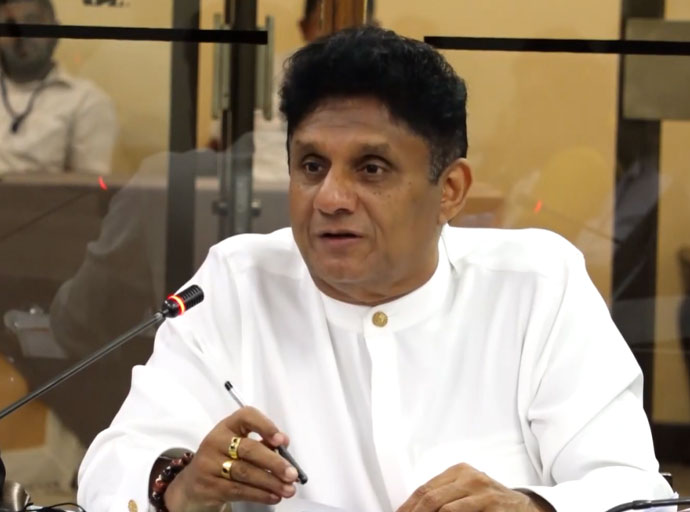
Premadasa criticized the current government on several fronts:
- Hostile Investment Climate: The state has failed to create a conducive environment for investors, ignoring the need for competitive production costs and tax relief.
- Economic Blindness: The government is accused of turning a blind eye to geopolitical shifts and international tax policies, leaving local industries utterly defenseless.
- Loss of Livelihoods: The administration’s inefficiencies and lack of foresight are directly contributing to thousands of citizens losing their primary source of income.
A Looming Threat to the Wider Economy
The shuttering of the MAS factories in Mihintale is not just an isolated corporate restructuring event; it is a glaring red flag for Sri Lanka’s entire manufacturing sector. While corporate management successfully spins the narrative around “alternative employment,” the reality on the ground is that over a thousand families are now staring at extreme financial distress.
If the government and relevant authorities do not intervene immediately to lower production costs and retain these critical industries, the complete collapse of Sri Lanka’s rural manufacturing economy may be inevitable.