




Sri Lanka is confronting a deeply disturbing digital abuse network after public outrage exposed extensive Facebook, Telegram and WhatsApp groups allegedly dedicated to the non-consensual circulation and commercial trading of intimate images involving women and children. What initially appeared to be isolated incidents has now emerged as a wider online ecosystem involving organised groups, anonymous accounts, financial transactions and, in some cases, individuals targeting people they personally know.
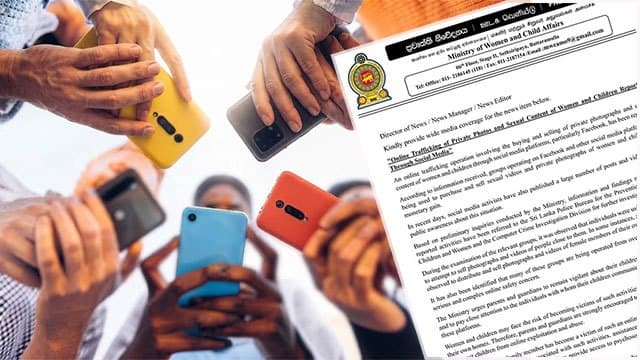
The Government has responded by activating multiple law-enforcement and child-protection agencies. The Ministry of Women and Child Affairs has referred the matter to the Police Bureau for the Prevention of Abuse of Children and Women and the Computer Crime Investigation Division. The National Child Protection Authority has also been requested to pursue criminal action, particularly where minors are involved, under stringent child-exploitation laws.
Investigators are examining the use of existing legislation, including Section 345 of the Penal Code, which addresses sexual harassment and acts that outrage modesty, together with provisions of the Computer Crime Act. The Attorney General’s Department is also being consulted to identify additional legal avenues that could strengthen prosecutions against those operating, administering or participating in the networks.
The investigation is not confined to traditional policing. Sri Lanka Computer Emergency Readiness Team, or SLCERT, is working to dismantle exploitative online groups, while Meta is reportedly cooperating with authorities in efforts to identify anonymous administrators and active participants. This cooperation could prove critical because the anonymity offered by social-media platforms has allowed perpetrators to operate behind fake identities and obscure their real-world locations.
A major obstacle, however, is jurisdiction. Authorities have found that a significant number of malicious groups are operated from overseas, potentially complicating evidence gathering, identification of suspects and prosecution. Cross-border digital investigations require coordination beyond Sri Lanka’s normal policing framework.
Perhaps more alarming are preliminary findings concerning insiders. Investigators have reportedly encountered cases in which perpetrators use fake profiles to distribute or trade images of people they know personally. Some alleged offenders have even attempted to profit from or circulate private images involving female members of their own families.
The consequences extend far beyond online embarrassment. Children as young as five have reportedly been targeted, raising grave concerns about digitally distributed child sexual abuse material and potentially irreversible psychological trauma. The networks have also evolved into commercial operations, with images allegedly organised into databases according to names and schools and accompanied by price lists.
For victims, the danger can continue indefinitely. Images can be copied, archived and redistributed, creating persistent fear of exposure. Former partners and hackers may use private material for blackmail, demanding money or additional content. Victims can experience anxiety, post-traumatic stress and profound humiliation.
Sri Lanka’s social stigma surrounding female sexuality can further silence victims, allowing perpetrators to operate with less fear of reporting.
Anyone affected should seek specialised assistance. Children can contact the National Child Protection Authority’s 24-hour toll-free 1929. Women and adults can call 1938, while the CID Cyber Crime Unit can be reached on 011 232 6979. Women In Need can also be contacted on 077 5676 555 for legal, physical protection and counselling support.