




Sri Lanka’s first-ever FinTech Festival is being positioned as more than a technology conference. Scheduled for 2–3 November 2026 at the Shangri-La Hotel in Colombo, the event is intended to turn the country’s emerging financial-technology ecosystem into an international investment proposition. Organised by the FinTech Forum Sri Lanka in collaboration with the Ministry of Digital Economy, the festival could become an important test of whether Sri Lanka can convert its digital infrastructure into measurable economic value.
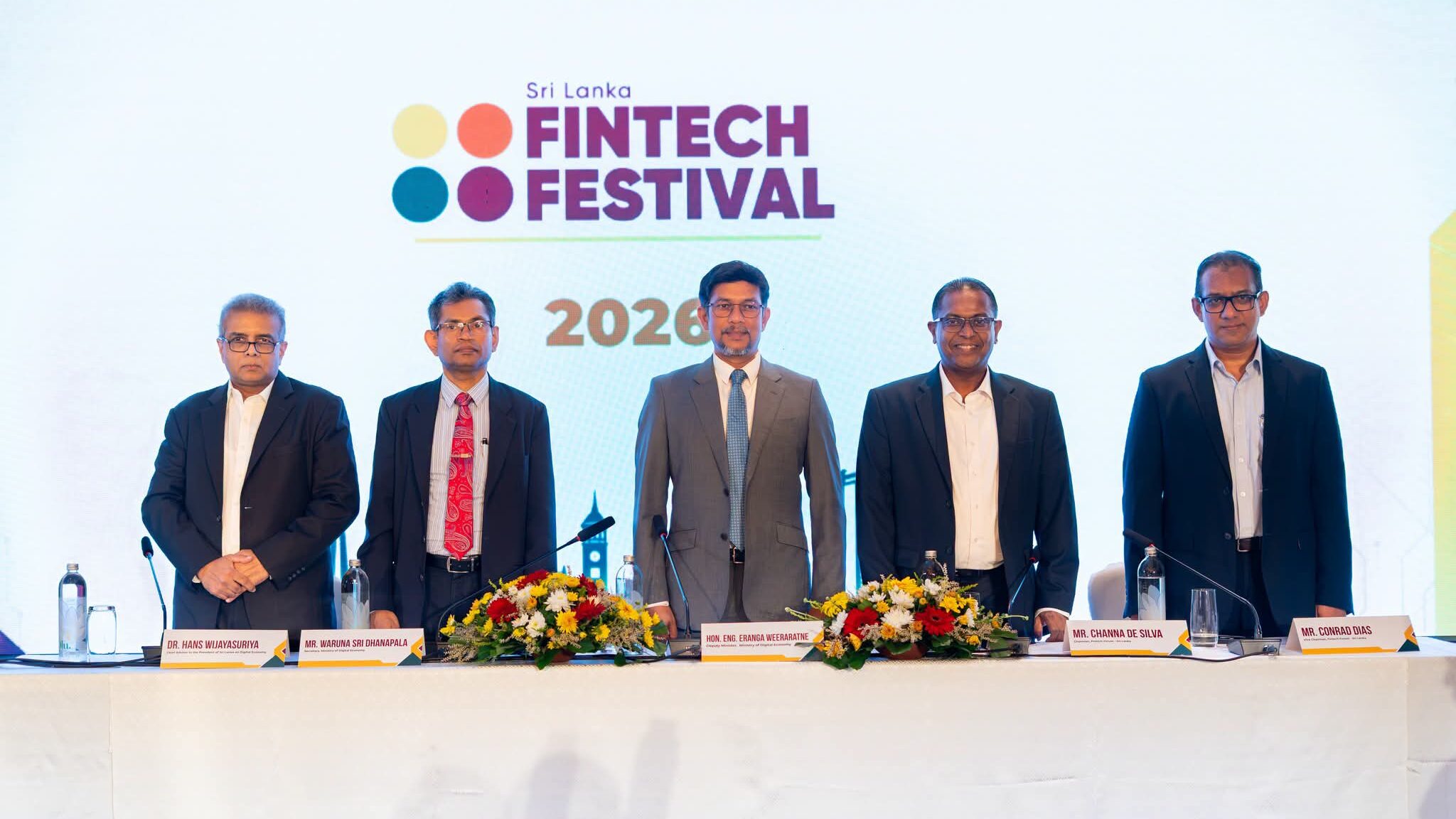
The central opportunity is straightforward: attract capital, talent and international partnerships into a sector capable of generating higher-value economic activity without requiring the enormous physical investment associated with traditional industries.
The festival will bring together banks, non-bank financial institutions, fintech companies, regulators, government agencies, technology providers and international investors. Its programme includes a CEOs Night, a 500-plus participant FinTech Expo, an exhibition of solutions providers and a closing FinTech Night featuring awards.
On paper, this creates an unusually concentrated platform for investment matchmaking. For Sri Lanka, still seeking foreign exchange, export diversification and new sources of foreign investment, fintech offers potential advantages. Digital financial services can be exported without shipping physical goods, while software and technology companies can generate foreign revenue from relatively small domestic operations.
The festival’s focus on “Building Unicorns and Monetisation” is particularly significant. Sri Lanka has produced technology companies and entrepreneurs, but the bigger challenge is scaling them into internationally competitive businesses. A conference can connect entrepreneurs with investors, but the harder question is whether those connections produce actual financing, acquisitions, and regional expansion or export contracts.
Financial inclusion provides another potential economic benefit. Better digital payments, lending platforms and financial services could reduce transaction costs and widen access for small businesses and consumers. The SME sector could particularly benefit if fintech firms develop affordable credit, payment and accounting solutions.
Tourism is another potential beneficiary. A more sophisticated digital-payment ecosystem could make Sri Lanka easier for international visitors and businesses to transact in, while helping tourism operators move away from cash-dependent models.
Nevertheless the festival also carries risks.
The biggest danger is confusing visibility with transformation. A successful two-day event can produce publicity, networking and awards without necessarily creating sustainable companies or investment flows. Sri Lanka has repeatedly demonstrated an ability to launch initiatives; the more difficult task has been maintaining policy consistency and converting announcements into long-term economic outcomes.
Cyber security and fraud are also increasingly important. As financial activity becomes more digital, vulnerabilities can multiply. The festival’s inclusion of cybersecurity and fraud prevention therefore reflects a critical economic requirement rather than merely a technical concern.
Regulation will be equally decisive. Investors need predictable rules governing digital finance, data, payments, digital assets and emerging technologies. Without regulatory clarity, international companies may view Sri Lanka as a promising market but hesitate to commit significant capital.
Ultimately, the FinTech Festival should be judged not by attendance or international headlines, but by what follows after November. New investments, fintech exports, jobs, startups scaled internationally, SME adoption and measurable improvements in financial inclusion would provide evidence of success.
The festival offers Sri Lanka a valuable shop window. The real economic test is whether anyone walks through the door with capital, technology and long-term commitments.