




More than Rs. 60 billion allocated for rehabilitation, reconstruction and disaster compensation following Cyclone Ditwah remained unspent by the end of July, exposing a troubling gap between the Government’s financial commitments and the speed at which assistance is reaching disaster-hit families.
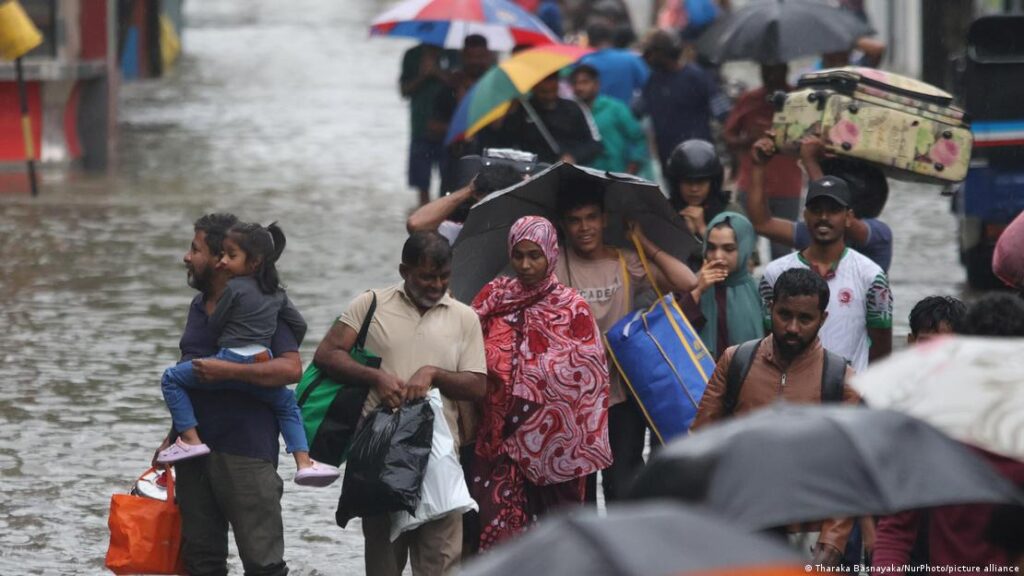
Treasury figures show that Rs. 86.7 billion was released between January and July through the National Disaster Relief Services Centre for compensation and infrastructure development in areas devastated by floods and landslides. Yet only Rs. 26.4 billion roughly 30 percent had been utilised, leaving nearly 70 percent unused.
The figures raise a fundamental question: how effective is disaster relief if billions released for victims remain locked within the administrative system while families struggle to rebuild their lives?
The Government has recognised the problem. The Ministry of Defence has instructed District Secretaries to accelerate the release of remaining funds to beneficiaries. But the slow progress in resettlement is particularly concerning. Only Rs. 190 million of the Rs. 1.05 billion allocated to relocate affected families had been spent by July 31.
Officials insist that the low expenditure does not necessarily mean relief funds are being deliberately withheld. Senior Assistant Secretary of the Disaster Relief Services Centre Prageeth Danansooriya has pointed to practical and administrative obstacles, particularly land ownership, identification of suitable rebuilding locations and documentation required before reconstruction can proceed.
The Centre says Rs. 100.475 billion has been allocated this year for emergency relief and compensation for completely destroyed houses. Of this, Rs. 12.5 billion was initially provided for emergency assistance, while a further Rs. 87.975 billion was allocated for fully damaged houses.
By July, only Rs. 6.439 billion had been spent on emergency disaster relief and Rs. 26.404 billion on damaged-house compensation.
The housing figures reveal the scale of the challenge. Of approximately 29,000 completely destroyed houses identified, only 429 had been fully repaired and reoccupied by July. Another 4,166 families had received the first Rs. 2 million instalment, while 4,918 completely damaged houses had received some form of assistance.
The situation is more advanced among partially damaged homes, but even here substantial gaps remain. Of about 87,000 affected houses, 50,554 households had received support, including phased payments.
The Government’s explanation that land ownership and beneficiary documentation are slowing payments is credible, but it also exposes a deeper weakness: disaster relief planning appears to have underestimated the administrative complexity of rebuilding entire communities.
There is also evidence that some beneficiaries have failed to claim subsequent instalments, particularly under the Rs. 500,000 assistance scheme for partially damaged homes.
Nevertheless, accountability cannot end with identifying administrative obstacles. When billions remain unspent months after a disaster, the Government must demonstrate where the money is, why it has not moved and when each affected family can realistically expect payment.
For cyclone victims, relief delayed is not merely an accounting statistic. It means another month without a secure home, income, livelihood or normal life.