




More than four years after the MV X-Press Pearl disaster, Sri Lanka is still confronting the consequences of one of the country’s most devastating maritime environmental catastrophes. Plastic pollution, chemical contamination, economic losses and an unresolved compensation battle continue to shadow the nation’s western coastline.
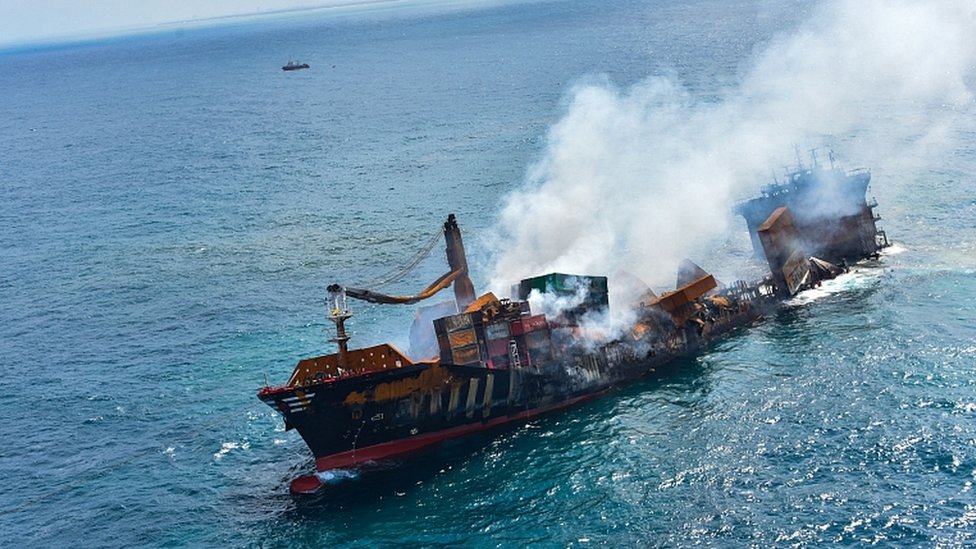
The latest warning has come from Archbishop of Colombo His Eminence Malcolm Cardinal Ranjith, who has called on the Government to continue closely examining the disaster’s impact on Sri Lanka’s maritime territory and marine environment.
His intervention is significant because the crisis has moved beyond the question of what happened in May 2021. The more difficult issue now is whether the country can measure the full scale of the damage, recover adequate compensation and restore ecosystems that may take decades to recover.
The Supreme Court has placed responsibility firmly on the corporate parties involved. In its 361-page judgment, the Court held the vessel’s owner, operator X-Press Feeders and local agent Sea Consortium Lanka jointly and severally liable. It found that critical information regarding leaking nitric acid had been concealed or inadequately disclosed before the vessel entered Sri Lankan waters.
The Court ordered US$1 billion in interim compensation, directing that the funds be channelled into a dedicated mechanism for environmental restoration and protection. However, the operator has rejected the order, creating a difficult enforcement challenge for the Sri Lankan authorities.
The compensation dispute is only one part of the unresolved crisis.
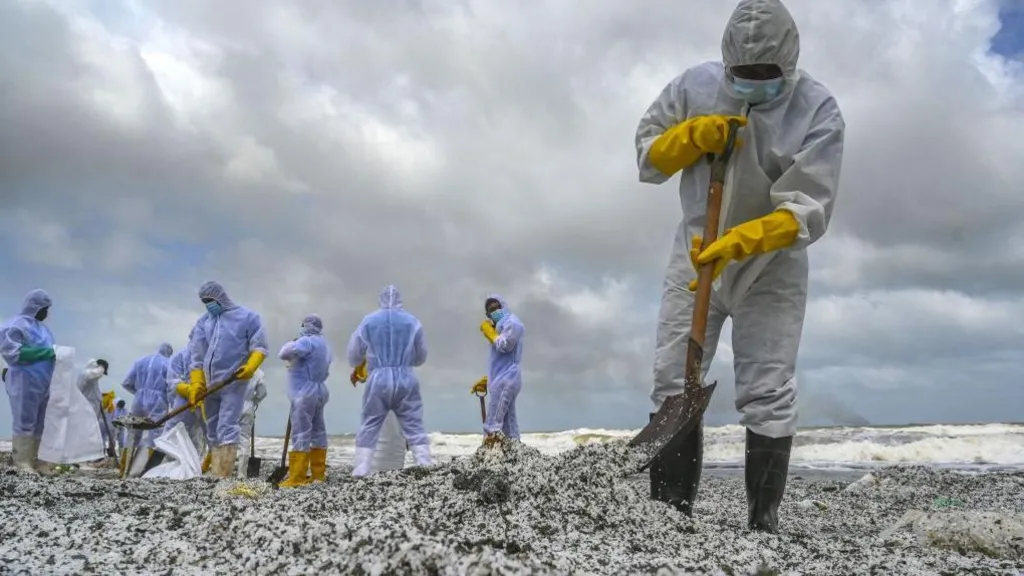
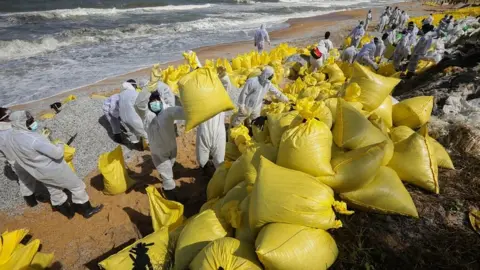
The environmental footprint remains extensive. Billions of plastic nurdles were deposited along more than 80 kilometres of the western coast. Many remain trapped in beaches and coastal environments, raising concerns about their continued movement through marine ecosystems and food chains.
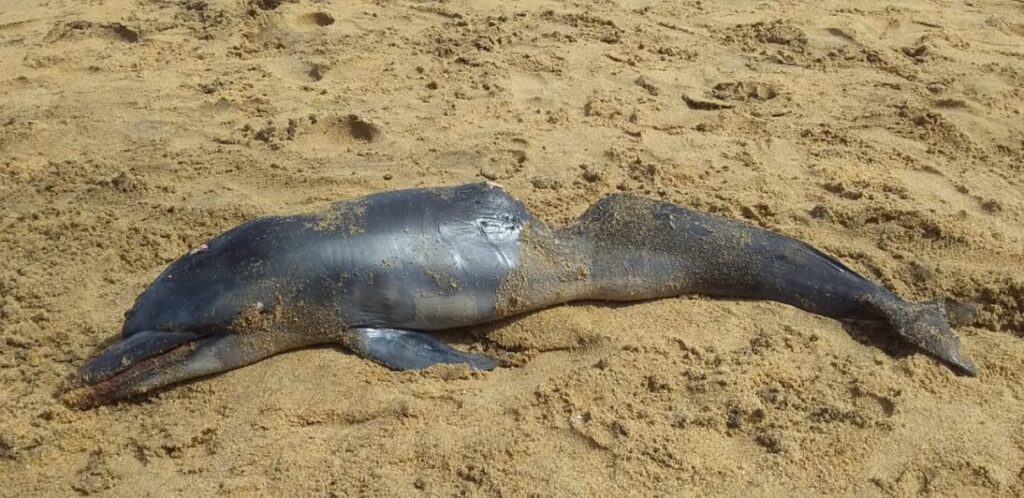
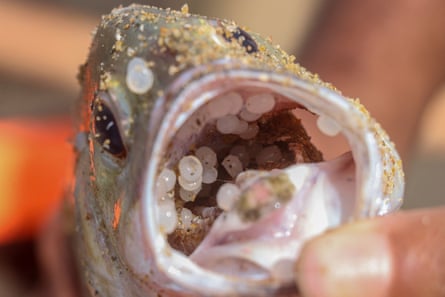
The disaster also involved approximately 25 metric tons of nitric acid, together with toxic lead, caustic soda and bunker oil. Marine animals, including turtles, dolphins and whales, were reportedly among those affected.
The economic consequences have been equally serious. Fishing communities that depend directly on healthy coastal waters have experienced prolonged disruption, including fishing restrictions and reduced catches. The reported overall economic and ecological damage, estimated at approximately US$6.4 billion, dwarfs the compensation order currently at the centre of the legal dispute.
Meanwhile, investigations into allegations surrounding a proposed US$250 million bribe have also been ordered to resume, adding another layer to a case already marked by legal and political controversy.
The Cardinal’s intervention consequently places the spotlight back on an uncomfortable reality: a court judgment does not automatically restore a damaged ecosystem.
For Sri Lanka, the real measure of accountability will ultimately be whether compensation is recovered, polluted waters and beaches are rehabilitated, affected communities receive meaningful redress, and the country learns enough from the disaster to prevent another environmental catastrophe from being repeated.