




Avant-Garde Maritime Services (Pvt) Ltd and its former chairman, Nissanka Senadhipathi, are facing an intensifying state crackdown following years of controversy over the privatization of maritime security operations, disputed financial arrangements and alleged regulatory violations.
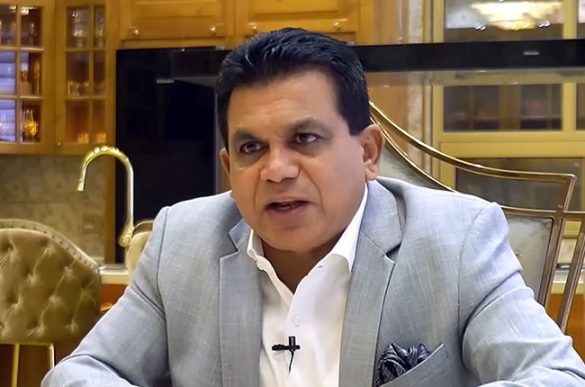
The latest development came today with Senadhipathi being summoned before Sri Lanka’s Commission to Investigate Allegations of Bribery or Corruption (CIABOC) to record statement on Krish Colombo mixed development project, according to the document reviewed for this report. The summons adds a new dimension to a wider legal battle surrounding the company’s former maritime-security empire.
At the heart of the Avant-Garde controversy is the previous government’s decision to return onboard security operations and weapons storage to the Sri Lanka Navy. The document says a government gazette effectively transferred these functions exclusively to the Navy, while the Court of Appeal in February 2026 rejected two writ petitions challenging a Defence Ministry order to close and remove three weapons warehouses operated by the company.
The scale of the unresolved weapons issue emerged during a parliamentary sub-committee hearing on July 30. According to the document, 135 state-linked firearms associated with previous commercial operations remain unaccounted for or stranded in South Africa, Tanzania, Oman and Mauritius. The government now faces the diplomatic and logistical challenge of recovering the weapons, while disputes continue over who should bear the associated costs.
The company’s international footprint has consequently collapsed. The document states that Avant-Garde has closed offices in five foreign countries and reduced its workforce from more than 6,500 at its peak to a small domestic operation focused primarily on land-based guarding services.
Financial records cited in the document raise another critical question: whether the state received a fair return from the privatized security model. A joint venture with state-owned Rakna Arakshaka Lanka Limited reportedly generated about US$400,000 a month, but Avant-Garde allegedly retained 80 percent, leaving the state with approximately 20 percent. The arrangement also reportedly involved collecting payments in US dollars while the state’s share was settled in depreciating Sri Lankan rupees.
The document further identifies an outstanding Rs.782 million debt to the Sri Lanka Navy, relating to private-sector operations conducted between 2014 and 2015. A separate Rs.3.5 million in delayed fees is reportedly owed to Rakna Lanka.
But the strongest argument for state control may be economic. After the Navy assumed maritime-security operations, it reportedly generated US$690,000 in direct foreign-exchange revenue for the Consolidated Fund during an initial four-month period.
Meanwhile, Senadhipathi faces allegations linked to the Krrish Group transaction, money laundering, bribery and the controversial floating armoury case. The document says prosecutors allege that unauthorized privatization of maritime security caused an estimated Rs.11.4 billion loss to the treasury, while separate charges concern 813 firearms and more than 200,000 rounds of ammunition allegedly carried without authorization.
The unfolding case now represents more than the collapse of a private security company. It is a test of whether Sri Lanka can recover public assets, trace disputed funds and establish accountability for decisions that placed sensitive national-security functions in private hands.