




The violent unrest that engulfed Sri Lanka’s Mahara Prison has reignited scrutiny of the country’s correctional system, exposing longstanding concerns over overcrowding, prison management and security, while prompting fresh investigations into what triggered one of the most destructive prison disturbances in recent years.
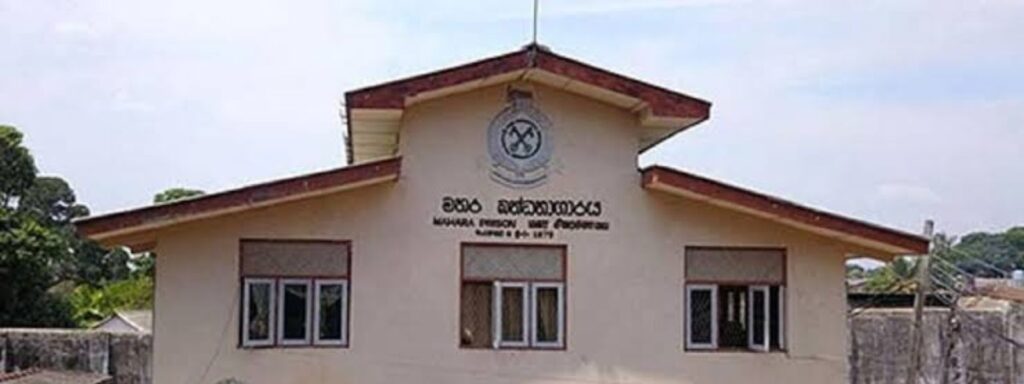
Although authorities have restored control after an operation involving the Sri Lanka Police, Special Task Force (STF) and Sri Lanka Army, the scale of destruction inside the prison has raised troubling questions that extend beyond the immediate violence. One inmate died while six others were injured during the incident, which unfolded during Saturday’s family visiting hours after a confrontation between inmates and prison officers reportedly escalated into widespread unrest.
According to prison authorities, nearly 4,000 remand and convicted prisoners became involved as inmates climbed onto rooftops, set fire to several buildings and caused extensive damage across the prison complex. The prison hospital, kitchen, administrative offices, vocational training facilities and a recently constructed rehabilitation building were destroyed or severely damaged. Vital administrative records were also reduced to ashes, complicating future prison operations and investigations.
Officials have since transferred 104 inmates identified as high-risk or requiring separation to prisons in Boossa, Welikada, Dumbara, Kalutara, Badulla, Polonnaruwa and Batticaloa in an effort to restore stability. Family visits have been suspended for two days while damaged visitor facilities undergo repairs, although the localized police curfew imposed in surrounding areas has since been lifted.
Yet the central question remains unanswered: What transformed a confrontation inside the prison into an outbreak capable of crippling one of the country’s largest correctional institutions?
The Human Rights Commission of Sri Lanka (HRCSL) has launched a special investigation, dispatching a three-member team to Mahara Prison to examine the circumstances leading to the violence. The inquiry is expected to determine whether prison management, security lapses or inmate grievances contributed to the rapid escalation.
Adding another dimension to the investigation, representatives of the International Human Rights Organization Sri Lanka (IHRO) also inspected the prison following the unrest. Executive Director Subashana Subawickrama questioned whether the destruction could have been the work of only a handful of inmates, suggesting investigators should examine whether the incident involved a broader, coordinated operation. He stressed that these concerns remain matters requiring investigation rather than established conclusions.
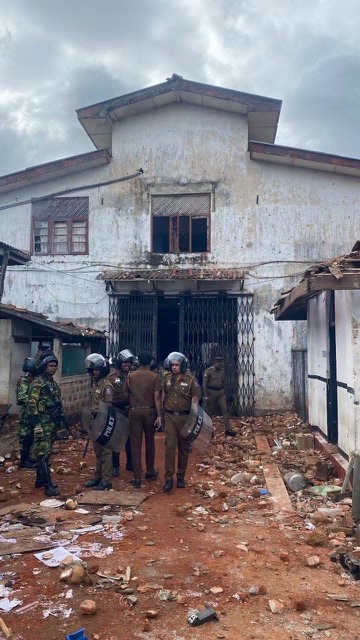
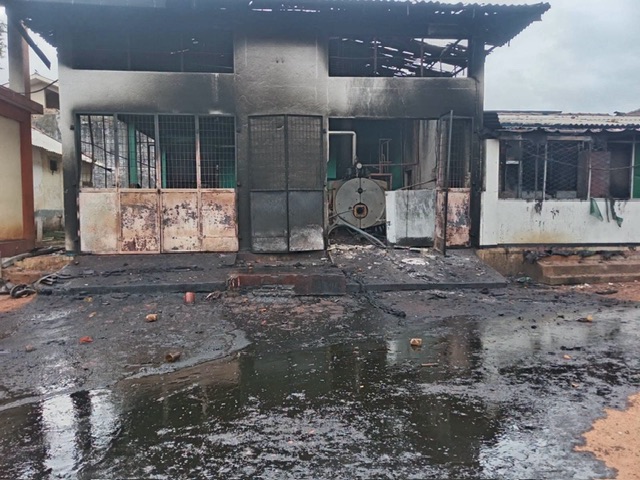
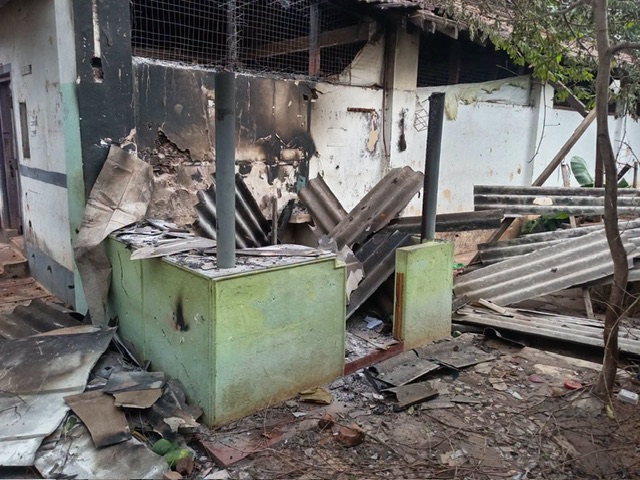
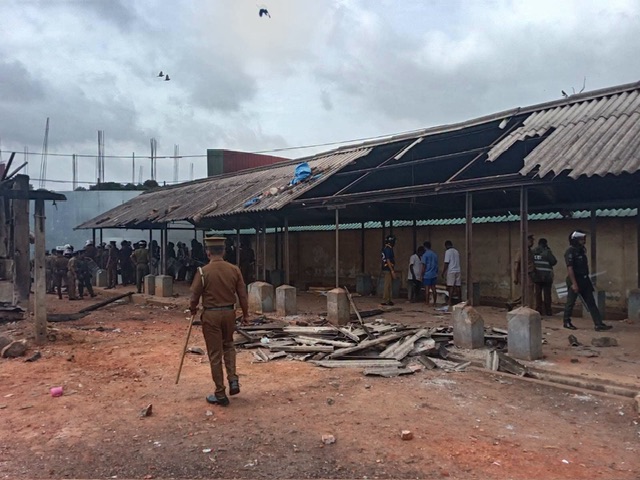
The sheer scale of destruction has intensified debate over deeper structural problems affecting Sri Lanka’s prison system. Authorities have acknowledged tightening security at correctional facilities nationwide, particularly around Colombo, where overcrowding has remained a persistent challenge for years. Experts have frequently warned that congested prisons, inadequate infrastructure and strained resources create conditions that heighten tensions and complicate prison management.
As investigators continue gathering evidence, the Mahara Prison unrest is increasingly being viewed not simply as an isolated riot but as a stark reminder of vulnerabilities within Sri Lanka’s correctional system. Whether the violence was driven primarily by inmate grievances, operational failures or other contributing factors remains the subject of official investigations. The findings are expected to shape future reforms and determine accountability for one of the country’s most destructive prison disturbances in recent memory.