




The security crisis surrounding the 2026 Devinuwara Esala Perahera should be viewed as far more than an isolated law-and-order incident. It exposed a troubling reality: Sri Lanka’s organized criminal syndicates have evolved beyond drug trafficking and financial crime into powerful social actors capable of influencing state decisions and challenging public authority at some of the country’s most sacred religious events.
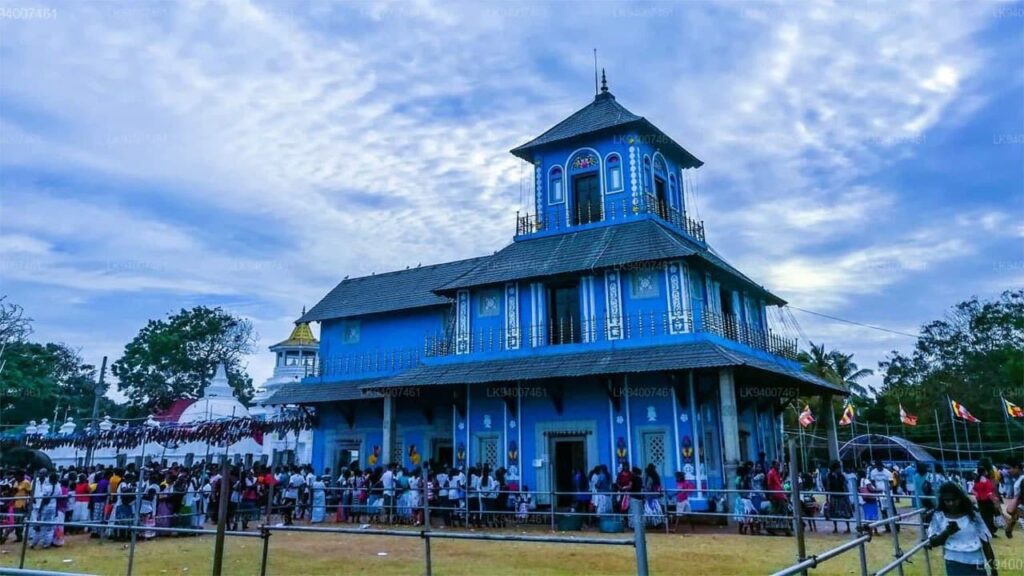
The government’s immediate objective was understandable. Faced with intelligence warnings of a violent confrontation between rival criminal factions seeking to participate in the Kavadi dance, authorities confronted an impossible dilemma. Cancelling the centuries-old ritual would have been interpreted as surrendering a historic religious tradition to criminal intimidation. Proceeding with the event carried the risk of violence in front of thousands of devotees and tourists.
Ultimately, the administration allowed 45 historically registered Kavadi groups to participate while deploying an unprecedented security operation involving the Special Task Force, police units and intelligence agencies. The strategy succeeded in preventing a major terrorist-style attack or mass-casualty incident, allowing the 769th Devinuwara Esala Perahera to proceed without catastrophic violence.
However the apparent success masks deeper institutional weaknesses.
By permitting groups reportedly linked through intermediaries to underworld figures, the government inadvertently blurred the distinction between religious devotion and criminal influence. Whether or not individual participants were directly involved in organized crime, the perception that criminal networks could pressure the state into accommodation sends an alarming message. It risks encouraging other criminal organizations to adopt similar tactics at future religious festivals.
Equally troubling were reports of disagreements within the state’s own security apparatus. Intelligence-based recommendations from senior police officers were reportedly overridden by political considerations, creating frustration among officers responsible for maintaining public safety. When operational policing becomes subordinate to political calculations, public confidence in law enforcement inevitably suffers.
The economic implications should not be underestimated. Devinuwara sits within one of Sri Lanka’s most important tourism regions. Images of heavily armed security personnel, bomb disposal units and extensive checkpoints surrounding a sacred festival inevitably undermine efforts to promote the country as a peaceful destination. Local traders, pilgrims and tourism operators all bore the psychological burden of uncertainty during an event traditionally associated with faith and celebration.
The Devinuwara episode should therefore serve as a catalyst for comprehensive reform rather than political self-congratulation. Temporary security deployments cannot permanently counter sophisticated transnational criminal organizations directed from overseas. Stronger legislation targeting organized crime, financial investigations aimed at dismantling criminal wealth, tighter prison communication controls and the elimination of political patronage networks deserve urgent national attention.
The government’s successful management of the immediate crisis prevented tragedy. But preventing future crises will require confronting the systemic conditions that allow organized crime to seek legitimacy within Sri Lanka’s cultural and religious institutions. Without structural reforms, Devinuwara may become remembered not as an isolated warning, but as the beginning of a dangerous national precedent.