




Sri Jayewardenepura General Hospital (SJGH), once regarded as a symbol of excellence in Sri Lanka’s healthcare system, is now facing a major administrative challenge as concerns grow over leadership gaps, financial mismanagement and declining public confidence.
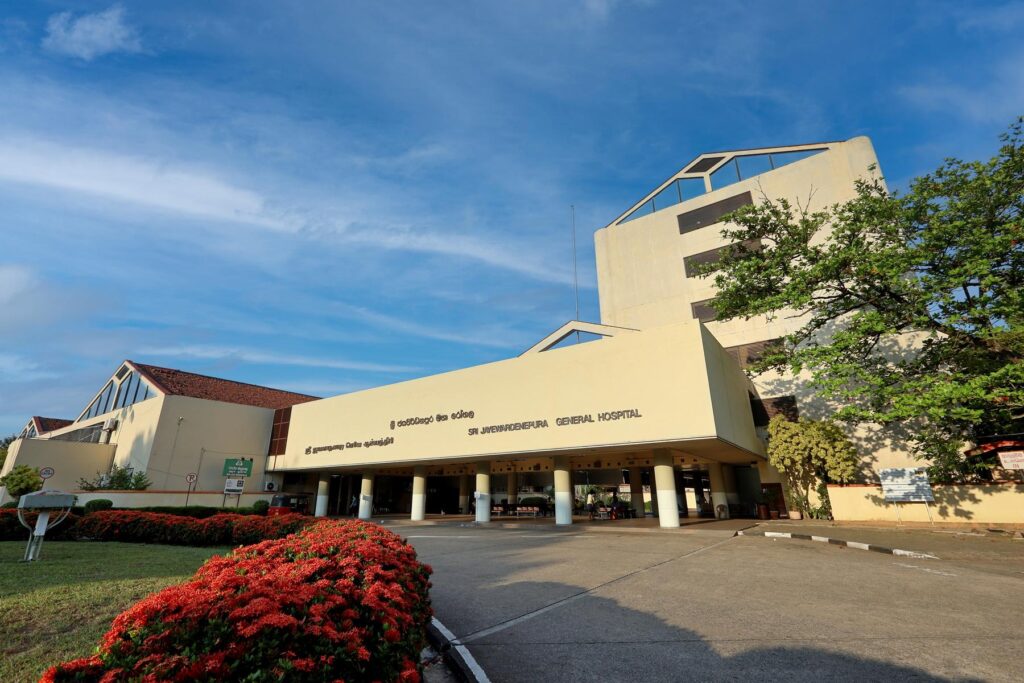
Although the hospital remains fully operational, healthcare professionals and civil society groups warn that the institution’s future could be affected unless urgent reforms are introduced. The Medical and Civil Rights Professionals Collective has raised serious concerns over the prolonged absence of a qualified hospital administrator, claiming that the failure to fill this key position has weakened effective management.
Collective president and specialist doctor Dr Chamal Sanjeeva said authorities have failed for more than a year to appoint a suitably qualified medical professional or an individual with relevant expertise to oversee the hospital’s administration. According to him, the leadership vacuum has created difficulties for medical staff and affected the smooth functioning of the institution.
SJGH was established as a donation from Japan during the presidency of J.R. Jayewardene and was once recognized for providing high-quality healthcare services. However, doctors and observers say increasing political influence in hospital management and board appointments has damaged the institution’s reputation and public trust.
Recent discussions surrounding the hospital’s performance have highlighted concerns over administrative weaknesses and financial irregularities. Dr Sanjeeva claimed that instead of appointing experienced professionals, politically connected individuals without the required qualifications have attempted to influence hospital operations.
He warned that continuing such practices in key positions, including the hospital board and administration, could threaten the long-term sustainability of the facility.
The concerns come amid findings and observations from oversight institutions, including the Committee on Public Enterprises (COPE) and the Auditor General’s Department, which have identified several areas requiring reform. These include unauthorized recruitment before election periods, questionable salary payments, weak financial controls and poor asset management.
Investigations highlighted that unauthorized positions had been created and staff recruited without proper approval, while some employees received a 35 percent salary allowance despite the existence of legally approved essential vacancies. Financial concerns have also emerged over internal professional fee payments exceeding Rs. 600 million in a single year without adequate assessments of sustainability.
The hospital has also faced criticism over subsidies provided to certain groups without proper cost-recovery mechanisms, raising concerns about future financial stability.
Despite these challenges, SJGH continues to provide specialist treatment, outpatient services and inpatient care. Recent policy changes have also focused on improving public access, including the conversion of the presidential ward, traditionally reserved for the Executive President, into a general public ward.
The hospital is also carrying out infrastructure improvements, including a Rs. 50 million operating theatre air-conditioning upgrade and improvements to its internal security systems.
However, healthcare professionals insist that administrative reform remains essential. They have urged the government to appoint qualified leadership and restore accountability to ensure SJGH can continue delivering quality healthcare to the public.