




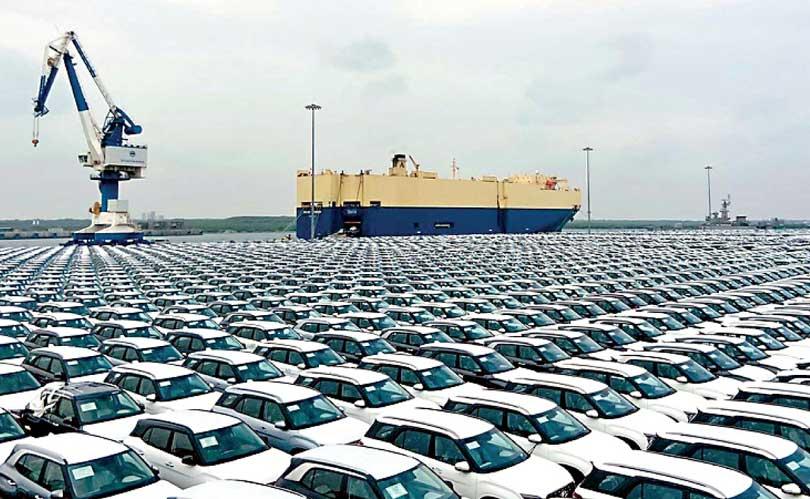
Sri Lanka’s Hambantota International Port has come under renewed attention after hundreds of imported vehicles remained uncleared for extended periods, creating pressure on the port’s operational capacity and raising concerns over the impact of delayed vehicle clearance on the country’s automotive logistics sector.
Hambantota International Port Group (HIPG) has rejected suggestions that vehicle storage has become a revenue-driven activity at the facility, stating that the port’s primary objective is the efficient movement of cargo rather than collecting storage fees.
“The Port’s business is built on the efficient movement of cargo, not on earning revenue from storage charges,” HIPG said in a statement, stressing that ports are designed to support trade flows and logistics operations, not operate as long-term vehicle storage locations.
The statement followed reports that more than 1,000 imported vehicles had not been cleared by importers and were remaining at Hambantota Port. Reports indicated that hundreds of vehicles had been stored for more than six months, raising concerns over congestion and the use of valuable port space.
HIPG revealed that the port currently handles more than 50,000 vehicles, including both transhipment vehicles and locally imported units. However, a significant number remain at the facility for prolonged periods. Around 1,278 vehicles have been in the port yard for more than three months, while 581 vehicles have remained for over one year.
The company said the long-term vehicle storage problem was largely linked to market conditions created by Sri Lanka’s vehicle import restrictions, which disrupted the automotive sector and affected normal supply chains.
Among the vehicles stored for more than a year, approximately 400 were imported before vehicle imports resumed in 2025. Another 175 vehicles had arrived before restrictions were introduced in 2020, leaving them stranded due to changing market conditions and regulatory challenges.
HIPG warned that vehicles occupying port space for months or years create operational difficulties by limiting areas required for handling new cargo. The company emphasized that every vehicle remaining in storage affects the port’s ability to manage increasing cargo volumes and support the growth of Sri Lanka’s automotive logistics industry.
The situation reflects the wider challenges faced by importers, regulators, and logistics operators following years of restrictions and economic uncertainty. While importers have struggled with clearance issues and changing market conditions, ports must continue ensuring efficient movement of goods through limited infrastructure.
The Hambantota vehicle backlog highlights the need for stronger coordination between government authorities, importers, and logistics providers to avoid future disruptions. As Sri Lanka’s vehicle import sector gradually returns to normal operations, clearing existing stocks at ports will remain a critical challenge.
The developments at Hambantota Port serve as a reminder of how policy decisions and market disruptions can create long-term consequences for supply chains, trade operations, and national logistics systems.