




Sri Lanka’s debate over proposed judicial reforms has escalated into a broader confrontation over judicial independence, parliamentary privilege, and the relationship between the legal profession and the government.
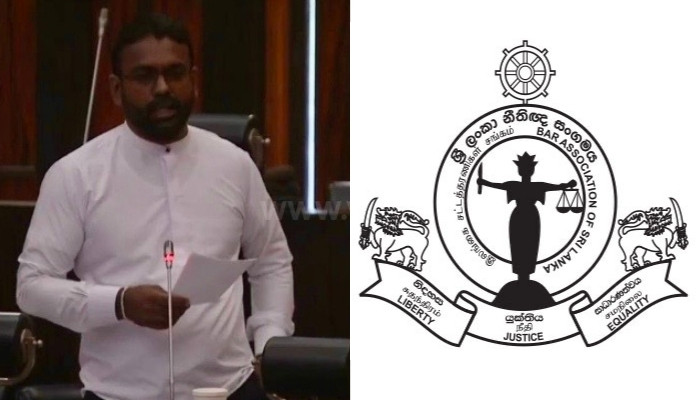
The controversy intensified during a parliamentary debate on a no-confidence motion against the Minister of Justice when National People’s Power (NPP) MP Asitha Niroshana Egodawithana alleged that Bar Association of Sri Lanka (BASL) President Rajeev Amarasuriya had held a secret meeting with Opposition Leader Sajith Premadasa and discussed a possible political candidacy linked to the BASL’s opposition to proposed judicial reforms.
The allegations immediately drew a forceful response from the BASL, which rejected them as “utterly false, baseless and malicious.” The Association challenged the MP to repeat the allegations outside Parliament, where parliamentary privilege would not apply and legal action could be pursued if warranted.
The exchange has shifted attention to the government’s proposal to amend the retirement ages of superior court judges. The proposal would increase the retirement age of Supreme Court judges from 65 to 67 and Court of Appeal judges from 63 to 65.
The BASL, Colombo Law Society and Judicial Service Association have expressed concerns that any reforms affecting the judiciary should be transparent, supported by clear institutional reasons, and developed through broad consultation. Among the issues raised are the possible impact on judicial independence, public confidence and the appearance of executive influence over the composition of superior courts.
Government supporters have argued that judicial reforms should be considered within the broader objective of improving the administration of justice and ensuring institutional continuity. Critics, however, contend that extending the tenure of sitting judges rather than introducing prospective reforms could create perceptions of preferential treatment.
Rajeev Amarasuriya has been a prominent voice on judicial independence during his tenure as BASL President. An appellate practitioner specializing in public law and civil litigation, he has publicly called for the prompt filling of vacancies in the Supreme Court and Court of Appeal while urging respect for the constitutional separation of powers.
The parliamentary allegations have also prompted political reactions. Opposition parliamentarians described the remarks as an attack on the legal profession, while legal organizations warned that personal attacks on institutional leaders risk diverting attention from substantive constitutional questions.
Constitutional experts note that parliamentary privilege plays an essential role in protecting legislative debate but also limits immediate legal remedies for statements made within Parliament. Consequently, the dispute has expanded beyond the specific allegations to broader questions about accountability, public discourse and institutional trust.
As the government continues to pursue its judicial reform agenda, attention is likely to remain focused not only on the proposed amendments themselves but also on whether the increasingly polarized political debate affects public confidence in Sri Lanka’s constitutional institutions. The outcome may shape future discussions on judicial independence and the balance between executive authority and the rule of law.