




The battle to protect one of Sri Lanka’s most treasured colonial landmarks has become a powerful example of how public resistance can shape national policy. After years of controversy and repeated attempts to hand the iconic Nuwara Eliya Post Office to private hotel developers, the historic building will remain under the Sri Lanka Department of Posts. The current National People’s Power (NPP)-led government has abandoned earlier privatization plans and instead launched a Rs. 200 million conservation project that combines heritage preservation with sustainable tourism.
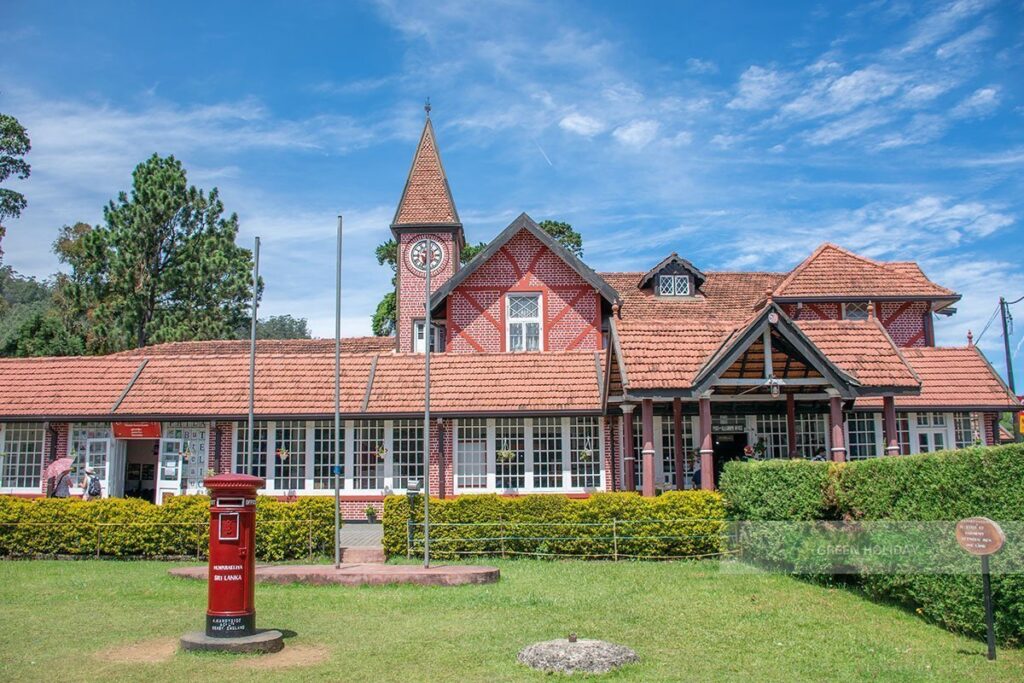
Built by the British in 1894, the Nuwara Eliya Post Office is among Sri Lanka’s finest examples of British Tudor Revival architecture. Its distinctive red-brick façade, towering clock spire, and colonial-era wooden mailbox have made it one of the country’s most photographed public buildings. Recognized as an Archaeological Protected Monument, the landmark also earned national prominence when it appeared on a Rs. 10 postage stamp issued to mark World Postal Day in 1990. Today, thousands of local and foreign visitors continue the tradition of posting postcards from the historic mail facility.
Despite its heritage value, successive governments sought to transform the building into a commercial hotel. Initial proposals in 2017 to privatize the Nuwara Eliya, Kandy, and Galle Fort post offices were abandoned following strong opposition from postal trade unions. The controversy intensified in 2023, when the previous administration approved plans to transfer the property to the Urban Development Authority for leasing to India’s Taj Hotels Group as a luxury boutique hotel.
The proposal triggered one of the most remarkable heritage campaigns in recent years. Postal workers, trade unions, civil society groups, and local business owners organized mass demonstrations throughout Nuwara Eliya. Shops closed in solidarity while black flags were raised across the town, symbolizing opposition to the loss of a national landmark. The protests attracted international attention as foreign tourists joined demonstrations, carrying banners declaring that Nuwara Eliya already had plenty of hotels but only one historic “Royal Mail” post office. The movement transformed a local dispute into an internationally recognized campaign for heritage conservation.
The Janatha Vimukthi Peramuna (JVP), now the leading force within the ruling NPP coalition, strongly supported the protests, arguing that public institutions and historic monuments should remain in state ownership rather than be transferred to private commercial interests.
Following the change of government, President Anura Kumara Dissanayake’s administration formally revoked the privatization decision. Instead, authorities have unveiled a restoration strategy that preserves the building’s original function while generating tourism revenue. The ground floor will continue operating as a fully functional post office, while the upper floor once the official residence of the Postmaster will be carefully restored into heritage tourist accommodation under state management.
With technical guidance from the Sri Lanka Tourism Development Authority and the Urban Development Authority, the project aims to protect the architectural authenticity of the 132-year-old landmark, ensuring that one of Sri Lanka’s most cherished symbols remains in public hands for generations to come.
By a Special Correspondent