




The dramatic transformation of Sri Lanka’s Regional Development Bank has created an uncomfortable contradiction: a state institution producing record profits while its leadership faces a politically charged upheaval.
RDB’s numbers tell the story of a bank that has undergone a substantial recovery. Profit after Tax climbed to Rs. 2.37 billion in 2025, up 86% year-on-year, before jumping another 187.3% during the first quarter of 2026 to Rs. 1.08 billion.
Its balance sheet has strengthened alongside profitability. By March 2026, assets had reached Rs. 366 billion, while the gross loan portfolio stood at Rs. 323 billion and deposits at Rs. 286 billion. The bank also retained its BBB+ Stable LRA credit rating.
Most importantly, its deteriorating-loan problem has been brought under control. Stage 3 impaired loans declined from 8.80% in 2023 to 4.06% in 2025 and 3.77% in the first quarter of 2026 evidence of stronger credit-risk management and recovery efforts.
Operational reforms have produced equally striking results. Streamlining customer onboarding, credit assessment and back-office processes contributed to a 223% increase in net fee-based income in Q1 2026.
RDB simultaneously expanded lending and support for SMEs, agriculture, micro-enterprises and women entrepreneurs, sectors crucial to economic recovery. Its focus on data quality also earned the institution three major data-management awards at the CEOs Forum & Institutional Rating Awards Ceremony conducted by the Credit Information Bureau of Sri Lanka.
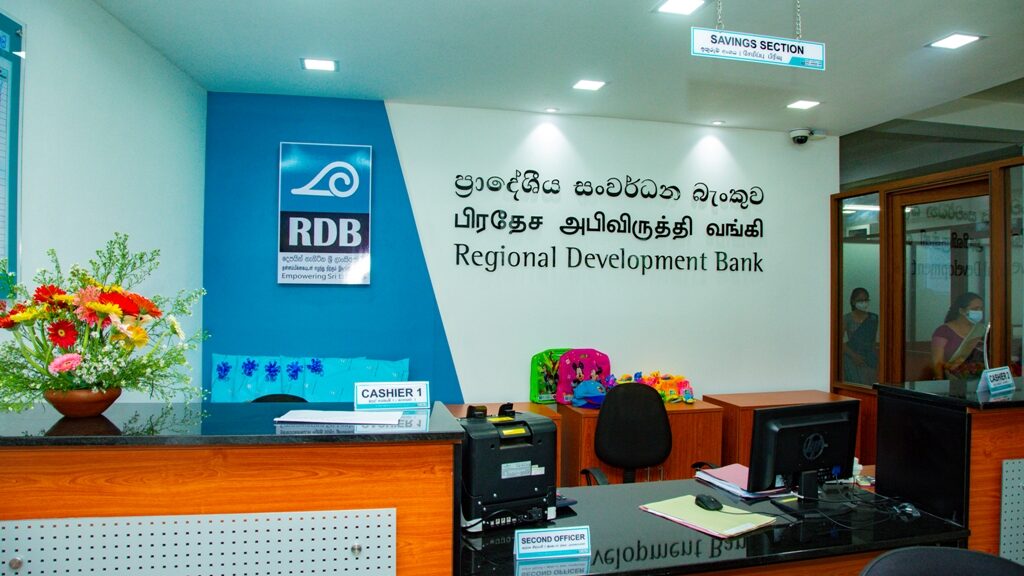
The bank has additionally modernised its physical infrastructure by moving its National Head Office to a newly optimised facility in Mahara, Kadawatha.
Against this backdrop, the removal of Chairman Lasantha Fernando and other directors has generated intense internal and external criticism.
The reported dispute centred on the appointment of a senior Director General-level official. The Chairman and executive management allegedly opposed the appointment after the CEO advised the board that the individual did not possess qualifications required under banking law.
The subsequent removal of the board is therefore being interpreted by critics not as a response to financial failure, but as a consequence of refusing to accommodate an allegedly politically favoured appointment.
That interpretation is particularly damaging because Fernando’s administration had also pursued corruption inside the institution, including action surrounding an alleged Rs. 400 million fraud at the Valachchenai branch.
Media analysts and trade-union observers have reportedly compared the episode with the earlier controversial removal of former Chairman Jeevaka Purasinghe, raising concerns about a recurring pattern in state-bank governance.
The danger extends beyond personalities. If professional executives believe that enforcing banking regulations or confronting internal fraud could cost them their positions, the consequences could reach far beyond RDB.
Sri Lanka cannot credibly demand stronger governance from state enterprises while simultaneously creating uncertainty over the independence of their professional leadership.
RDB’s revival demonstrates what disciplined management can achieve. The current controversy will determine whether that revival becomes a lasting institutional success—or another casualty of political patronage.