




High Court Exposes the Collapse of the State Service
The ongoing trial before the Colombo Permanent High Court at Bar regarding the criminal misappropriation of Rs. 144.4 million in public funds and the supply of substandard Human Intravenous Immunoglobulin (IVIG) and Rituximab to government hospitals continues to expose the severe vulnerabilities and utter lack of accountability within Sri Lanka’s state administrative machinery.
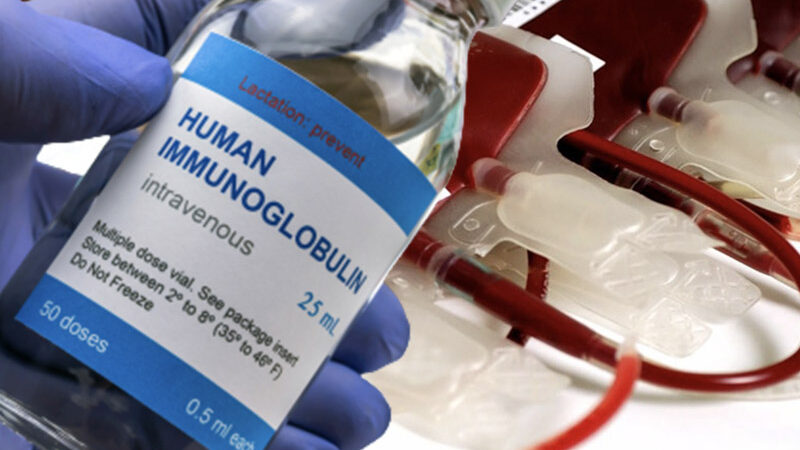
The evidentiary hearing held recently (25th) against 12 accused—including former Health Minister Keheliya Rambukwella and the owner of Isolez Biotech Pharma, Sudath Janaka Fernando—focused entirely on uncovering the flawed scientific basis used for testing the quality of these drugs and the appalling gaps in document management across state institutions.
Defense Arguments: The Purpose of Scientific Testing Equipment
Testifying as the fourth witness for the prosecution, Dr. Rajiva de Silva, Consultant Immunologist at the Medical Research Institute (MRI), faced rigorous cross-examination by Attorney-at-Law Harendra Banagala, representing the first accused. The defense counsel heavily questioned the logical basis of the drug testing methodology. Specifically, the defense argued that the ‘Beckman Coulter’ analyzer used to measure IgG levels was designed to test human fluids (serum, plasma) and was not intended for testing pharmaceutical drugs.
- Defense Counsel: The machine is designed to test patients’ IgG levels. Your opinion is that the IgG in the vial is identical.
- Witness: A person’s IgG and the IgG in a vial are two distinct things. The machine is indeed designed to test human symptoms and fluids. It is not designed to test the IgG of most drugs.
- Presiding Judge Priyantha Liyanage: Are you stating that utilizing data from a medical device is not a hindrance to diagnosing patients?
- Witness: Yes, My Lord.
Missing Sample Numbers and Presumptive Testing in Official Documents
During this cross-examination, the fragility of the state service was acutely exposed as the defense counsel raised sharp arguments regarding the accuracy of test reports and document maintenance. The tragic state of laboratory record-keeping, along with the alleged second test conducted to confirm the IgG levels of the IVIG vials in question, were clearly revealed through the following exchange:
- Defense Counsel: Did you personally conduct that (second) test?
- Witness: No. I did not conduct it.
- Defense Counsel: Is it mentioned anywhere in the report that you provided the sample used for that test?
- Witness: There is no such record anywhere in the report.
- Defense Counsel: There is no Lab Number or Sample Number mentioned in it, is there?
- Witness: No such detail is mentioned in the relevant report.
- Defense Counsel: Is it possible to identify which sample was tested using this report?
- Witness: Such an identification cannot be made. My Lord, there was no other brand of IVIG in our lab; this was the only one available. They are kept at the Medical Supplies Division (MSD). At that time, our department only had the ‘Live Earth’ brand. Therefore, it can only be stated that this particular one was tested.
- Defense Counsel: Can someone else understand the statement you are making simply by looking at this report?
(At this point, the Deputy Solicitor General raised an objection to the question. Presiding Judge Priyantha Liyanage intervened and granted permission to ask the question.)
- Presiding Judge Priyantha Liyanage: The question asks whether someone looking at this report can understand “what kind of sample was tested.” Therefore, that question can be directed.
- Witness: My Lord, this is merely a single document. In it, I made a note to Specialist Dr. Ananda Wijewickrama stating that this was the Isolez sample. That was done simply to verify that it was the relevant sample.
This testimony confirmed that an environment had been created within the state machinery where, in the absence of a laboratory number, it had to be presumed that a specific company’s drug was tested merely because it was the only one present in the lab at the time.
The Dilution Issue and Undocumented Reports
The witness admitted that when the IgG percentage exceeds 3000, the specific value cannot be calculated using the aforementioned equipment. While he claimed that a drug from Reliance Life Sciences had been tested previously, the defense’s cross-examination established that none of this was documented in official reports. Responding to the question of why the solution inside the vial was not diluted for the test, the witness stated that since the IgG level was below 75 (meaning no antibodies were present), the need for dilution did not arise.
A Decision Between Life and Death: The Mandatory Reporting of ADRs
Amidst these administrative failures, the severe risk posed to patients’ lives became further apparent during the questioning by the Deputy Solicitor General.
Dr. Rajiva de Silva emphasized that if IVIG is not administered to immunodeficiency patients who do not produce autoantibodies, the virus can travel to the brain via the bloodstream or infect the lungs (causing pneumonia), leading to a prolonged, agonizing death. Therefore, this specific drug is essential for these patients on a monthly basis for as long as they live.
Furthermore, he pointed out that if Adverse Drug Reactions (ADRs) occur after administering a drug, it is mandatory to notify the SAFREx committee immediately. Failure to do so could lead to an increase in patient mortalities due to the continued use of such drugs. The severe anaphylaxis suffered by two patients at the Matale and Kandy hospitals was a direct result of the tragedy embedded in this flawed process.
The Corrupt Network Slipping Through the Loopholes of Digitization
The next crucial piece of evidence in this trial was presented by the 165th prosecution witness, Kumara Kushantha Hemantha, an assistant at the Medical Supplies Division (MSD). Cross-examined by Attorney-at-Law Asela Serasinghe, representing the second accused, the testimony revealed how the administrative process was deliberately weakened following the introduction of the ‘Swastha’ system in 2023.
Introduced under the directives of Dr. Kapila Wickramanayake, the then-Director of the MSD, this “Paperless and Seal-less” mechanism allowed data to be entered into the system without any physical approval. It was through seven such invoices that Sudath Janaka Fernando, the owner of Isolez, supplied these drugs to the MSD. This testimony logically proves that the health system’s administration had become porous enough to allow billions of rupees worth of counterfeit drugs to enter government warehouses by bypassing physical approvals and transparency under the guise of digitization.
This trial repeatedly reminds society that the entire state healthcare service has fallen into the clutches of a corrupt network, facilitated by laboratories without proper document management, medical test reports lacking sample numbers, and digital data systems operating without the proper supervision of superior officers. The fact that the state service lacks even the fundamental procedural integrity to assign a specific laboratory number when testing a life-saving drug speaks volumes about the true magnitude of this tragedy.