




Sri Lanka is moving towards a new approach to a group of costly government residences that have traditionally been associated with presidents, former presidents and senior officials.
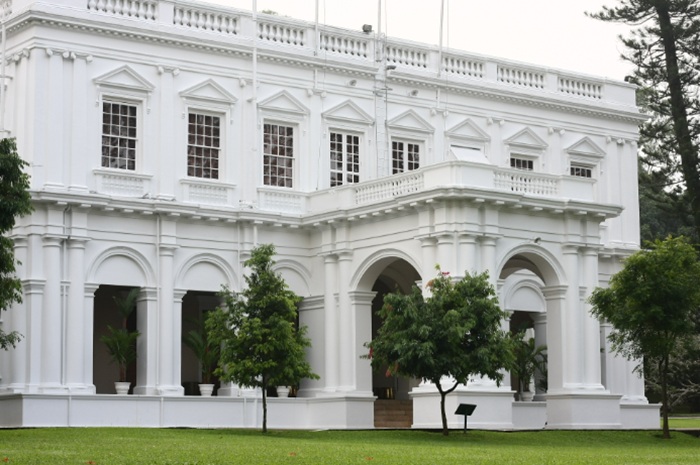
The change is driven by a straightforward question: should the State continue spending millions of rupees maintaining large properties that are used only occasionally, or should those assets be converted into productive public or commercial facilities?
The financial figures explain why the question has become increasingly important.
Seven official presidential residences incurred Rs.35.43 million in maintenance and related expenditure during 2025, according to figures reported from National Audit Office information.
The expenditure included electricity, telephone and other basic costs.
Three residences Kataragama, Mahiyanganaya and Bentota reportedly recorded no meetings or stays during the year. Nevertheless, Rs.2.45 million was spent on their maintenance and related expenses.
The costs can be considerably higher when major improvements are required.
The Wijerama Mawatha residence associated with former President Mahinda Rajapaksa cost Rs.38.3 million to maintain in 2024. Among the major expenses were an escalator costing Rs.15.09 million and a backup generator costing Rs.4.89 million.
These figures demonstrate the difficulty of maintaining large official residences designed for high-level political use. Their costs do not necessarily fall in proportion to their occupancy.
Security has historically added another substantial burden. In 2024, expenditure on security for former presidents and their residences was estimated at about Rs.1.45 billion. The Government subsequently introduced tighter limits on police deployments, reducing the associated cost.
The policy direction has also changed.
In December 2024, the Government began examining alternative uses for underutilised official bungalows and residences. Cabinet later approved a proposal to invite investment for 24 properties, with public-private partnerships of up to 30 years among the options being considered.
Potential uses include diplomatic facilities, government institutions, boutique hotels, restaurants and other commercial activities.
Such a programme could provide several benefits. Leasing suitable properties could reduce maintenance costs while generating revenue. Repurposing others could allow valuable state buildings to serve public institutions or economic activities.
However, the process also requires safeguards.
These properties are public assets, and long-term leases involving valuable land must be transparent and competitively awarded. Proper valuation will be important to ensure that the State receives a fair return.
There is also the question of heritage. Some of the properties are historic buildings, particularly those located in Colombo’s older residential areas. Commercial use should therefore be balanced with appropriate protection of architectural and cultural value.
The Government’s challenge is consequently broader than simply reducing maintenance bills.
It must demonstrate that properties currently costing taxpayers money can be transformed into assets that produce measurable public benefit.
The success of the policy should ultimately be judged by three outcomes: lower recurring expenditure, increased public revenue or service value, and transparent management of state property.
The transition has begun.
The important question now is whether implementation can match the ambition of the policy.