




Sri Lanka is confronting a widening financial accountability crisis after President Anura Kumara Dissanayake disclosed that approximately US$1 billion had allegedly been siphoned out of the country through fraudulent trade transactions. The revelation has triggered a political and institutional battle over how 26,108 Telegraphic Transfers (TTs), involving 227 bank accounts and 105 fictitious companies, escaped detection for more than two years.
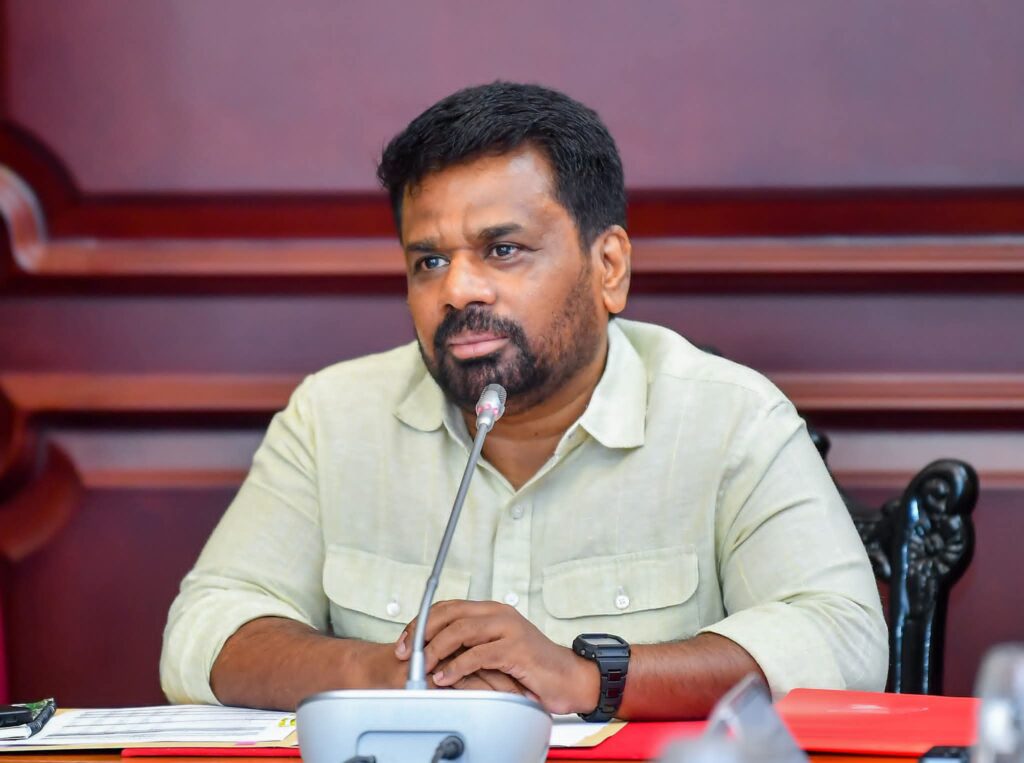
Dissanayake, who also serves as Finance Minister, said Rs.340 billion had been sent overseas under the guise of “phantom imports”. Money reportedly left the banking system for essential goods that were never physically brought into Sri Lanka. According to the information provided, forged customs documentation was used to support transactions, allowing foreign exchange to be transferred abroad without corresponding imports.
Opposition MP and former Finance Minister Ravi Karunanayake has responded by demanding a parliamentary investigation rather than allowing the issue to remain solely within criminal investigations. In a written request to Committee on Public Finance (CoPF) Chairman Dr. Harsha de Silva, Karunanayake called for the Central Bank of Sri Lanka, Sri Lanka Customs and chief compliance officers of 13 commercial banks to appear before the committee.
The central question is not merely who allegedly orchestrated the transactions, but how such a large volume of transfers could continue without effective intervention by the Central Bank’s Bank Supervision Department, Financial Intelligence Unit and commercial-bank compliance systems.
Central Bank Governor Dr. Nandalal Weerasinghe has reportedly backed the call for a coordinated parliamentary hearing, arguing that a multi-agency examination is necessary to identify regulatory weaknesses and introduce corrective legislation.
The financial drain extends beyond the alleged trade-fraud network. The supplied report identifies between US$715 million and US$1 billion in combined economic losses and liabilities associated with illicit financial flows, procurement premiums and other structural weaknesses.
One significant procurement case involves Aditya Birla Global Trading (Singapore) Pte. Ltd. The company was awarded major fuel-supply contracts, including a Cabinet-approved long-term arrangement for six Murban crude oil tankers and a six-month contract for 1.5 million barrels of 92 Octane Unleaded Petrol.
The document does not present these contracts as fraudulent transactions. Instead, it identifies higher procurement costs as a consequence of Sri Lanka’s weak credit position, foreign-exchange volatility, delayed letters of credit, financing costs, freight and supplier risk premiums. These factors meant state entities such as the Ceylon Petroleum Corporation could pay more than international spot-market prices.
Meanwhile, the Financial Crimes Investigation Division arrested Jeffrey Mohamed, identified in the report as a primary facilitator, while the CID focused on 21 companies among the 105 entities to trace ultimate beneficiaries.
The crisis therefore has two distinct dimensions: legitimate but costly state procurement and an alleged illicit trade-finance network. Sri Lanka’s challenge is to close both vulnerabilities without confusing commercial risk premiums with criminal conduct. Digital procurement, automated Customs-bank verification, stronger compliance monitoring and judicial asset recovery are now central to restoring confidence in the country’s financial system.