




A legal challenge before Sri Lanka’s Right to Information Commission could determine how far public authorities can go in withholding even basic updates from citizens who report alleged corruption.
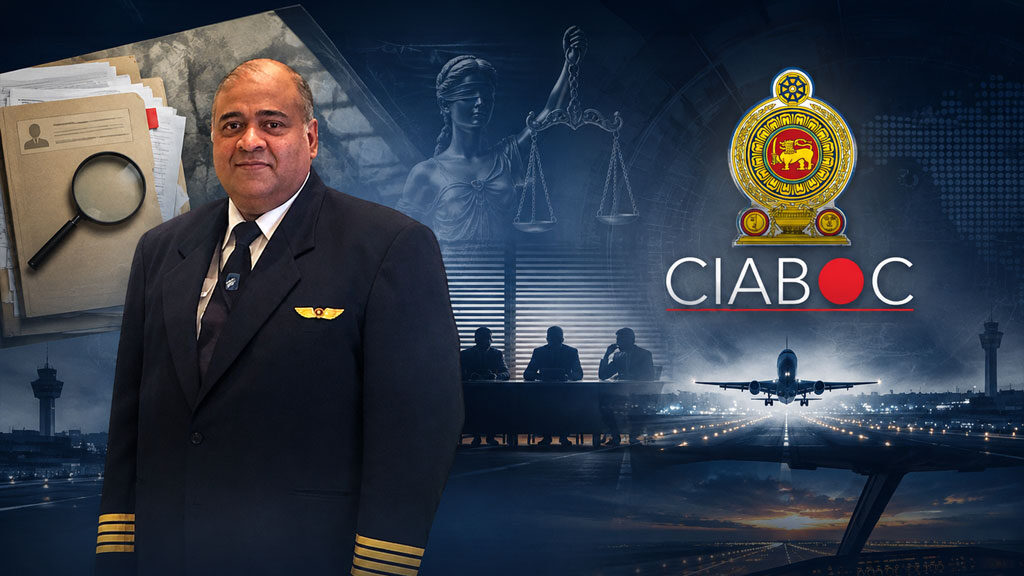
The appeal, filed by former international airline captain Anil Jayasinghe, centres on his complaint to the Commission to Investigate Allegations of Bribery or Corruption (CIABOC) over alleged irregularities in civil aviation licensing. More than two years after the complaint was lodged, Jayasinghe says repeated requests for information about its progress went unanswered, culminating in an RTI request that allegedly remained without a substantive response for months.
The case does not ask the RTI Commission to determine whether corruption occurred. Instead, it raises two fundamental questions: can a public authority remain non-responsive to a citizen seeking information, and does a person who reports alleged wrongdoing have a right to receive a meaningful procedural update while an investigation remains active?
According to documents filed before the Commission, Jayasinghe lodged his CIABOC complaint on or about May 30, 2024, under reference AC/1686/2024. He alleges that former Civil Aviation Authority of Sri Lanka Director of Aircraft Operations Lushan Fernando fraudulently obtained an Airbus A320 type endorsement and subsequently secured employment with FITS Aviation despite allegedly not meeting advertised qualifications.
Jayasinghe further alleges that the matter reflects wider irregularities in pilot licensing and could have implications for aviation safety. The allegations have not been proven in court.
CIABOC acknowledged the complaint in July 2024 and informed Jayasinghe that an investigation would be conducted. He was later summoned to provide a statement to investigators and says he supplied additional documentary material.
But, according to his submissions, communication subsequently stalled.
Jayasinghe lists correspondence sent in February, September and October 2025, followed by further requests in December and January 2026. He says these communications received neither meaningful acknowledgement nor information on the investigation’s progress.
He eventually submitted an RTI request on November 24, 2025. When that too allegedly went unanswered, he appealed to the RTI Commission.
CIABOC now relies on Section 5(1)(h) of the RTI Act, arguing that disclosure concerning an ongoing investigation could compromise investigative strategies, expose confidential sources, influence witnesses, facilitate destruction of evidence or prejudice future prosecutions.
The anti-corruption body also maintains that filing a complaint does not give the complainant ownership or supervisory authority over an investigation.
Jayasinghe disputes that interpretation. He says he never sought confidential evidence, witness statements or investigative files. His request, he argues, was limited to a basic status update.
That distinction lies at the heart of the dispute.
Jayasinghe also argues that Section 32(4) places the burden on the authority seeking to withhold information to demonstrate why disclosure should be prevented. In his view, a general warning that disclosure could interfere with an investigation is insufficient unless CIABOC can establish how the specific information requested would cause such harm.
The case also brings public interest into sharper focus. Jayasinghe argues that alleged irregularities in pilot licensing are not merely administrative matters, given the potential consequences for passenger safety.
CIABOC, meanwhile, maintains that investigative confidentiality is essential to effective anti-corruption enforcement.
The Commission’s eventual ruling could therefore extend well beyond this dispute. If it recognises a right to meaningful procedural updates during ongoing investigations, public authorities may face greater pressure to communicate with complainants.
If CIABOC’s interpretation prevails, investigative agencies could retain wider discretion to withhold information while inquiries remain active.
Ultimately, the case asks a deceptively simple question: when a citizen reports alleged corruption, does the right to know include the right to know what happened next?.