




Sri Lanka’s Parliament has moved to tighten import regulations after investigations uncovered that more than US$715 million flowed out of the country through advance payment schemes without the corresponding goods ever arriving, exposing one of the country’s largest suspected trade-based foreign exchange leakages in recent years.
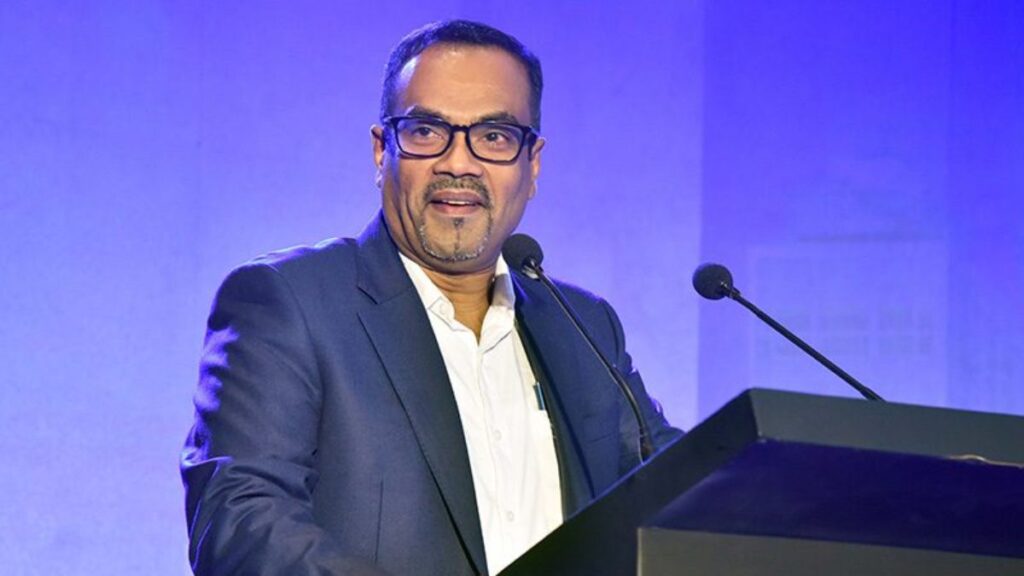
The revelations emerged as Deputy Minister of Finance and Planning Anil Jayantha presented two new regulations under the Import and Export (Control) Act, arguing that long-standing loopholes had enabled individuals and companies to exploit weak oversight mechanisms while placing pressure on the country’s already fragile foreign exchange reserves.
According to the government, investigations conducted by the Criminal Investigation Department (CID) and other law enforcement agencies between 2023 and 2026 identified approximately 55 individuals and 107 companies allegedly involved in exploiting advance payment provisions. Existing rules permitted importers to remit payments overseas and take between 360 and 720 days to bring goods into the countrya window investigators say was repeatedly abused to transfer funds abroad without completing imports.
“In terms of dollar outflow, a massive sum of around US$715 million has left the country, which adversely affects our balance of payments,” Jayantha told Parliament.
The newly introduced Regulations No. 5 and No. 6 of 2026 seek to close these gaps by requiring importers to register with Sri Lanka Customs before banks release advance payments. Businesses must now provide transaction details, beneficiary information, a Unique Identification Number (UIN), and Taxpayer Identification Number (TIN), enabling authorities to track transactions more effectively.
The government is also preparing amendments to the Foreign Exchange Act No. 12 of 2017, proposing to make the failure to remit foreign exchange a criminal offence instead of a civil violation punishable primarily through Central Bank fines.
However, the opposition argues that the scandal reflects institutional failure rather than legislative shortcomings.
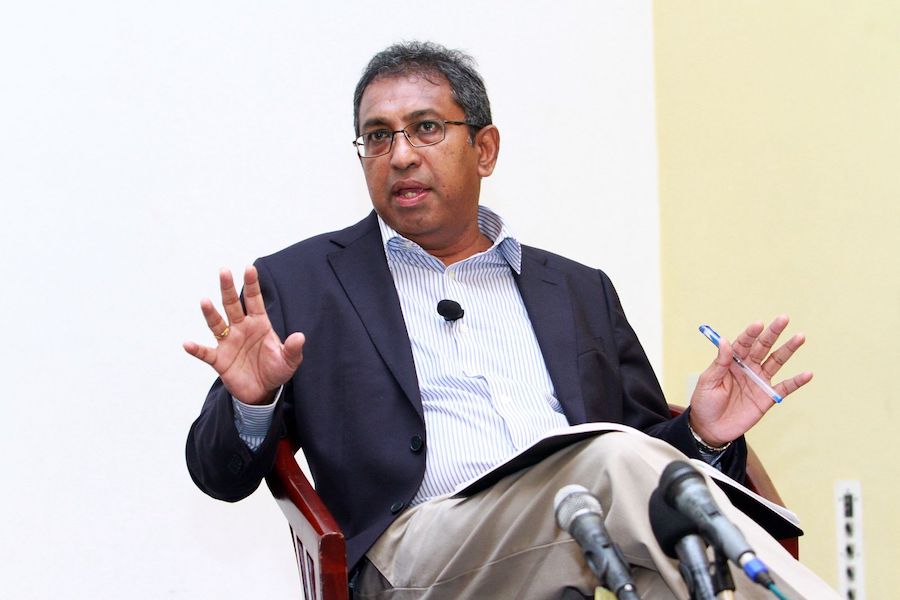
Opposition MP Harsha de Silva blamed weak enforcement and poor coordination among state agencies, pointing to serious deficiencies in the Customs Department’s ASYCUDA system, which he said cannot reconcile customs declarations with banking transaction records. He also alleged that intelligence generated by the Central Bank’s Financial Intelligence Unit (FIU) on suspected trade-based money laundering had gone largely unenforced.
“The problem lies within the ASYCUDA system,” de Silva said. “Because there is no coordination, these thieves slip through the cracks.”
Committee investigations also exposed alarming administrative failures. Police officials reportedly revealed that some bank accounts had been opened using nothing more than a full stop in place of a valid TIN number, while numerous shell companies registered with the Registrar of Companies lacked verified addresses or meaningful background documentation.
De Silva cautioned that the government’s solution could unintentionally burden legitimate businesses by requiring registration across multiple state institutions, increasing compliance costs and delaying imports that ultimately affect consumers.
Responding to those concerns, Jayantha maintained that compliant businesses have nothing to fear, insisting that recent arrests were linked solely to parties refusing to cooperate with customs investigations.
The debate leaves Sri Lanka confronting a broader question: whether stronger laws alone can prevent future capital flight, or whether meaningful reform depends on fixing the institutional weaknesses that allowed hundreds of millions of dollars to disappear unnoticed.