




Sri Lanka appears headed toward an unprecedented confrontation between the Government and the legal profession after Cabinet approved plans to amend the Constitution and the Judicature Act to extend the retirement age of superior court judges.
While ministers describe the proposal as an administrative reform designed to improve judicial efficiency, legal organizations across the country argue that the amendments raise fundamental constitutional concerns and could alter the balance between the Executive and the Judiciary.
The proposal would increase the retirement age of Supreme Court judges from 65 to 67 years and Court of Appeal judges from 63 to 65 years.
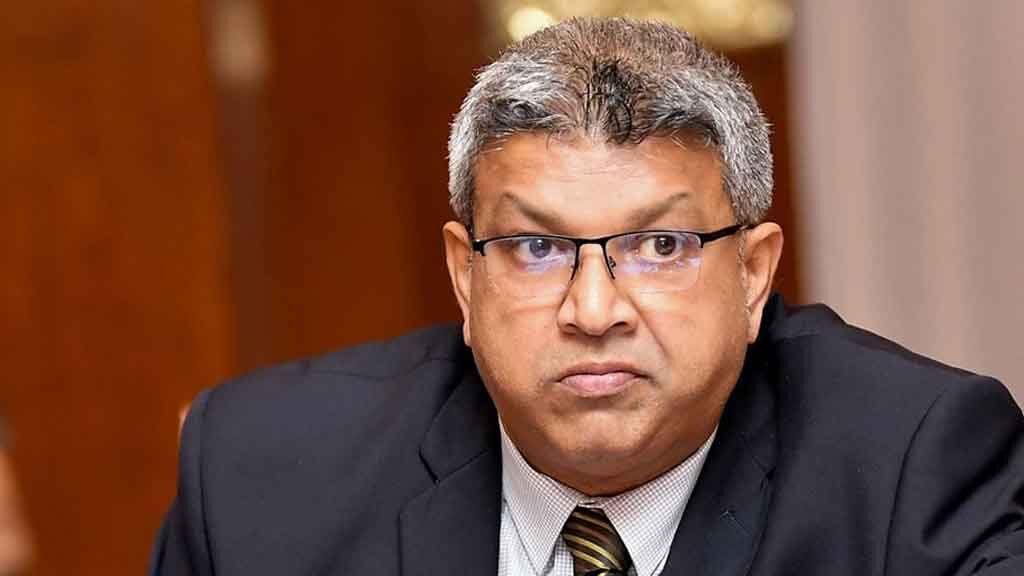
Justice Minister Harshana Nanayakkara has defended the initiative, stating that experienced judges are needed to address the country’s mounting case backlog of more than one million pending matters while broader justice-sector reforms are implemented.
Hitherto the response from the legal community has been unusually unified.
The Bar Association of Sri Lanka, representing approximately 26,000 lawyers, has announced consultations with the Justice Minister while simultaneously preparing for large-scale professional action if the Government proceeds without meaningful stakeholder engagement.
Regional organizations, including the Colombo High Court Lawyers’ Association, the Gampaha Lawyers’ Association, and Free Lawyers Sri Lanka, have publicly aligned themselves with the BASL’s position. Several groups have warned that demonstrations in Colombo remain a possibility should Parliament fast-track the legislation.
At the centre of the dispute is the argument that judicial tenure should not be altered without broad constitutional consensus.
BASL President Rajeev Amarasuriya has stated that judicial reforms affecting constitutional structures require transparency and public participation. The association also argues that any constitutional amendment of this nature should be subjected to a national referendum if required under the Constitution.
Another major concern involves judicial appointments.
Legal organizations contend that extending the tenure of current judges could postpone appointments to the Supreme Court and Court of Appeal, affecting promotions throughout the judicial hierarchy. According to the Judicial Service Association, such delays could weaken morale among judges serving in lower courts and undermine confidence in the judicial system.
Critics have also highlighted the existence of eight vacancies in the superior courts, arguing that filling those positions should take precedence over altering retirement ages.
The controversy has quickly expanded into the political arena.
Opposition MP M.A. Sumanthiran has been among those criticizing Justice Minister Nanayakkara, while opposition parties have intensified political pressure following unrelated controversies surrounding the Justice Ministry. Although a no-confidence motion against the Minister was defeated in Parliament by 152 votes to 36, opposition parties continue to challenge the government’s approach to judicial reform.
Attention has also focused on the impending retirement of the current Chief Justice. Some civil society groups and legal commentators have questioned whether the timing of the proposed amendments could affect the leadership of the Supreme Court. The Government has consistently maintained that the proposal is intended to improve institutional efficiency rather than benefit any individual.
Legal experts expect that if Parliament passes the amendments, constitutional challenges are likely to follow. Former BASL President Saliya Peiris, PC, has indicated that opponents may argue the legislation infringes constitutional principles relating to the sovereignty of the people.
What began as a proposal to retain experienced judges has therefore evolved into a broader constitutional test. The coming weeks are expected to determine whether dialogue between the Government and the legal profession can bridge the divide—or whether Sri Lanka is heading toward a prolonged institutional confrontation involving Parliament, the courts, and the country’s legal community.
By Special Correspondent