




The latest decline in Sri Lanka’s official foreign exchange reserves has evolved into more than a dispute over economic statistics. It has become a broader debate over transparency, accountability and public confidence in the country’s post-crisis economic recovery.
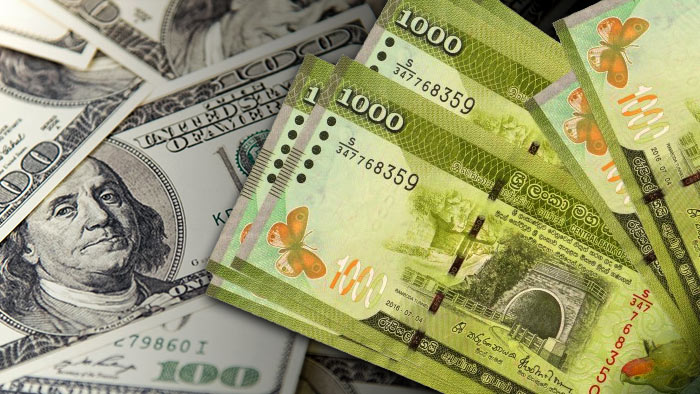
Official data show gross foreign reserves falling to around USD 6.4 billion by the end of June from approximately USD 6.8 billion earlier this year. Although the decline appears relatively modest, it has attracted considerable political attention because reserve accumulation remains a central commitment under Sri Lanka’s IMF-supported economic reform programme.
Opposition MP and former Finance Minister Ravi Karunanayake argues that the reserve decline raises important questions about how the Central Bank is managing foreign exchange. He believes the reduction suggests authorities may be using reserves to cushion the rupee against depreciation instead of allowing market forces to determine the exchange rate.
Beyond the intervention allegation, Karunanayake has repeatedly called for greater disclosure regarding the composition of Sri Lanka’s reserves. He argues that headline figures provide only a partial picture and that policymakers should disclose how much of the reserves are immediately usable, how much is tied to liabilities and how much remains encumbered under various financial arrangements.
Such transparency, he argues, is essential for investors, Parliament and the public to properly evaluate Sri Lanka’s financial position.
Central Bank Governor Dr. Nandalal Weerasinghe has categorically dismissed suggestions of concealed intervention. According to the Governor, reserve movements are primarily explained by exceptionally high import payments, particularly fuel, vehicles and other essential goods.
He also points to continued net purchases of foreign exchange by the Central Bank, noting that more than USD 550 million has been accumulated from the domestic market during the first half of 2026 despite temporary reserve fluctuations.
Officials further emphasise that Sri Lanka continues to benefit from strong worker remittances, stable export earnings and expected multilateral financing from the IMF, Asian Development Bank and World Bank.
The disagreement illustrates two contrasting interpretations of the same data.
Critics focus on declining gross reserves and the gap between current levels and IMF programme aspirations. The Central Bank instead highlights Net International Reserves, ongoing foreign exchange purchases and temporary import-related pressures that are expected to ease over time.
Independent analysts note that both perspectives contain valid concerns. Gross reserves remain an important indicator of external resilience, while NIR provides a more accurate measure of the country’s immediately available foreign exchange position.
Ultimately, confidence in reserve management depends not only on economic performance but also on institutional credibility. As Sri Lanka continues rebuilding after its worst economic crisis in decades, clear communication and transparent reporting will be as important as the reserve figures themselves.
With reserve accumulation expected to accelerate through anticipated multilateral inflows during the second half of the year, the coming months will determine whether the Central Bank’s optimism is justified or whether opposition concerns about reserve sustainability gather greater political momentum.
Sri Lanka’s foreign exchange reserves has come under scrutiny following a recent drop in official figures, with opposition politicians alleging dollar sales by the central bank to defend the local currency, while monetary authorities attributed the decline to elevated import demand.
Opposition Member of Parliament Ravi Karunanayake noted that gross official reserves dropped from 6.8 billion dollars to 6.4 billion dollars, moving away from the year-end target of 8.9 billion dollars outlined under the International Monetary Fund (IMF) program.
“Dropping it to 6.4 billion suggests that they are selling dollars to protect the rupee—meaning they are selling off dollars to prevent depreciation,” Karunanayake said.
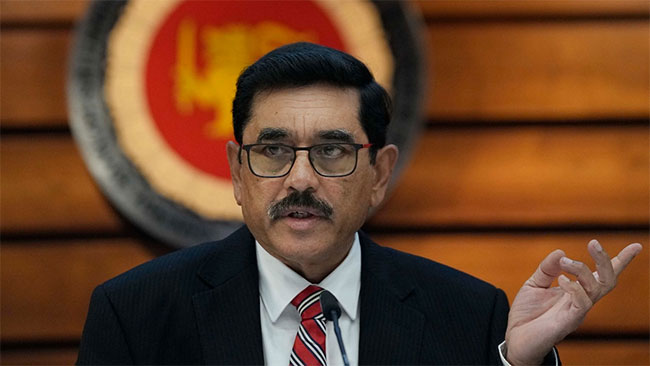
Responding to queries at today’s monetary policy review, Central Bank Governor Nandalal Weerasinghe clarified that the fall in reserves was caused by higher import outflows rather than intervention to protect the exchange rate. He pointed out that monthly import expenditure had been running above 2.0 billion dollars for several months, reaching as high as 2.4 billion dollars in one month.
According to Weerasinghe, the surge in imports was driven by higher international petroleum prices, increased import volumes of vehicles and fuel partly due to stockpiling by petroleum suppliers to maintain buffer stocks in April and broader import expansion fueled by credit growth running at around 27 percent.
The Governor noted that while import outflows expanded, substantial foreign currency inflows are expected from multilateral lenders to boost reserve levels. The central bank recently received the fifth and sixth tranches from the IMF, with additional inflows anticipated from the Asian Development Bank (ADB) and the World Bank.
“Gross official Reserve target estimate is around to have it over 8 billion dollars by the end of the year, but there is an NIR target which is a much lower number where we take out other short-term liabilities,” Weerasinghe said.
Commenting on mid-year performance, Weerasinghe mentioned that official reserve and Net International Reserve (NIR) targets were revised for end-June and end-December to reflect market conditions. While balance sheet numbers are still provisional, the Central Bank believes it has met the revised end-June NIR target, with active market purchases and incoming multilateral receipts set to further strengthen the country’s overall reserve position going forward.
By a Special Correspondent