




A key transmission project underpinning Sri Lanka’s renewable energy ambitions and the India-backed Sampur Solar Park has hit another hurdle, with authorities seeking fresh Cabinet approval after revising the project’s transmission capacity—raising concerns over further delays, procurement setbacks, and the country’s broader clean energy agenda.
The Sampur-Kappalthurai Transmission Infrastructure Development Project, originally designed as a 220 kV transmission line, has now been expanded to a planned 580 kV capacity, according to National Transmission Network Service Provider (NTNSP) Chairman Nusith Kumaratunga.
He said the revision was necessary to accommodate anticipated growth in electricity demand and the large volume of renewable energy expected from the Eastern Province.
“There has been a change in the scope as the initially planned transmission capacity was 220 kV, which has now been increased to 580 kV due to the expected demand for transmission and future power generation from the area,” Kumaratunga said.
He confirmed that the revised scope has already been submitted to Cabinet for approval before fresh tenders are called for the additional work. Although acknowledging that reaching the tender stage had already taken around a year, Kumaratunga maintained that only the newly added scope would require procurement, rather than a complete retendering of the project.
The decision, however, has prompted questions from engineers closely involved with the project, who argue that the transmission line had already been designed with sufficient spare capacity to support future renewable energy developments.
According to them, financial bids for the transmission line have already been received but remain unopened because authorities now believe the original design may not adequately absorb future solar generation in the region. They dispute that assessment, insisting the existing design could already accommodate nearly 600 MW of renewable energy and questioning why years of technical planning are now being revisited.
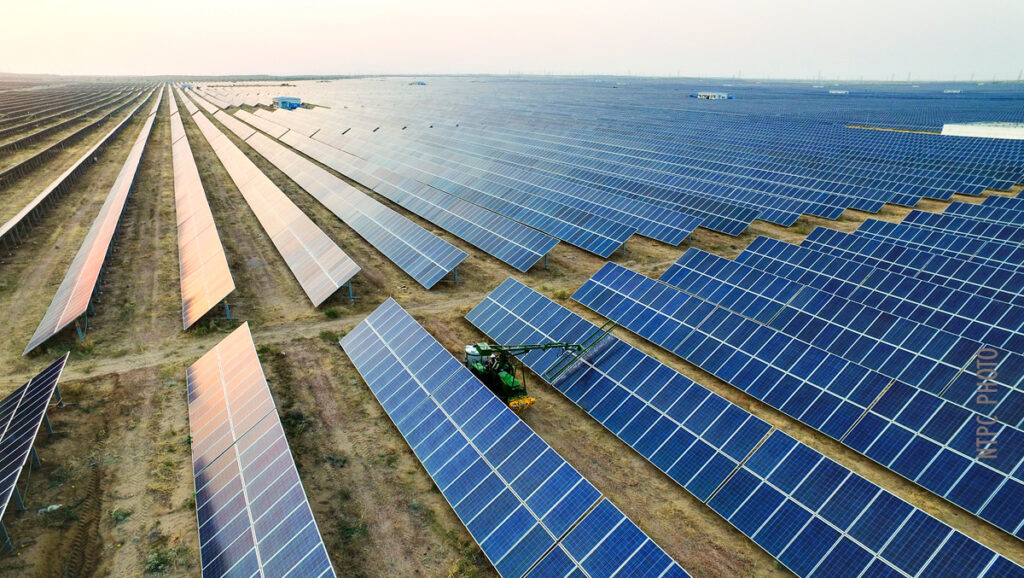
The project has undergone several transformations over the past decade. Initially proposed in 2015 to evacuate electricity from the planned Sampur coal-fired power plant, it was repurposed after the coal project was cancelled following the change of government the same year. The land earmarked for the coal plant is now intended to host a 120 MW solar park under Sri Lanka’s renewable energy programme.
According to the July 2025 Environmental and Social Impact Assessment (ESIA), the solar park will be developed in two phases, with an initial 50 MW expected to connect to the national grid in early 2028, followed by an additional 70 MW. The assessment also identifies around 700 MW of renewable energy projects currently seeking approvals across the surrounding region.
The transmission line is regarded as strategically important because it links the proposed Sampur development with the Kappalthurai Grid Substation—the primary gateway connecting Trincomalee to Sri Lanka’s national transmission network and a future 400 kV transmission corridor extending through Kilinochchi and Habarana.
The project has already secured domestic environmental approvals and is expected to receive concessional financing from the Asian Infrastructure Investment Bank (AIIB).
However, engineers warn that altering the transmission design at this advanced stage risks repeating portions of the procurement process, delaying not only the transmission line but also associated renewable energy investments. They caution that prolonged uncertainty could undermine investor confidence, discourage international financiers, and slow Sri Lanka’s transition towards large-scale renewable energy integration at a time when strengthening the national grid has become increasingly critical to future electricity security.
By a Special Correspondent