




The Dr. Neville Fernando Teaching Hospital (NFTH) saga has emerged as one of Sri Lanka’s most costly examples of how a private-sector liability can gradually become a public financial burden. Over nearly a decade, successive administrations are estimated to have committed between Rs.5.5 billion and Rs.7 billion in public funds to a hospital that, for much of that period, was not legally owned by the State.
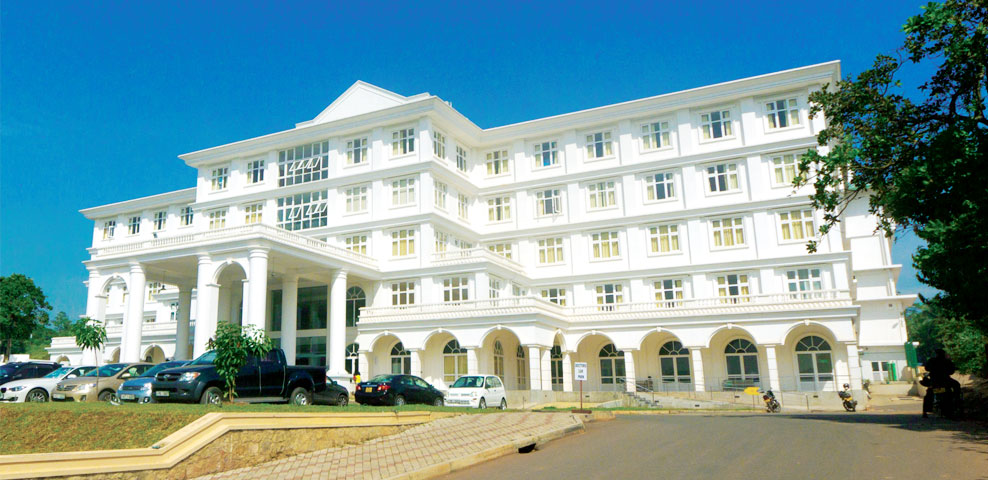
Now, in September 22 2026, the Government has moved to end the prolonged ownership uncertainty by converting NFTH into a state-owned enterprise, with 100% equity held by the General Treasury under a cabinet decision, after 13 years of stagnation. .
The central question for taxpayers is no longer simply how the hospital was rescued, but how billions of rupees were spent before the State secured clear ownership of the asset and what action the NPP government going to take against perpetrators. .
The origins of the crisis go back to 2013, when Dr. Neville Fernando established the 1,000-bed hospital in Malabe as the teaching facility of the South Asian Institute of Technology and Medicine (SAITM).
The establishment of Sri Lanka’s first private medical college triggered a prolonged confrontation involving medical students, professional organisations and authorities over the institution’s standards, recognition and legality.
The crisis intensified under the Yahapalana administration, which sought to resolve the controversy through a highly publicised 2017 arrangement placing the hospital under the Health Ministry. However, subsequent revelations before a Presidential Commission of Inquiry raised serious questions about the financial structure of that arrangement.
One of the most significant revelations concerned what has been described as a 10-year ownership loophole. According to evidence cited in the inquiry, a clause contained in the 2017 Cabinet paper meant that although the State was assuming responsibility for the facility, its legal ownership remained with SAITM for a decade.
This created a remarkable situation: the Treasury was spending public money on an asset it did not legally own.
The financial burden was substantial. Public funds were used to service a Rs.2.5 billion Rs.3 billion Bank of Ceylon loan obtained by Dr. Fernando. Health Ministry officials also acknowledged approximately Rs.2.18 billion in public expenditure on operational and capital requirements of the hospital.
The recurring burden extended to salaries, with the State reportedly carrying a monthly staff wage bill of approximately Rs.40 million. A single allocation in 2019 amounted to Rs.182 million, illustrating the scale of expenditure required to keep the facility functioning.
The controversy deepened when allegations emerged that private interests had sought to sell the hospital to other private buyers even while taxpayers were supporting its finances.
The SAITM crisis also created an academic emergency. Parliament subsequently enacted the KDU (Special Provisions) Act No.17 of 2018, facilitating the absorption of 864 eligible civilian medical undergraduates into the Faculty of Medicine at General Sir John Kotelawala Defence University.