




The substandard medicine trial, filed against 12 accused individuals including former Health Minister Keheliya Rambukwella, is currently being heard before the Permanent High Court at Bar. Observations from the 15th day of the proceedings serve as a stark reflection of the severe vulnerabilities, institutional inefficiency, and sheer irresponsibility prevalent within Sri Lanka’s healthcare administration.
The Prosecution’s Predicament and the Stance of the Bench
During the trial, a noticeable disarray in the prosecution’s case presentation and the evasive nature of its witnesses became glaringly apparent under the defense’s cross-examination. While Mr. H.M.W.N. Bandara, the Chief Stock Controller of the Medical Supplies Division (MSD), was responding to cross-examination, Deputy Solicitor General (DSG) Lakmini Girihagama raised a notable objection before the court.
- DSG Lakmini Girihagama: (Raising an objection) “The Chief Stock Controller of the Medical Supplies Division is not testifying before the court in his capacity as a stock controller. Please caution him regarding this matter.”
- Permanent High Court at Bar (The Bench): (Rejecting the request) “The witness must be granted the opportunity to testify freely.”
This underscores the significant challenge the prosecution faces, as their own witness’s apparent dereliction of official duties is being systematically highlighted by the defense. The Bench’s ruling paved the way for the true roles and the level of awareness of state officials to be openly scrutinized in court.
Email Evidence and “Zero” Lifesaving Drugs
The series of questions posed by Counsel Priyantha Nawana, representing the 10th accused, quantitatively exposed the tragedy the country’s medical supply chain faced in mid-2022. This line of questioning was anchored to an internal email dated May 23, 2022.
- Counsel Priyantha Nawana: (Presenting an email sent by the witness for inspection) “This message contains orders related to medicines, doesn’t it? Are they essential medicines?”
- Witness (H.M.W.N. Bandara): “Yes, My Lord.”
- Counsel Priyantha Nawana: “Does that summary categorize them as lifesaving drugs, non-essential drugs, and essential drugs? It was sent on May 23. What was the stock level as of that date?”
- Witness: “According to that, lifesaving drugs at the MSD were at zero.”
The depletion of lifesaving drug stocks to “zero” at the Medical Supplies Division (MSD)—the very core of the country’s healthcare system—is not a mere administrative oversight, but a grave national tragedy. It is precisely within these systemic loopholes that the groundwork for the substandard medicine racket was laid.
The Core of the Crisis: Rituximab and Human Immunoglobulin
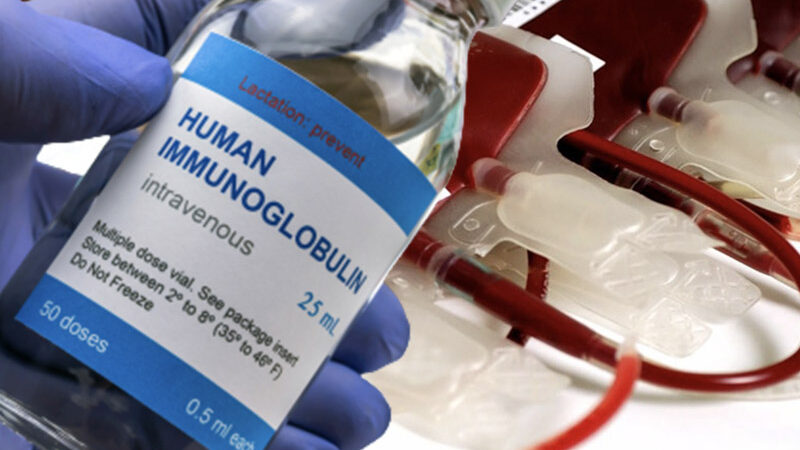
The breakdown of the supply chain was further corroborated when the defense counsel questioned the stock levels of the two primary drugs involved in the litigation.
- Counsel Priyantha Nawana: “Compare the stock status of both medicines.”
- Witness: “The monthly requirement for Rituximab is 75. However, it was zero at the MSD. There were 850 in the institutions. The monthly requirement for Human Immunoglobulin is 7,500. There were 5,500 at the MSD and 4,420 within the institutions.”
The situation deteriorated further by June and August 2022. According to an email sent to senior officials, including Additional Secretary Saman Rathnayake, the witness himself described the critical status of essential medicines:
- Counsel Priyantha Nawana: “This was sent to Additional Secretary Rathnayake and Deputy Director Wickramasinghe on June 21, 2022, to notify them of the MSD stocks. Had the stocks reached zero by that date?”
- Witness: “I stated that lifesaving drugs were at 1 at the MSD, and zero in the institutions. Essential medicines were at 18 at the MSD, and zero in the institutions.”
- Counsel Priyantha Nawana: “Did you notice that by August 2022, the MSD stock of Human Immunoglobulin, an essential drug, had reached zero?”
- Witness: “Yes, My Lord.”
- Counsel Priyantha Nawana: “Were there no stocks matching the monthly requirement?”
- Witness: “MSD had 0, and the institutions had 765.”
Concluding Observations
This cross-examination clearly indicates that although senior officials were repeatedly notified via email that lifesaving and essential drug stocks were depleting to zero over several months, the relevant state machinery completely failed to implement prompt and systematic preemptive solutions.
The failure of the prosecution’s witnesses to testify responsibly regarding their official duties reflects a deeply flawed institutional culture—one that operates on the assumption that accountability ends merely at “notifying superiors of zero stocks.”
Evaluated without prejudicing the independence of the judiciary, the aforementioned courtroom dialogues thoroughly establish that this trial exposes the internal collapse of a highly irresponsible health administration system dealing directly with human lives. The further cross-examination of the said witness has been adjourned to today (16th).