




Prosecution’s Narrative Crumbles Before the Defense in Substandard Drug Trial
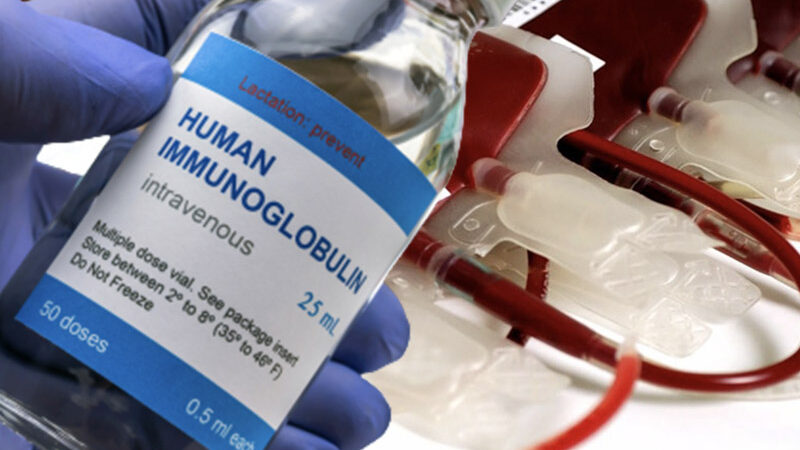
The Trial-at-Bar at the Colombo Permanent High Court—hearing the case against 12 accused, including former Health Minister Keheliya Rambukwella, over the procurement of substandard human immunoglobulin and rituximab—has reached a critical turning point. Before the bench comprising Presiding Judge Priyantha Liyanage, Judge Viraj Weerasuriya, and Judge Thilakarathne Bandara, the defense counsels’ cross-examination of the 339th prosecution witness, Criminal Investigation Department (CID) Inspector of Police Eranga Prabhash Laksiri, thoroughly exposed severe shortcomings and the incomplete nature of the two-and-a-half-year investigation.
No Forged Signatures or Fabricated Documents
The defense established before the Court that no accused had fabricated documents or used forged signatures. Responding to cross-examination by Counsel Nuwan Jayawardena, representing the 6th accused, the witness directly admitted that the investigation found no evidence of any officer preparing fabricated documents using forged signatures, affirming that the documents signed by the officials were authentic.
Furthermore, the witness conceded that a technical analysis of telephone records confirmed no personal correspondence existed between the 1st accused and the 6th accused. It was also established that the Secretary’s approval to obtain blood plasma was a strictly official administrative procedure, and the preparation of cabinet memoranda was conducted through formal administrative channels.
Selective Evidence and Investigative Gaps
Although the witness rejected the defense’s assertion that the investigation employed a ‘pick and choose’ methodology by only recording statements favorable to the prosecution, the cross-examination highlighted glaring investigative gaps. The defense strongly criticized the CID’s failure to review the Board of Directors’ minutes of the State Pharmaceuticals Corporation (SPC) and the failure to record statements from crucial officers—such as Shiranthi Dissanayake, who prepared the cabinet memorandum, or Sathish Kumara, who printed the purchase orders—citing they had “gone abroad.”
- Counsel Nuwan Jayawardena: “I suggest that this investigation has not been conducted fairly or properly. Statements from essential witnesses have been completely omitted.”
- CID Witness: “Only the statements of necessary individuals were recorded.”
- Counsel Nuwan Jayawardena: “I suggest that you have only recorded the statements of those favorable to the prosecution.”
The defense further illustrated the investigation’s inadequacy by pointing out the failure to question bank officials regarding fund withdrawals despite a discrepancy in the payee’s name on the vouchers, as well as the failure to investigate the crossing out of the word ‘visit’ on a critical document.
Subordinate Officers Acted on Superior Directives
Through evidence elicited by Counsel Ashoka Serasinghe, representing the 4th and 5th accused, it was corroborated that subordinate officers acted strictly upon instructions from their superiors. Although the Waiver of Registration (WOR) certificate had expired when the Rituximab stock was received, the witness admitted that prior directives had been issued by higher-ranking officials.
- CID Witness: “My Lord, Rituximab is an anti-cancer drug. According to a policy decision made at a meeting chaired by the Health Minister, the 7th accused had issued written instructions to maintain buffer stocks for 6 to 9 months.”
Based on this directive (Document P-401), the defense emphasized that the drugs were received and the process advanced to the payment stage without objection from any superior officer, thereby affirming that the 5th accused properly executed the receiving protocol. The defense also challenged the witness’s claim that printed copies of purchase orders were only generated after approval in the Pronto system, suggesting it was factually incorrect.
Verifying Standards is NMRA’s Duty: Investigations Conducted Without English Proficiency
Defense counsels, including Isuru Jayawardena representing the 3rd accused and Aravindu Manatunga Arachchi representing the 7th accused, underscored that the statutory authority to ensure the quality, safety, and efficacy of pharmaceuticals lies exclusively with the National Medicines Regulatory Authority (NMRA). Under cross-examination, the CID officer admitted that the stock control officers and assistant directors of the Medical Supplies Division had never been provided with any training on verifying Certificate of Analysis (COA) documents.
A highly controversial revelation emerged when defense counsels exposed that the investigating officer, despite lacking proficiency in the English language, had conducted a complex investigation relying heavily on English-language documents.
- Defense Counsel: “You admit that you do not possess much knowledge of the English language. That being the case, how did you conduct such a complex investigation utilizing documents in English?”
- CID Witness: “Evidence was obtained from the relevant witnesses regarding those documents. Clarifications were sought when necessary.”
- Defense Counsel: “So, are you simply coming here and repeating what others have told you?”
- CID Witness: “I am stating what was revealed during the investigation.”
Subsequently, the counsel representing the 9th accused cross-examined the witness, establishing that the 9th accused possessed no decision-making authority in emergency procurement matters and that the decisions of the HSEPC committee were not final.
- Defense Counsel: “I suggest that the ninth accused does not have the capacity to make decisions regarding emergency procurement.”
- CID Witness: “He submitted the relevant recommendation. It was revealed he gave instructions to prepare the relevant documents.”
- Defense Counsel: “Was it revealed during the investigation that the HSEPC committee’s decision was the final decision?”
- CID Witness: “No, it was revealed that it is not the final decision.”
Considering the totality of these revelations, the defense counsels are effectively demonstrating before the High Court that the overarching criminal narrative constructed by the prosecution is heavily reliant on assumptions, third-party interpretations, and fundamentally incomplete investigations.