




Colombo’s oceanfront skyline carries a 47-storey reminder of how corporate fraud, political controversy, state intervention and institutional failures can combine to produce an extraordinary public financial burden.
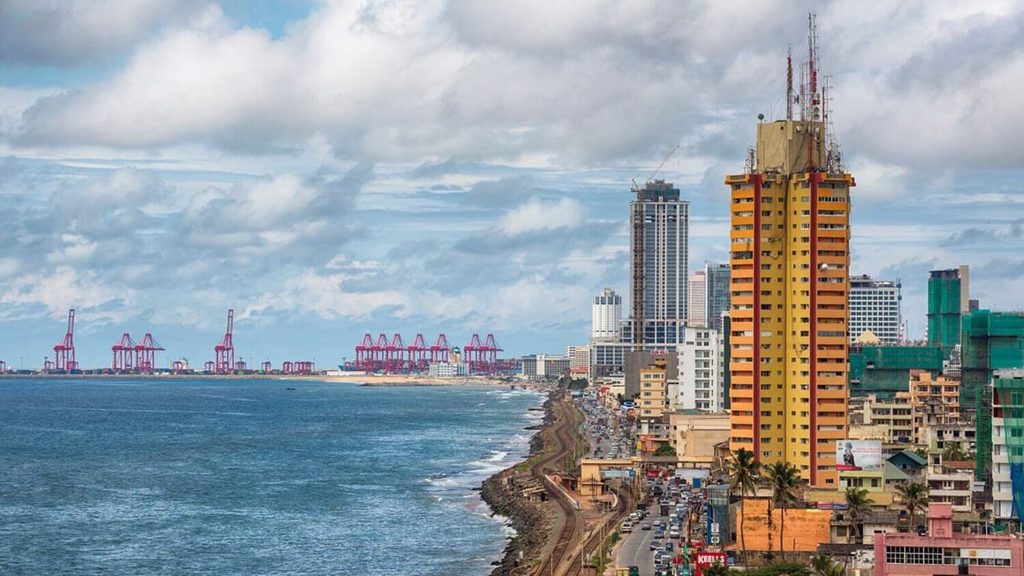
The unfinished high-rise in Kollupitiya was originally conceived in 2003 as the ultra-luxury Ceylinco Celestial Residencies under billionaire businessman Lalith Kotelawala. The ambitious project collapsed following the 2008 Golden Key Credit scandal, leaving construction frozen at the 15th floor and 85 apartment purchasers trapped after paying a combined Rs.2.3 billion in cash advances.
Instead of allowing the failed project to disappear with the collapse of its corporate parent, the State intervened in 2012 under the Revival of Underperforming Enterprises and Underutilized Assets Act. Ownership was transferred to Canwill Holdings (Pvt) Ltd and its subsidiaries, Sinolanka Hotels & Spa and Helanco Hotels & Spa.
The intervention, however, failed to transform the abandoned project into a productive national asset. More than Rs.20 billion in public funds subsequently went into the venture, yet the property remains unfinished and non-performing.
The financial controversy deepened when adjoining properties belonging to Ranmuthu Hotels and Ceylinco Insurance PLC were acquired for expansion at prices allegedly far above statutory limits. The acquisitions resulted in the State paying more than Rs.1 billion above the valuations permitted by the Government Valuer, according to the findings outlined in the document.
Investigations by the Financial Crimes Investigation Division subsequently exposed further allegations involving senior officials of the Mahinda Rajapaksa administration. Former Presidential Chief of Staff Gamini Senarath and Canwill Managing Director Piyadasa Kudabalage were accused of irregularly channeling Rs.500 million of State-owned Litro Gas funds into unauthorized secondary accounts and an abandoned secondary resort venture in Hambantota.
That Hambantota venture involved a 9.42-acre beachfront lease, which eventually expired, leaving the State with a complete financial loss from the property.
The Employees’ Provident Fund also invested Rs.5 billion in an unlisted equity stake in the project. The investment generated no commercial profits or dividends for a decade, eventually forcing a distressed capital exit to absorb the losses.
Procurement practices also came under severe criticism. A US$37 million international contract was allegedly rushed through and executed the day before a crucial Presidential Election. An Rs.80 million cash advance was paid to a fittings supplier without board approval, while Rs.12.8 million was spent on a single ceremonial contract-signing event. Another Rs.300 million was spent on the abandoned Hambantota site before construction even began.
However the subsequent criminal prosecutions collapsed. On August 8, 2019, a three-member Permanent High Court-at-Bar delivered a 283-page judgment acquitting and releasing all principal defendants, citing severe evidentiary deficiencies. The State consequently obtained no criminal restitution.
The 2023 Auditor General’s report later identified another Rs.2 billion internal accounting discrepancy involving irregular share issuances.
Now, the Ministry of Finance and transaction adviser Deloitte Touche Tohmatsu India LLP are pursuing a 100% divestiture of Canwill Holdings. The Government hopes to attract local or international investors prepared to inject an estimated US$120 million required to complete the interiors.
Prospective investors are reportedly questioning whether the property could obtain a casino licence.
But beneath the restructuring lies the unresolved human cost: the original 85 apartment buyers remain without escrow protection or adequate statutory safeguards, potentially classified as unsecured, low-priority creditors.
For them, Colombo’s towering structure represents not merely an unfinished building, but two decades of uncertainty over Rs.2.3 billion in deposits and the fate of their life savings.