




Sri Lanka’s coal procurement controversy is emerging as far more than a procurement failure. It has developed into a costly electricity-generation problem with direct consequences for the Treasury, the national power system, businesses and millions of electricity consumers.
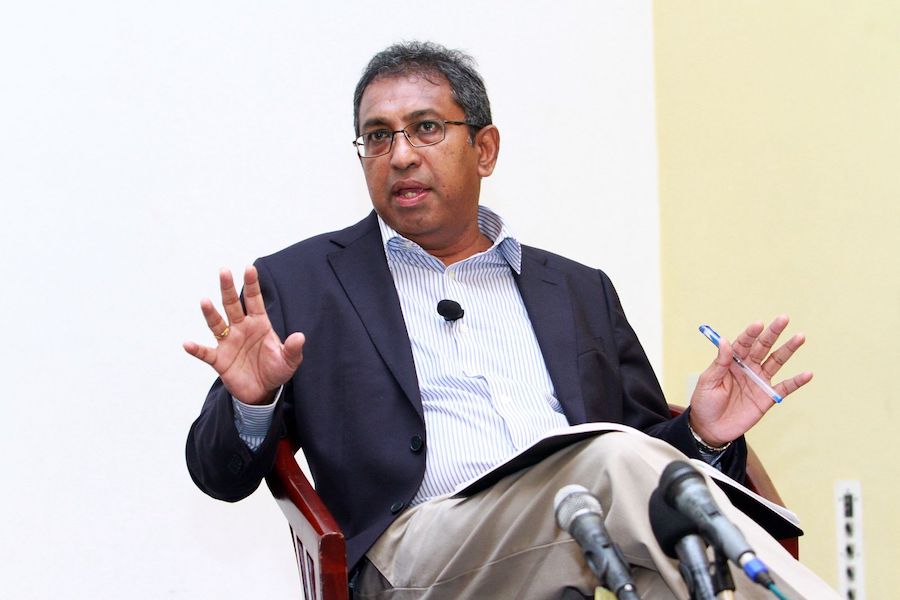
Chairman of Parliament’s Public Finance Committee Dr. Harsha de Silva has disclosed an estimated Rs.1.4 billion loss linked to the use of substandard coal. His assessment includes around Rs.800 million in direct losses caused by the need to resort to alternative electricity generation, while a further Rs.400–600 million loss has been projected.
But evidence before the Presidential Commission of Inquiry into coal transactions suggests that the financial exposure could be substantially larger. Testimony in July indicated that the use of questionable coal had generated more than Rs.4.5 billion in additional costs within just four months, because the Norochcholai plant could not supply the electricity expected from it.
That shortfall has created a dangerous chain reaction.
When coal-fired generation falls below requirements, the national grid must obtain electricity elsewhere. One major substitute has been the Sobadhanavi plant at Kerawalapitiya, which was designed to operate on LNG but has been operating on diesel. The result is a dramatic increase in the cost of replacing relatively cheaper coal-fired generation.
The deeper concern is how the country allowed the quality problem to become a national financial burden.
Evidence presented to the Presidential Commission indicated that 80% of payments to the coal supplier were released on the basis of laboratory reports from the loading port, while only 20% depended on testing after the coal arrived in Sri Lanka. The Commission also heard that discrepancies existed between overseas and Sri Lankan laboratory results.
This raises a fundamental question of accountability: why was the country’s payment mechanism structured in a manner that exposed public finances before final domestic quality verification?
The economic consequences extend beyond the immediate loss. Expensive diesel generation raises the cost of electricity supply, places additional pressure on the Ceylon Electricity Board’s finances and potentially increases the burden ultimately carried by consumers and businesses.
Dr. de Silva has also questioned electricity pricing, pointing to the gap between political promises of lower bills and subsequent tariff pressures. However, official tariff decisions are made through the regulatory framework administered by PUCSL, and tariff movements have varied considerably over recent years.
The central issue, therefore, is not merely whether coal was defective. It is whether procurement safeguards, quality controls, payment conditions and institutional oversight failed to protect the country from a foreseeable financial and energy-security risk.
With investigations continuing, Sri Lanka faces a broader question: who ultimately pays when procurement failures disrupt power generation? If consumers are eventually required to absorb higher generation costs, the coal controversy could transform from a procurement scandal into a nationwide economic burden.