




By a special correspondent
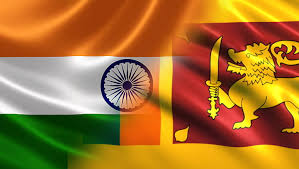
A bold push to expand the use of the Indian Rupee (INR) in Indo-Sri Lankan trade and investment is being pitched as a game-changer for regional integration. But beneath the optimism lies a deeper strategic question: does settling more trade in INR strengthen Sri Lanka’s resilience or deepen monetary dependence on its largest neighbour?
Speaking at the Association of Professional Bankers convention, Ajay Kumar of the Reserve Bank of India argued that denominating exports in INR could narrow trade imbalances, reduce exchange-rate risks and cut transaction costs.
Bilateral trade reached $5.8 billion in 2024-25, but the structure remains uneven. India exported $4.11 billion worth of goods in FY2023-24, while Sri Lanka exported $1.42 billion a persistent gap. Kumar contends that invoicing in INR would make Indian buyers more willing to transact, potentially stimulating Sri Lankan exports.
Under the RBI’s framework, Indian banks can open Special Rupee Vostro Accounts (SRVAs) for Sri Lankan banks. Nine Indian banks have opened seven such accounts linked to Sri Lanka, enabling trade settlement directly in INR without routing payments through US dollars.
Proponents argue this reduces reliance on scarce dollar liquidity a painful lesson from Sri Lanka’s 2022 crisis. Lower hedging costs and the ability to invest surplus INR balances in Indian Government securities add further appeal.
However critics quietly point to structural realities. If trade remains skewed toward Indian exports, INR accumulation in Sri Lankan banks could mirror the very imbalance the policy seeks to correct. Unlike dollars, INR is not fully convertible on global markets, limiting flexibility.
Currency alignment is another argument advanced by Kumar that the two economies move cyclically in tandem. But Sri Lanka’s external debt obligations, commodity imports and reserve management are still largely dollar-linked. A rapid pivot away from the greenback could complicate monetary operations unless carefully calibrated.
Data from the International Monetary Fund show the US dollar’s share of global reserves declining to 56.32% in mid-2025, reflecting broader diversification trends. However, the euro’s share stands above 21%, while the Chinese renminbi accounts for just over 2%. INR remains outside the dominant reserve basket a reminder that diversification does not automatically equal substitution.
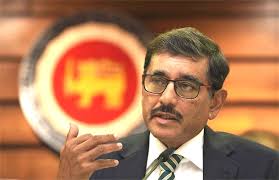
Governor Nandalal Weerasinghe of the Central Bank of Sri Lanka framed the shift within a wider regional integration strategy, citing payment interoperability and financial safety nets as pillars of resilience.
The macro backdrop is improving: 4.5% growth in 2025, low inflation near 2%, fiscal and current account surpluses, and rebuilding reserves.
Still, expanding INR use is as much geopolitical as economic. It reflects India’s broader effort to internationalise its currency and anchor South Asian trade around its financial system.
For Sri Lanka, the rupee route offers clear short-term efficiency gains. Whether it evolves into strategic leverage or strategic vulnerability will depend on export competitiveness, reserve diversification discipline, and how balanced the bilateral trade relationship becomes in practice.