




Australia’s renewed endorsement of Sri Lanka’s ambition to join the Regional Comprehensive Economic Partnership (RCEP) should be viewed as more than a diplomatic courtesy. It is an opportunity and a test for the National People’s Power (NPP) Government to demonstrate that its foreign policy machinery can effectively support one of the country’s most significant economic ambitions.

Addressing the Sri Lanka Shippers’ Council’s 60th anniversary celebrations, Australian High Commissioner Matthew Duckworth strongly backed Sri Lanka’s pursuit of RCEP membership. His message was clear. RCEP is not merely another free trade agreement but a vital pillar of the Indo-Pacific’s economic architecture, connecting 15 economies through integrated trade, investment and supply chains.
Duckworth’s remarks also contained an important reminder. Membership in such a regional bloc is built not only on economic reforms but also on credibility, consistency and sustained diplomatic engagement. Governments, he observed, cannot implement major reforms without the confidence of industry and the support of institutions committed to improving competitiveness.
For Sri Lanka, this presents a fundamental challenge.
The NPP Government has repeatedly highlighted exports, investment promotion, digitalisation and regional economic integration as key drivers of economic recovery. Joining RCEP would significantly enhance market access, simplify customs procedures and strengthen Sri Lanka’s role within Asian supply chains.
Hitherto economic ambition alone does not secure entry into international economic partnerships. Every major regional agreement depends upon active diplomacy, effective communication and the ability to persuade partner countries that Sri Lanka possesses the institutional capacity to meet its commitments.
Recent public appearances by members of Sri Lanka’s foreign policy leadership have attracted criticism from political observers, foreign affairs analysts and sections of the media regarding the quality of official communication in international forums.
Some interviews and press interactions have generated widespread discussion on social media after inaccurate terminology or unclear explanations distracted from the Government’s intended policy messages. Regardless of political affiliation, such incidents demonstrate how communication missteps can overshadow substantive policy objectives in today’s globally connected media environment.
Diplomacy increasingly unfolds before international audiences. Statements delivered at global conferences, investment forums and televised interviews shape perceptions among governments, investors and multinational institutions. Precision, confidence and subject expertise therefore become strategic national assets rather than personal qualities.
Australia’s own message illustrates this point.
Duckworth praised Sri Lanka’s efforts towards digitalisation, transparency and trade facilitation while highlighting Colombo Port’s growing strategic importance within Indo-Pacific shipping networks. He also pointed to maritime cooperation, border security and regional connectivity as areas where Australia and Sri Lanka already enjoy productive collaboration.
His speech reflected confidence in Sri Lanka’s economic potential. It also underscored expectations that accompany deeper regional integration.
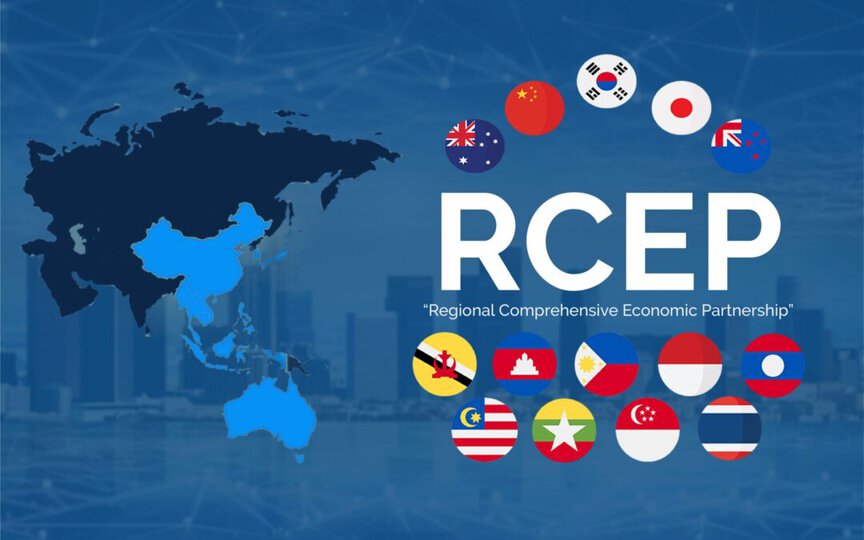
Membership in RCEP requires more than favourable geography or modern ports. It requires a coherent foreign policy narrative communicated consistently across capitals, ministries and international institutions. Successful economic diplomacy depends on professional engagement capable of building confidence among existing member states while reassuring investors that policy commitments will be sustained.
Sri Lanka possesses undeniable strategic advantages. Its location astride major Indian Ocean shipping lanes, expanding port infrastructure and long maritime history position it as a natural logistics hub. However, geography alone cannot substitute for effective diplomacy.
The Government’s economic strategy and its foreign policy must operate in tandem. Trade negotiations, investment promotion and regional partnerships all rely upon diplomats and ministers capable of articulating Sri Lanka’s priorities with clarity and confidence before international audiences.
Australia’s public support offers Colombo a valuable diplomatic opening. Whether Sri Lanka can translate that goodwill into RCEP membership will depend not only on domestic reforms but equally on the strength, professionalism and credibility of its diplomatic engagement.
As competition for regional investment intensifies across the Indo-Pacific, Sri Lanka’s success may ultimately depend on an often-overlooked reality: in modern international relations, communication is no longer a supporting function of diplomacy it is diplomacy itself.