




Sri Lanka’s aggressive anti-narcotics campaign has produced thousands of arrests, but the Negombo Prison tragedy raises a fundamental question: did law enforcement expand faster than the justice system’s capacity to process and accommodate those arrested?
The National People’s Power Government has prioritised an unprecedented crackdown against drug kingpins, traffickers, dealers and street-level peddlers in an effort to dismantle organised narcotics networks.
However, while arrests increased dramatically, corresponding reforms within the judiciary and prison system appear to have lagged behind.
The consequences are now becoming increasingly visible.

Justice Minister Harshana Nanayakkara disclosed in Parliament that prisons designed for approximately 10,000 inmates currently house nearly 29,000 prisoners—almost three times their intended capacity.
He further acknowledged that amendments relating to narcotics offences have contributed to prolonged delays in granting bail, with many suspects remaining on remand for more than eighteen months before their cases are heard.
These delays have transformed remand prisons into severely overcrowded holding facilities.
According to prison reform advocates, drug offenders account for a substantial proportion of Sri Lanka’s prison population, many of whom are low-level offenders or individuals struggling with addiction rather than organised crime figures.
International human rights organisations have similarly questioned whether incarceration has become the default response for narcotics-related offences when treatment and rehabilitation may be more appropriate in many cases.
The Committee for Protecting Rights of Prisoners had previously recommended establishing specialised rehabilitation centres for narcotics offenders to reduce prison overcrowding and improve rehabilitation outcomes.
Those recommendations also called for faster forensic reporting, expanded non-custodial sentencing where appropriate, improved case management and accelerated judicial proceedings.
Implementation has remained slow.As arrests continued to rise, prison infrastructure failed to keep pace.
The resulting congestion created an environment where criminal gangs allegedly retained influence, prison officers faced mounting pressure and tensions escalated inside overcrowded facilities.
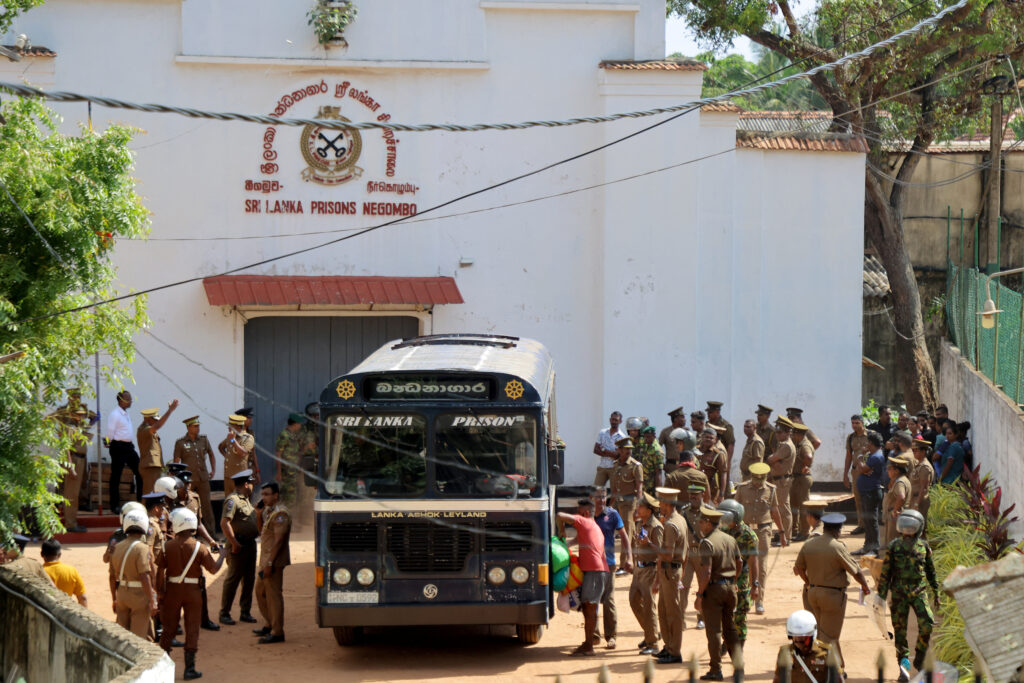
The Negombo riot has exposed how weaknesses across multiple institutions including policing, prosecution, courts and corrections can converge into a national crisis.
An effective anti-drug campaign requires more than large-scale arrests.
It demands prosecutors capable of filing cases without delay, courts able to dispose of cases efficiently, forensic services delivering timely reports, sufficient prison accommodation for dangerous offenders and comprehensive rehabilitation programmes for addicts and first-time offenders.
Without those supporting mechanisms, every successful police operation risks placing additional strain on an already overloaded correctional system.
The Government’s campaign against organised narcotics remains an important public security objective.
However the Negombo disaster demonstrates that enforcement alone cannot sustain long-term success.
Unless judicial reforms, expanded correctional capacity, rehabilitation facilities and prison modernisation advance alongside anti-drug operations, Sri Lanka risks repeating a cycle where successful arrests ultimately produce unsustainable prison overcrowding creating precisely the conditions that contributed to one of the country’s deadliest prison tragedies.