




Fresh complaints, documentary evidence and sworn statements relating to Sri Lanka’s controversial Lanka Government Network (LGN 2.0) project have revived one of the country’s most contentious public procurement cases, placing the multi-billion-rupee digital infrastructure programme back under legal and political scrutiny.
The latest submissions have reportedly been forwarded directly to President Anura Kumara Dissanayake and senior anti-corruption authorities, urging the government to reopen investigations into alleged procurement irregularities, financial losses and abuse of authority surrounding the implementation of the national network project between 2016 and 2018.
The LGN 2.0 initiative was designed as Sri Lanka’s flagship government digital communication network, connecting approximately 800 government institutions, ministries and public agencies through an integrated nationwide communications platform. Sri Lanka Telecom PLC (SLT), which owned the country’s national fibre backbone, was selected as the principal communications infrastructure provider under Procurement No. ICTA/GOSL/SER/DC/2016/105.
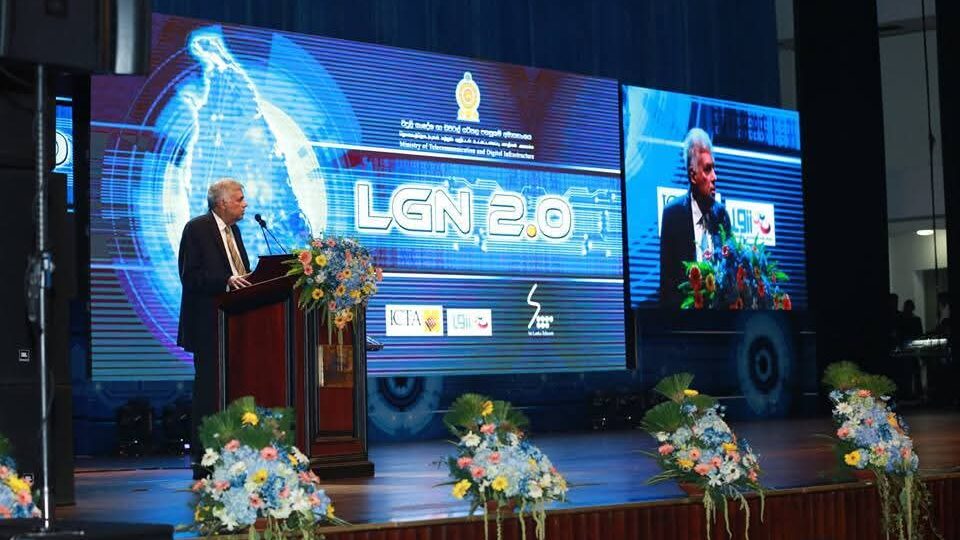
While the fibre network component was initially valued at nearly Rs. 4 billion, the broader implementation reportedly expanded to approximately Rs.12.7 billion across multiple phases. The Cabinet approved the project following a proposal presented by then Minister of Telecommunication and Digital Infrastructure Harin Fernando. The second phase was officially launched at the BMICH on November 7, 2017, in the presence of then Prime Minister Ranil Wickremesinghe and other senior government officials.
However, newly submitted complaints allege that the procurement process deviated significantly from accepted public procurement standards.
Among the principal allegations is that EZY Corporation, a company primarily recognised as an information technology product distributor, was selected as the System Integration partner despite allegedly lacking the enterprise-scale systems integration experience normally required for a project of such national importance.
The complaints further claim that established procurement procedures within SLT were bypassed and that the appointment was influenced by political considerations. These allegations have not been proven in court, and the parties concerned have not publicly responded to the latest submissions.

Another major allegation centres on the preparation of the technical Request for Proposal (RFP). According to documents submitted to authorities, the procurement specifications allegedly favoured a predetermined technology architecture by restricting security requirements to a specific product platform, effectively limiting competition from alternative vendors.
Investigative records also claim that after securing the contract, EZY Corporation subcontracted substantial implementation responsibilities to Millennium Information Technologies (MIT), a company that had reportedly participated independently in the original bidding process. Complainants argue this raises questions about whether the successful bidder functioned primarily as an intermediary rather than the intended systems integrator.
The complaints also describe four subsequent contract amendments allegedly approved by certain SLT officials to waive contractual penalties arising from project delays. According to the complainants, these amendments resulted in significant financial losses to the State.
The renewed submissions further allege that some officials involved in the disputed decisions later received promotions, while another senior official identified in the complaints reportedly obtained extended leave and subsequently left the country before investigations were concluded.
National audit observations have meanwhile questioned whether LGN 2.0 ultimately achieved the operational efficiencies originally promised despite the substantial public expenditure.
With Sri Lanka’s current administration pledging renewed action against corruption, investigators now face mounting pressure to determine whether sufficient evidence exists to reopen criminal inquiries and establish accountability over one of the country’s largest digital infrastructure procurements.